
Organizations invest heavily in training, including leadership programs, onboarding, capability development, and transformation initiatives. Yet one question keeps resurfacing:
Why does training not actually stick?
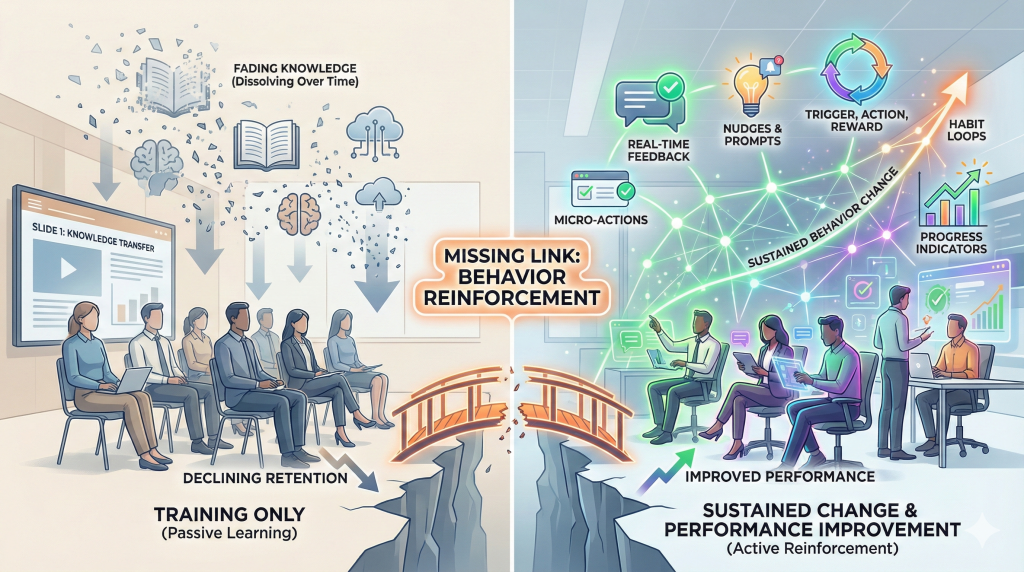
Despite strong content, high attendance, and positive feedback, new behaviors often fade within days. This is not a failure of training quality. It is a structural gap between learning and action.
Training creates awareness.
Sustained behavior change requires reinforcement.
The Training Illusion
Most training programs follow a familiar pattern:
- Employees attend workshops or complete modules
- Completion and attendance are tracked
- Surveys indicate positive sentiment
- Knowledge checks confirm understanding
From an HR or L&D perspective, the program appears successful.
But inside daily work:
- New behaviors are applied inconsistently
- Old habits quickly resurface
- Managers reinforce unevenly
- Teams revert to default ways of working
This creates a dangerous illusion:
training success without behavioral impact.
Why Training Alone Does Not Change Behavior
Training fails to create sustained behavior change for four structural reasons.
1. Knowledge Does Not Equal Action
Knowing what to do is not the same as doing it under real-world pressure. When priorities compete, people default to existing habits rather than newly learned concepts.
2. Training Sits Outside the Flow of Work
Training happens in sessions or platforms. Behavior happens inside meetings, decisions, handovers, and daily routines. Without reinforcement at the moment of action, learning remains theoretical.
3. Managers Lack Reinforcement Systems
Managers are expected to reinforce behaviors informally, without prompts, data, or structure. Reinforcement becomes inconsistent and easily deprioritized.
4. There Is No Measurement of Actual Behavior
Training effectiveness is typically measured through:
- Attendance
- Completion
- Satisfaction
None of these answer the critical question:
Did the behavior actually happen?
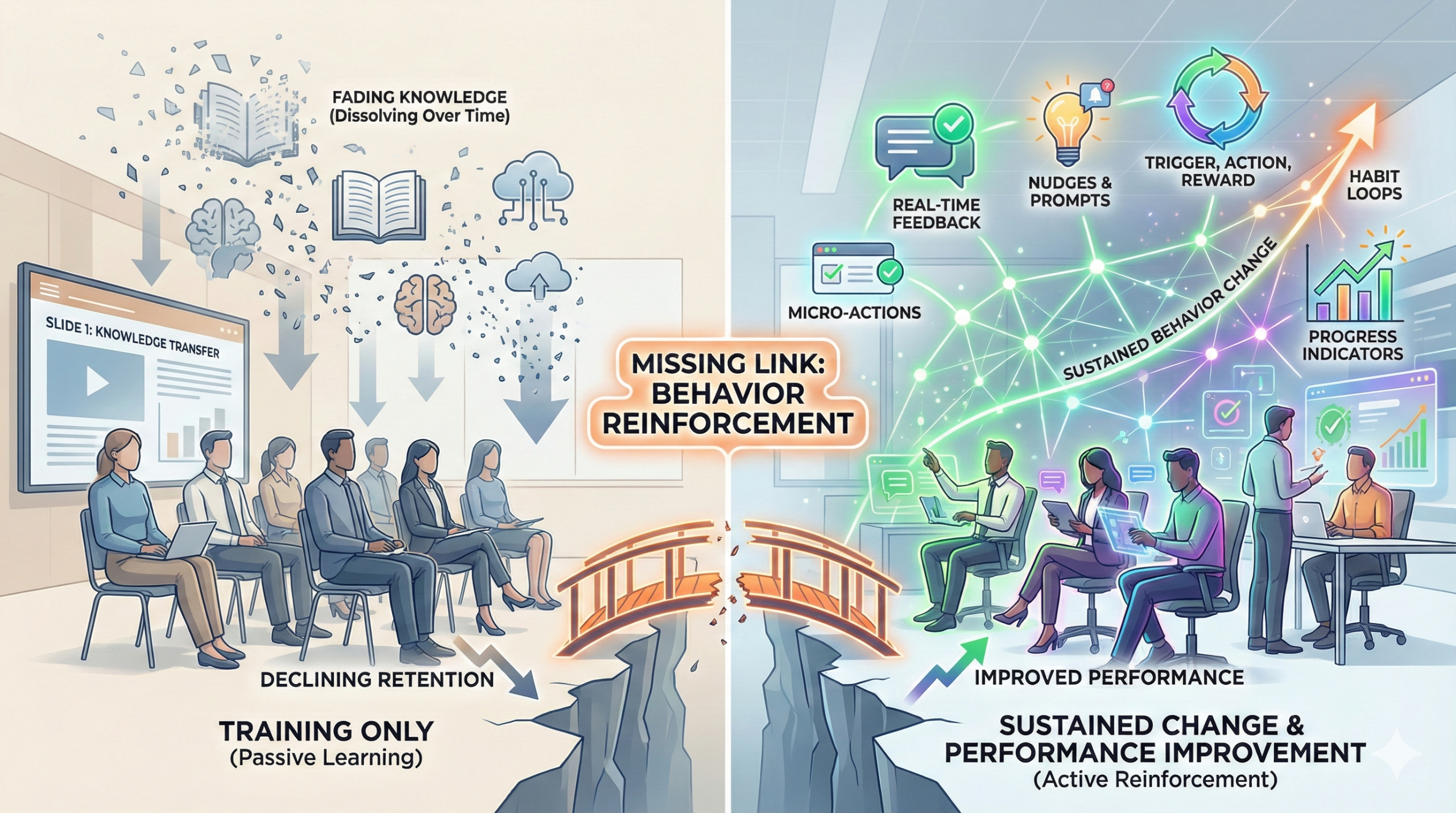
The Missing Layer: Behavior Reinforcement
Behavior reinforcement is what turns training into action.
Instead of asking:
Did people attend training?
It asks:
Did people change what they do, consistently, in real work?
Behavior reinforcement works by:
- Defining expectations as observable actions
- Reinforcing those actions repeatedly in context
- Measuring consistency over time
- Adjusting support based on real behavior data
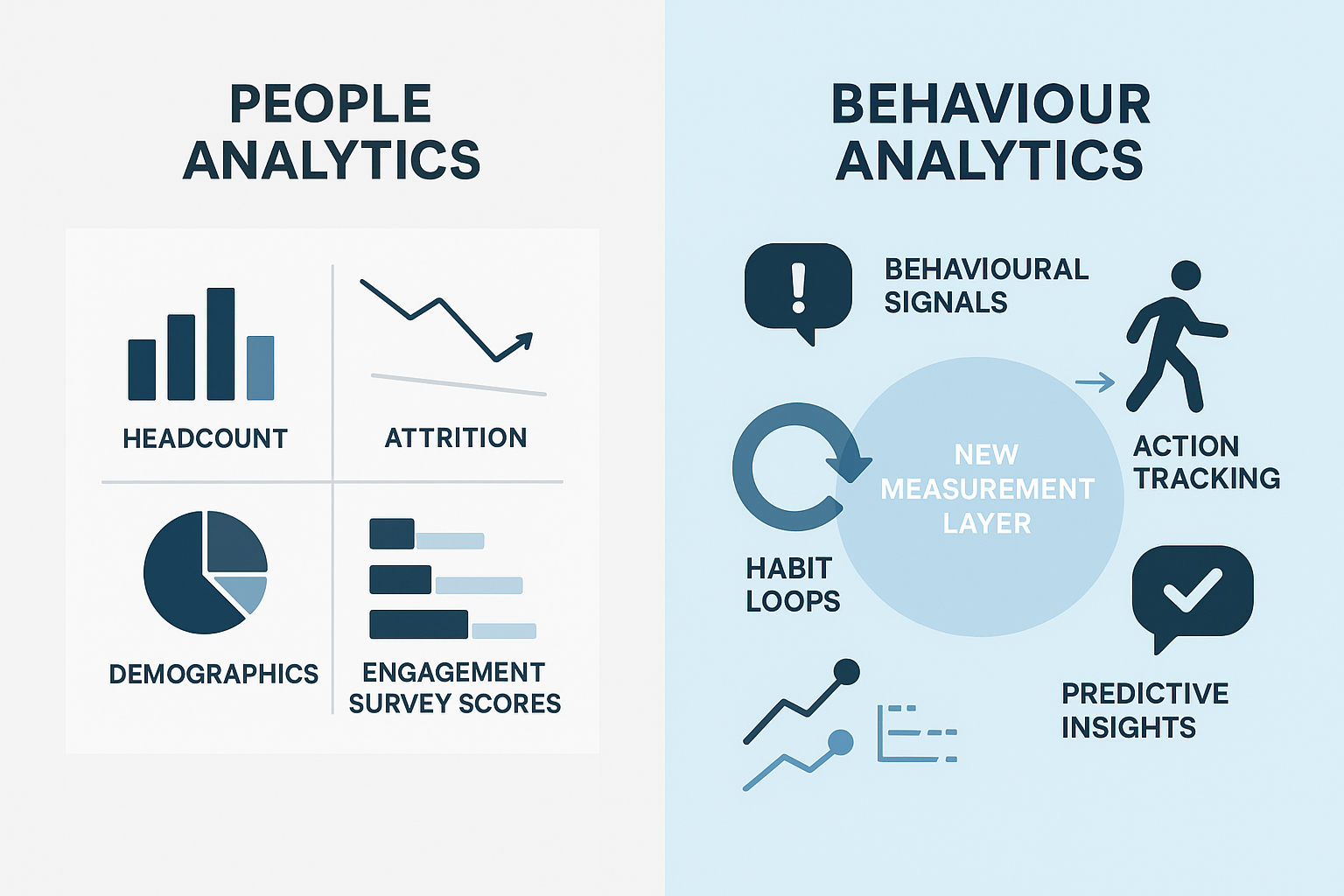
This is where training ends and behavior analytics system begins.
Training vs. Behavior Reinforcement

Training Behavior Reinforcement
- Event-based Continuous
- Knowledge transfer Action adoption
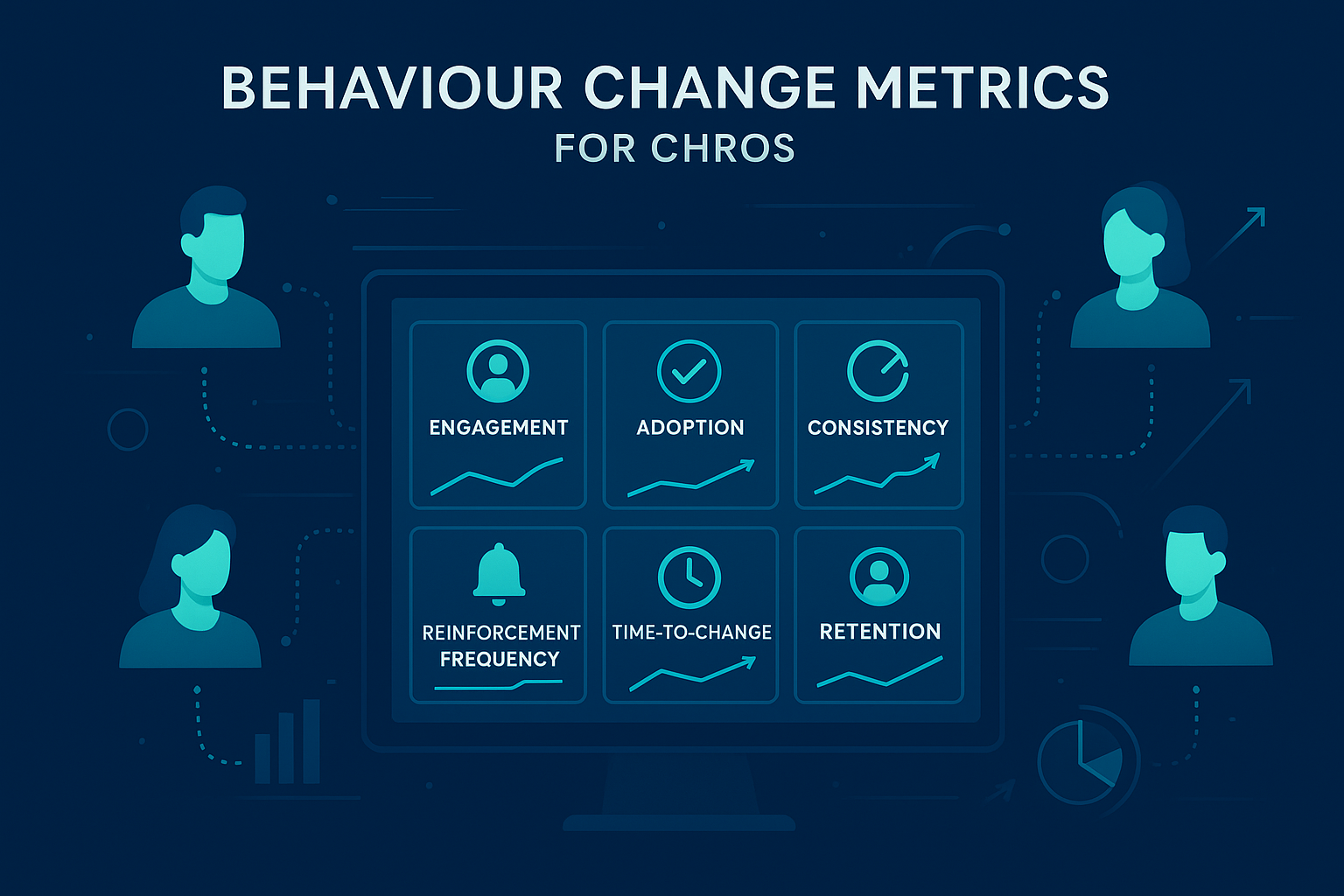
- Completion metrics Behavior metrics
- One-off Repetitive
- Lagging indicators Leading indicators
Training teaches what to do.
Reinforcement ensures it gets done.
A Simple Example

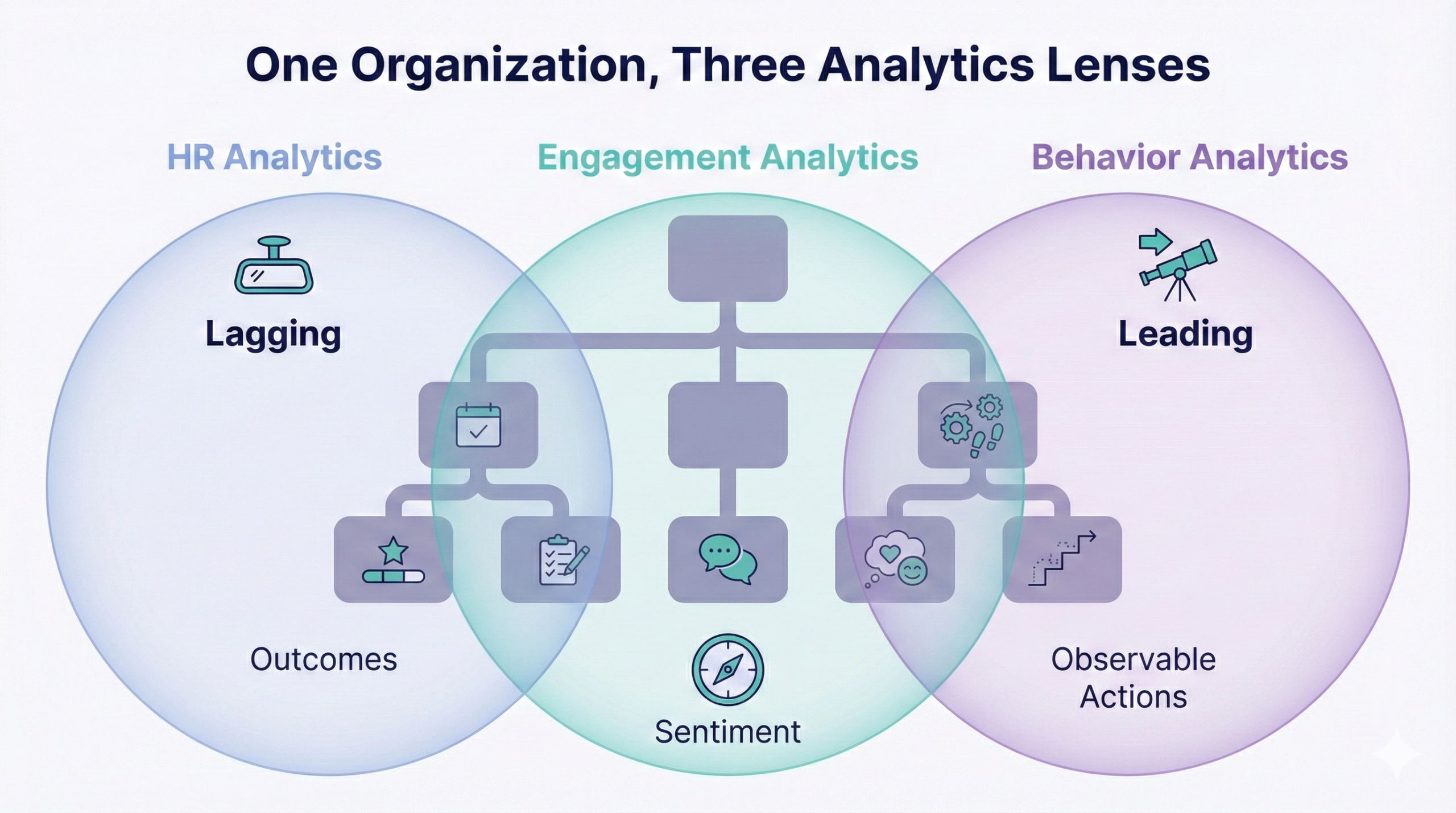
Training teaches a manager to give timely feedback.
- HR analytics shows the manager attended the training
- Engagement analytics shows the manager feels confident
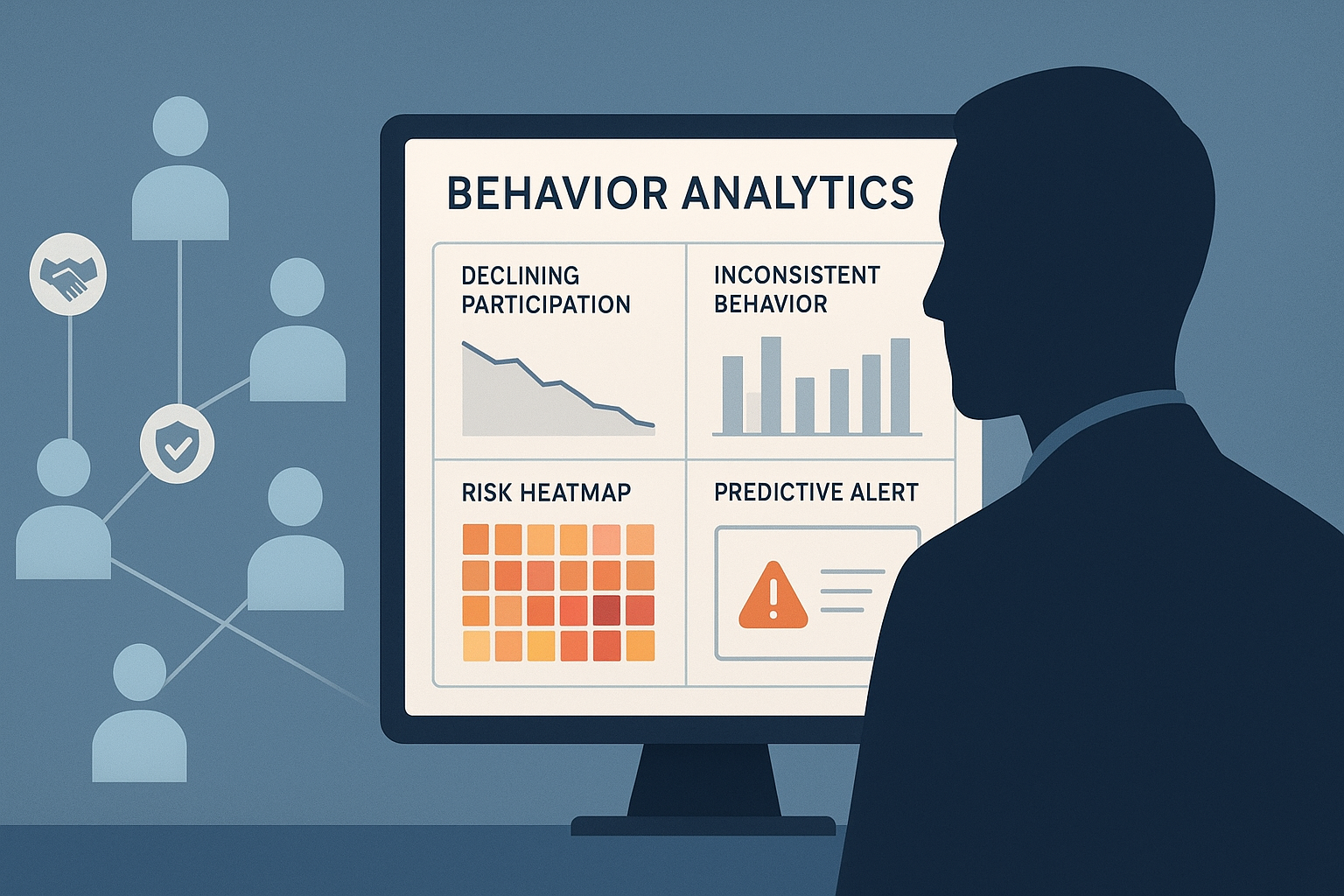
- Behavior analytics shows whether feedback was actually given within 72 hours
That final signal determines impact.
This difference is what distinguishes activity metrics from leading indicators of behavior change.
Why L&D Teams Struggle Without Reinforcement
L&D teams are increasingly accountable for outcomes, not just delivery. Without reinforcement systems, they face structural constraints:
- No visibility into post-training behavior
- No leading indicators of adoption
- No early warning when behaviors decay
- No data to demonstrate real training ROI
- Behavior reinforcement gives L&D:
- Measurable post-training adoption
- Early signals of skill application
- Evidence of behavior transfer
- Data to refine programs continuously
From Training Programs to Behavior Systems
Most organizations still operate with a program mindset:
- Launch training
- Measure completion
- Move on
- High-performing organizations are shifting to a system mindset:
- Define critical behaviors
- Break them into micro-behaviors
- Reinforce them in daily workflows
- Measure adoption continuously
These practices sit within a broader behavior analytics framework, which provides the structure training alone cannot.
How This Fits Into the Bigger Picture
Behavior reinforcement does not replace training.
It completes it.
Training builds capability.
Reinforcement builds habit.
Behavior Analytics: How Organizations Measure and Reinforce What Actually Happens at Work explains how organizations operationalize behavior change at scale.
Key Takeaways
- Training alone rarely produces sustained behavior change
- The gap is reinforcement, not motivation
- Behavior reinforcement turns learning into action
- Behavior analytics makes adoption visible and measurable
- L&D impact increases when behavior, not attendance, is measured