
1. Define the action
Choose one specific behavior that matters to the program. Describe the situation where participants will use it and what a useful attempt looks like.
Turn a learning session into a clear workplace action, supported practice and a review of what happened. Explore GWork for your next leadership or team learning program.



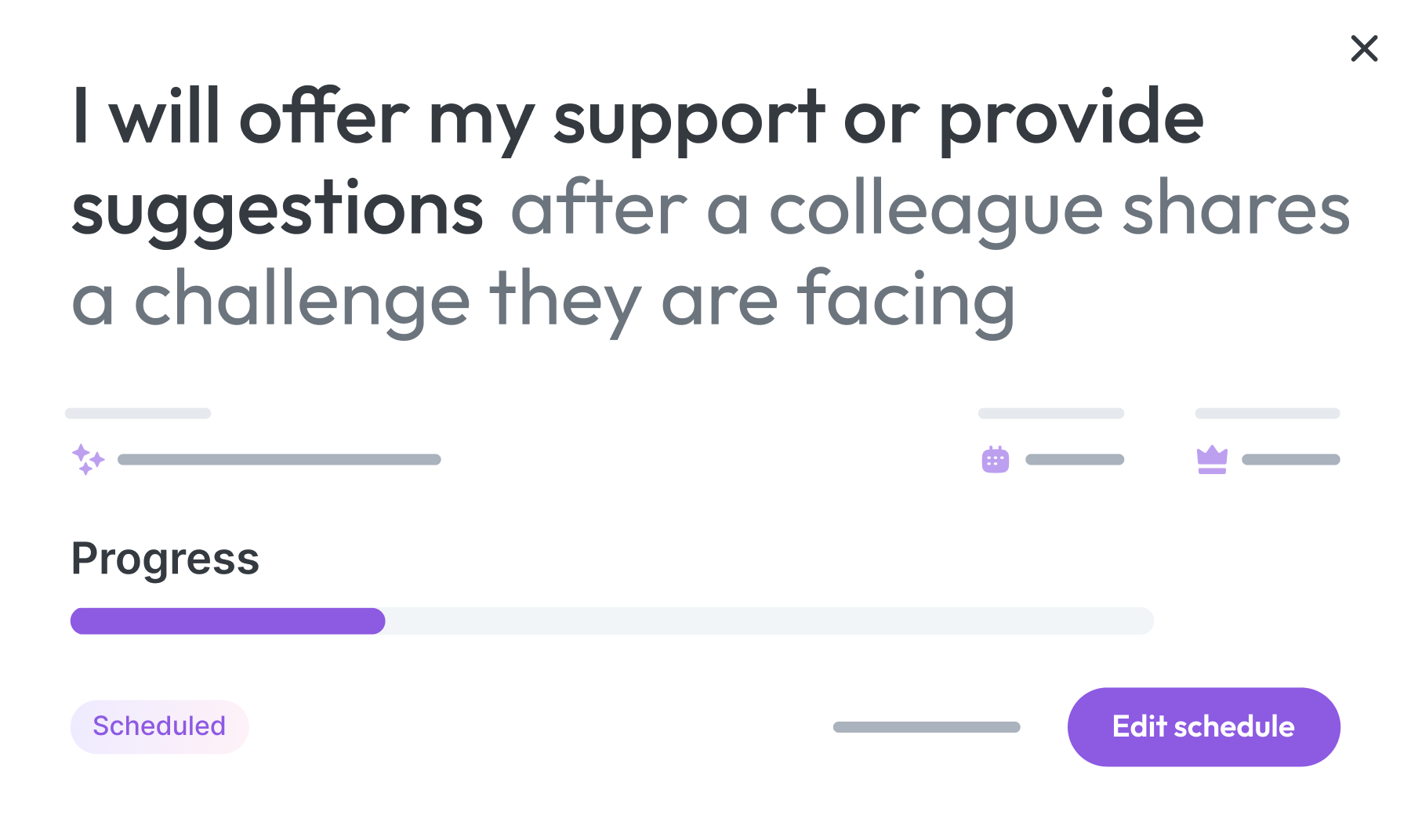
I will spend 10 minutes clarifying expectations and responsibilities with my team.




“We increased proactive feedback and communication by 30% in the last 6 months.”

Director at MTS
“GWork made it easy to manage productivity and performance.”

HR Executive at YES
"Highly recommend for increasing team performance.”

CEO at Growth Rocks





Choose one specific behavior that matters to the program. Describe the situation where participants will use it and what a useful attempt looks like.
Plan opportunities to try it in real work. Agree who will offer feedback, what managers need to do and how to address barriers.
Ask what participants tried, collect appropriate examples and decide what to change. Keep participation, application and business outcomes distinct.
You can start this cycle manually with the free kit. For product support, discuss your requirements and confirm the available capabilities with GWork.
Explore training reinforcementStart with one cohort and one observable action. Agree when people can practise, who will support them and how you will review what happened.
Turn the session into a specific action: what will the participant do, in which work situation, and what would a useful attempt look like?
Identify a real opportunity to try the skill. Give managers a clear role in rehearsal, feedback and removing barriers.
Discuss what people tried and bring appropriate examples. Separate missing opportunities from missed attempts, then agree the next step.
One clear action. A real opportunity. A useful review.
Agree what useful evidence looks like before the program starts. Attendance and confidence alone do not show that a skill is being used at work.
What will participants do differently, and when will they have a chance to try it?
Who will make room for practice, discuss obstacles and offer feedback?
Combine participant reports with an agreed work example or manager observation where appropriate.
Review what happened, what got in the way and what support is needed next.
Reported practice is a useful signal. It does not establish business impact or prove that training caused a result.
Use the Level 3 evaluation questionsBuilt from consulting work with






A behavior-first system that lives where your work already happens.
Start with a programme where participants have a real chance to practise.
Turn feedback, delegation or coaching skills into actions managers can try at work.
Choose a specific customer conversation or team-coaching practice to review.
Agree a shared action and who will support it between sessions.
Connect successive modules with practice, feedback and a useful review.
Choose one feedback behaviour from the workshop. Agree the practice opportunity, manager support and review date before the cohort leaves.
At the review, separate who responded, who had an opportunity and what evidence of application is available.
Help each participant describe one action they will try in a real work situation. Ask what support they need and who will follow up.
Use the next session to discuss attempts and barriers, rather than assuming the learning has transferred.
At the next project review, describe one specific observation, explain its effect and ask for the other person’s perspective.
Bring a brief example of what you tried and what you learned to the follow-up conversation.
Help the participant find an opportunity, rehearse the opening and make time to practise.
Ask what happened, discuss useful feedback and agree the next attempt. A single example is a starting point, not proof of lasting behaviour change.
Choose a useful next step for your program.
Turn one learning objective into a workplace action, a practice opportunity and a manager check-in.
Get the free action-plan kitUse a practical checklist to assign responsibility and plan follow-up around real work.
Use the follow-up checklistChoose questions that explore application, examples and barriers rather than satisfaction alone.
Choose Level 3 questionsBring one program, its intended workplace behavior and your follow-up challenge. Discuss fit, scope and what would need to be verified.
Discuss your learning program



Bring a leadership workshop, manager programme or team learning session. Choose the workplace action you want people to practise next.







GWork helps L&D teams and training providers focus on learning in use. Our work brings together workplace actions, supported practice and evidence review, informed by our experience in organisational development.
L&D teams, training providers and managers who want to support the application of learning after a workshop or programme. Start with a session and a specific workplace action.
Yes. Bring one programme, the people taking part and the action you want to support. We’ll discuss the appropriate scope and setup before you commit.
No. The kit contains editable materials and an Excel tracker you can use manually. It does not create participant accounts or send reminders automatically.
The focus here is application after learning, rather than course delivery. Tell us what you already use so we can establish fit and confirm any setup or integration requirements.
Bring a learning topic, an approximate cohort size and your follow-through challenge. We’ll explore the relevant GWork workflow, practical requirements and whether there is a fit.
Every quarter lost to poor execution costs more than GWork ever will. Don’t guess which habits matter—get a blueprint based on behavioral science.
Start with the free follow-up kit, or discuss how GWork could support practice after your program.
Choose a workplace action, plan manager support and review evidence of application.
You’ve already tried dashboards, meetings, and productivity apps. Still: missed deadlines, unclear priorities, inconsistent ownership.
What’s missing? Your team doesn't have a system to improve team habits—one that builds the right behaviors into the natural flow of work.
GWork delivers science-backed behavior nudges where your people already work—helping you improve team performance without adding more meetings, apps, or complexity.
This is the modern answer to how to improve workplace performance that sticks.