


Execution Drift: Why performance quietly slips

Most strategies don’t fail because they are wrong.
They fail because execution weakens once leadership attention moves on.
An initiative begins with clarity. Teams align. Standards are tight.
Then routine work takes over. Priorities compete. Reviews shift elsewhere.
Nothing dramatically breaks.
Execution simply becomes inconsistent.
Steps get skipped. Handoffs slow down. Decisions take longer.
Weeks later, results slip – and no one can pinpoint when it started.
This isn’t a motivation or talent problem.
It is a stability problem.
In fast-changing environments – growth, restructuring, or digital transformation – this instability compounds quickly. The risk isn’t poor strategy; it’s fragile execution.
👉 Many organizations face this gap between planning and delivery, as discussed in our guide on bridging strategy and execution gaps.
When reinforcement fades, behavior drifts back to old habits.
The change is gradual, which makes it dangerous.
Small deviations accumulate:
- a checklist missed
- a delayed handoff
- a postponed review
- a loosely interpreted standard
Each feels minor. Together, they erode reliability.
Consider a customer support team required to resolve escalations within two hours.
Adherence drops from 98 percent in week one to 90 percent by week three and 72 percent by week six.
The rule never changed.
Leaders simply stopped checking. Dashboards shifted focus. Attention moved elsewhere.
Customers noticed first. Leaders noticed last.
This is how most execution problems develop – quietly, not catastrophically.
Leadership’s role: Designing for reliable execution
When performance slips, many leaders respond with more pressure:
more training, more reminders, more urgency.
It creates a short burst of effort – and then regression.
Because the issue isn’t effort.
It’s how work is designed and governed.
Execution stability is a leadership responsibility, built on three actions:

👉 We’ve outlined practical accountability frameworks in our article on leadership accountability systems.
Reinforce what truly matters
Leaders must consistently review a small set of critical behaviors that drive results. What leaders regularly discuss is what teams actually do.
Intervene early
Small deviations must be corrected before they become missed targets. Early adjustments prevent major breakdowns.
Remove distractions
If everything is critical, nothing gets sustained attention. Clear priorities protect operational rhythm.
This is not about micromanaging people.
It is about shaping conditions that make consistent performance likely.
The key leadership question shifts from:
“Are people trying hard enough?”
to
“Where is reliability weakening right now?”
That shift separates reactive management from disciplined leadership.
Visibility and reinforcement: The system that creates stability
You cannot stabilize what you cannot see.
Most organizations track outcomes.
Far fewer track whether the actions that create those outcomes are happening consistently.
As a result, leaders detect problems only after results have already declined.
👉 Organizations that want earlier warning signals often build systems focused on leading indicators, as explored in Predicting Execution Breakdowns Before KPIs Reflect Them.
Stability requires earlier signals – simple, objective visibility into how work is actually being executed.
With clear visibility, leaders can:
- reinforce adherence
- correct small drifts
- intervene before performance drops
Leadership becomes proactive rather than reactive.
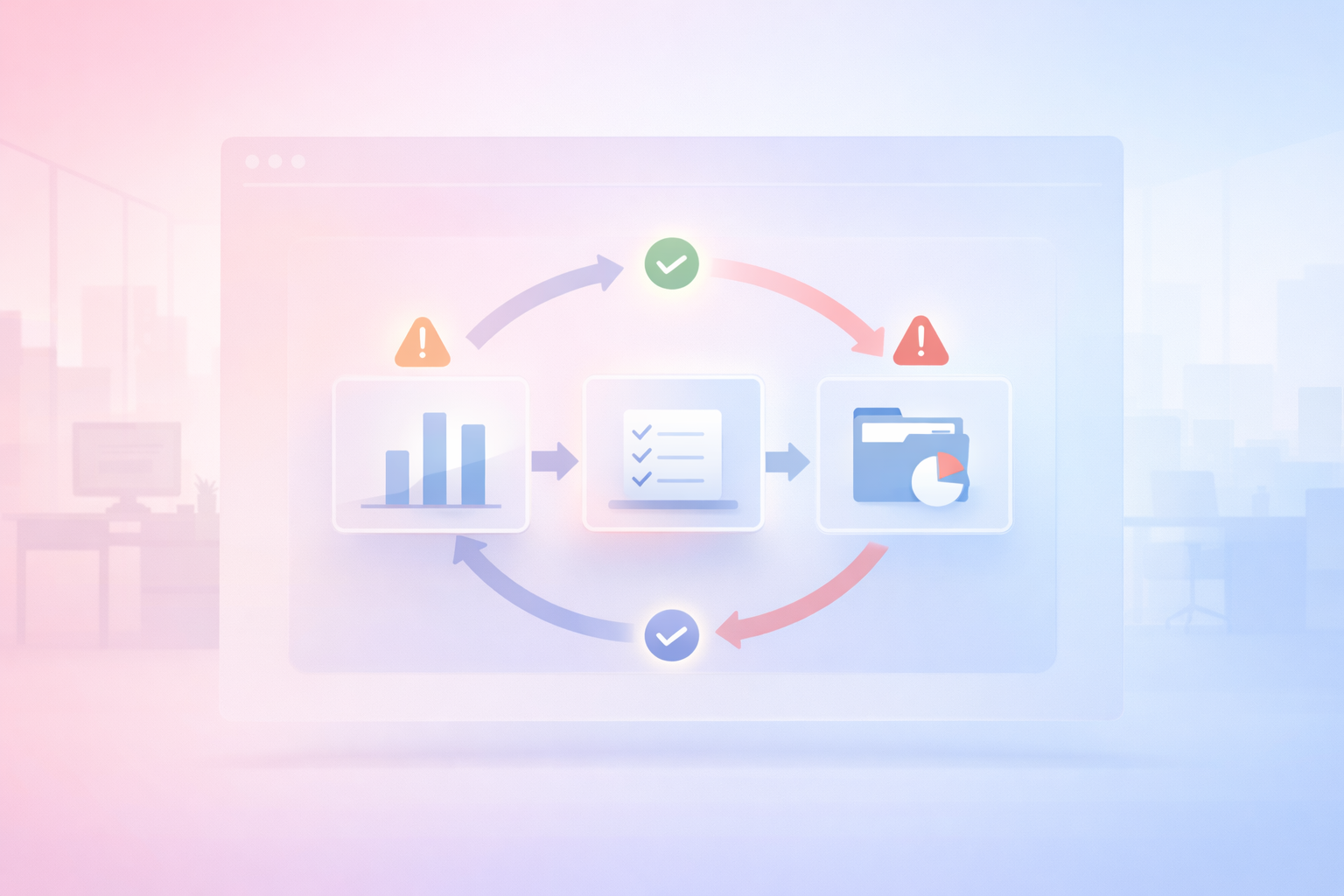
Leaders watch the signals, make decisions, reinforce what matters, and repeat the process.
Measurement is useful only if it changes action.
If a metric doesn’t influence decisions, it is just noise.
Reinforcement isn’t speeches or incentives.
It is regular review, clear discussion, and timely correction.
Over time, this creates reliability.
Execution stops depending on heroics or constant firefighting.
It becomes predictable – and predictability is what allows organizations to scale.
Strategy is made in moments. Execution is lived every day.
Ready to close the strategy-execution gap?