
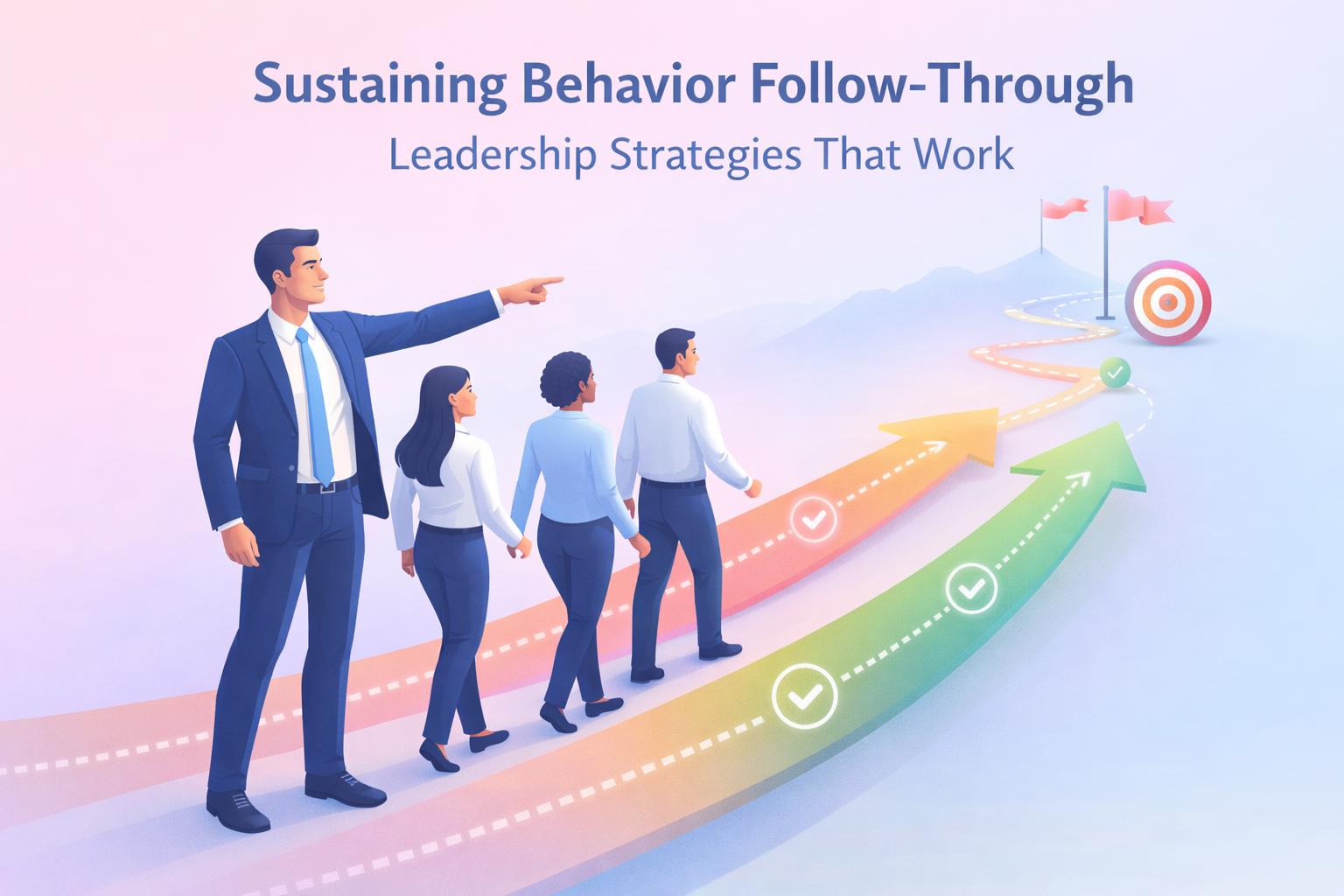

Most strategies don’t fail because they are wrong.
Last updated: April 2026
They fail because, after the decision is made, daily operations quietly reclaim control. Meetings fill up. Escalations compete for attention. Short-term pressure reshapes priorities. Within weeks, behavior no longer reflects the original intent.
This is not resistance.
It is execution drift.
The real leadership challenge is not deciding what to do – but sustaining behavior follow-through once attention moves on.
Execution Drift: Why Behavior Decays Even When Strategy Is Clear
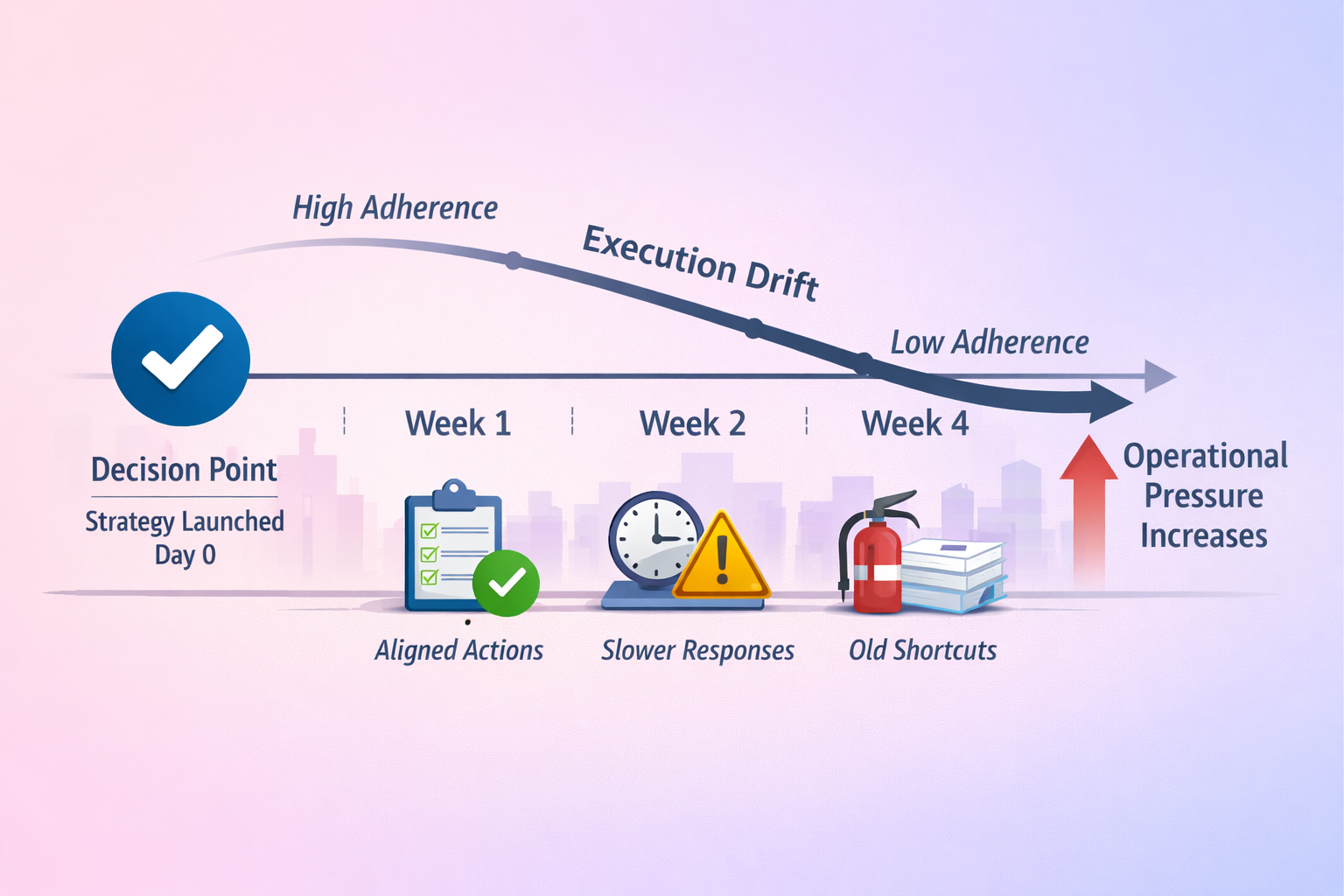
Execution drift begins the moment reinforcement weakens.
A strategic decision creates temporary clarity. Everyone knows what matters right now. But clarity fades as soon as the organization returns to its normal operating rhythm.
Drift shows up in small, familiar ways:
- Handoffs slow down
- Escalations get handled “the old way”
- Response time expectations quietly relax
- Teams prioritize what reduces immediate friction
Nothing breaks. Nothing fails loudly.
Behavior simply reverts.
This is why leaders are often surprised by outcomes. From their vantage point, the strategy still exists. From the system’s perspective, the signals have changed.
Drift is not a failure of discipline.
It is a predictable system response to time and pressure.
A Real Operational Example
Consider a regional operations team that introduces a new escalation protocol to reduce customer-impact incidents.
For the first two weeks:
- Escalations are logged consistently
- Response times improve
- Leaders reference the protocol in reviews
By week four:
- Urgent cases are handled informally “to save time”
- Logs are partially filled
- Managers stop asking about the protocol unless something goes wrong
Nothing in the strategy changed.
The reinforcement did.
A COO reading this will recognize the pattern instantly – not because people ignored the process, but because the system stopped signaling that it mattered.
The Leadership Role: Sustaining Follow-Through After the Announcement
Most leaders focus heavily on the decision moment.
But leadership impact is measured after the announcement – when priorities collide and attention fragments.
Follow-through does not survive on clarity alone. It survives on consistent signals.
Leaders unintentionally accelerate drift when:
- New priorities are introduced without trade-off
- Decisions contradict stated objectives
- Attention shifts without acknowledgment
Teams do not resist strategy.
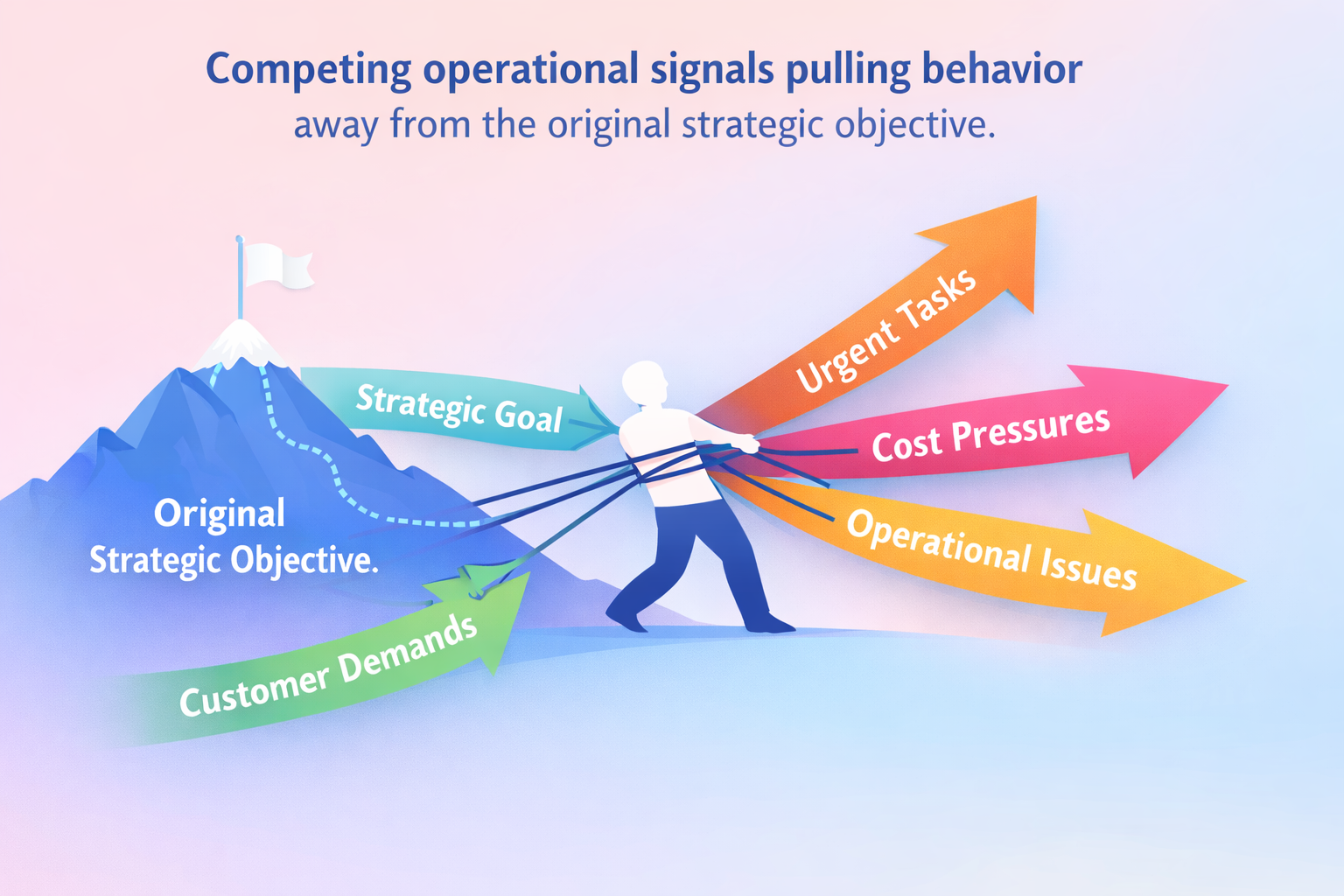
They respond to signals.
When signals conflict, behavior aligns with the strongest one – usually speed, convenience, or immediate risk reduction.
Why Alignment Breaks Quietly
Misalignment rarely comes from disagreement.
It comes from ambiguity.
If a team hears:
- “This initiative is critical”
but sees: - No reference in weekly decisions
- No adjustment to escalation rules
- No follow-up when shortcuts appear
They conclude – rationally – that the initiative has dropped in importance.
Sustaining behavior follow-through requires leaders to protect strategic intent from erosion, not just declare it.
That protection is a leadership responsibility, not a communication task.
Visibility and Reinforcement: Turning Follow-Through Into a System
The biggest risk in leadership is assuming execution is happening because no one raises a flag.
Silence is not evidence.
Sustained follow-through requires visibility into execution, not updates on intent. Leaders need to see whether behavior still reflects the decision – before results suffer.
This visibility should answer simple questions:
- Are key actions still happening?
- Are handoffs consistent?
- Are escalation paths being used as designed?
When leaders can see execution patterns, they stop reacting late and start reinforcing early.
Reinforcement Beats Reminders
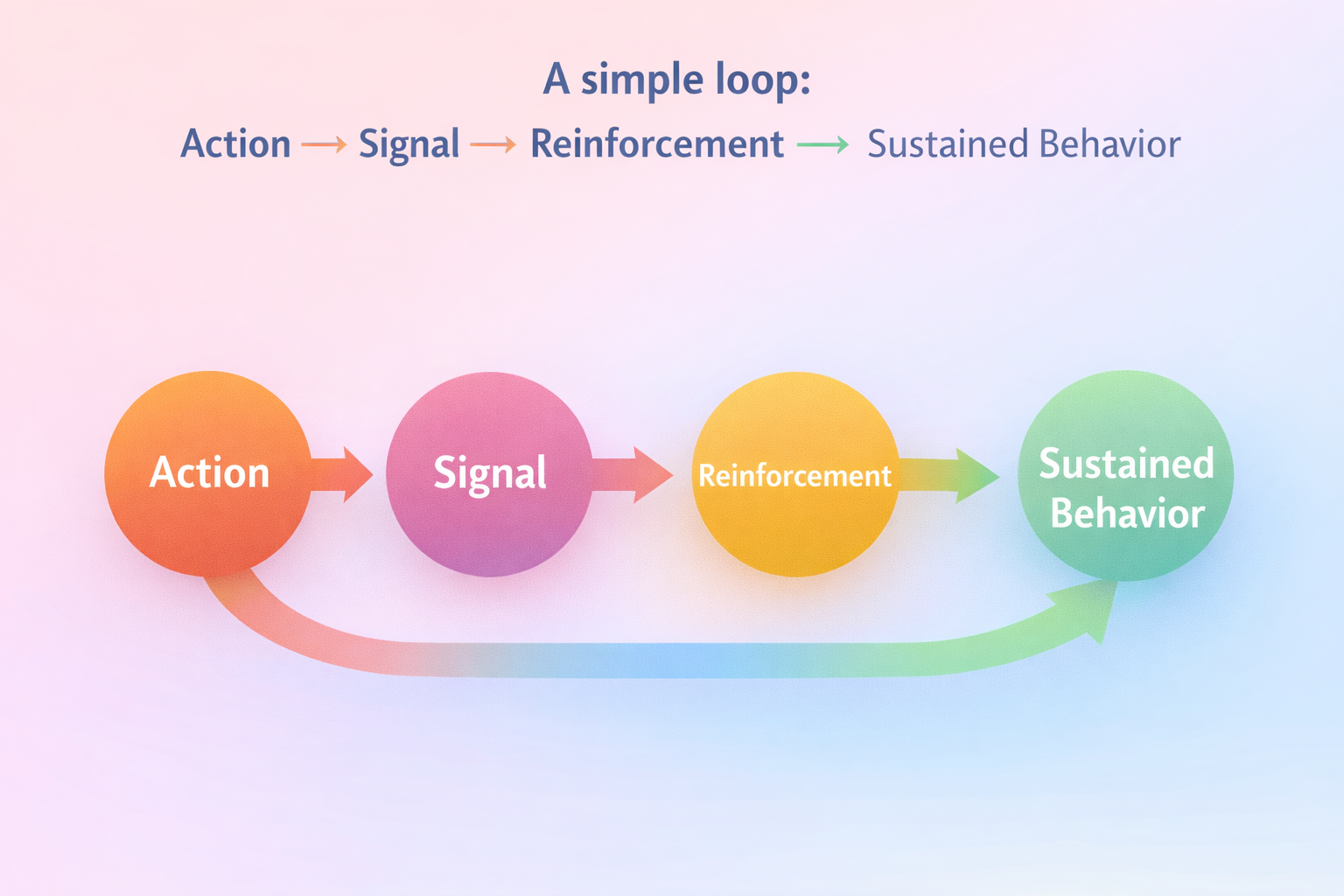
Reinforcement is not repeating the strategy.
It is making the strategy visible in decisions, trade-offs, and attention.
Effective reinforcement looks like:
- Referencing objectives when approving exceptions
- Calling out when execution slips, without blame
- Adjusting priorities publicly when conflicts arise
This keeps follow-through alive without micromanaging.
The Difference Between Intent and Durable Execution
Intent fades.
Systems endure.
Organizations that sustain behavior follow-through do not rely on memory, motivation, or heroics. They design environments where the right behavior is continuously reinforced.
This is what separates leadership that sounds good from leadership that holds.
The real test of leadership is not what happens right after the decision – but what still happens when no one is talking about it anymore.
That is where follow-through proves whether strategy was real or just announced.
Ready to close the strategy-execution gap?
