skip to Main Content


Most strategies don’t fail because they are wrong.
They fail because, after the decision is made, attention quietly moves on.
At kickoff, everything looks right.
Priorities are clear. Resources are assigned. Communication is crisp. For a few weeks, execution feels solid.
Then real work returns.
Meetings stack up. Local trade-offs appear. Managers stop explicitly reinforcing the change. Teams adapt in reasonable, well-intended ways. Nothing breaks loudly.
But the plan begins to shift.
By the time leadership notices outcomes drifting, the organization has already normalized a different version of the strategy.
This is the execution problem CHROs and COOs face today:
not alignment, not effort, not intent – but decision follow-through over time.
Execution Doesn’t Collapse – It Drifts
Execution failure is rarely dramatic.
It erodes.
A required step gets skipped when pressure rises.
A handoff happens informally instead of through the agreed process.
A rule bends “just this once.”
Individually, none of these feel dangerous. Together, they reshape how work actually gets done.
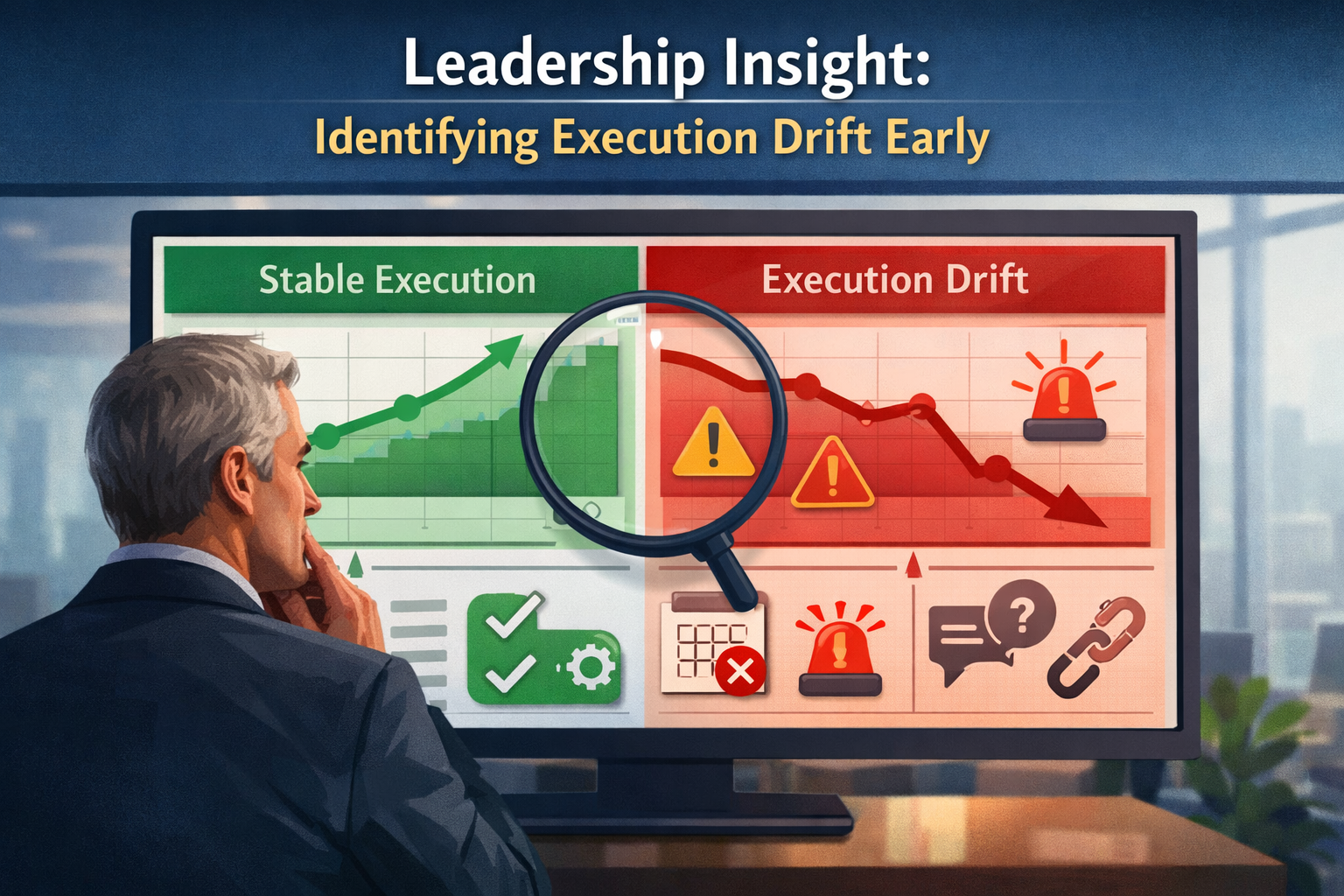
That is execution drift – the gradual decay of agreed behaviors once leadership attention shifts elsewhere.
Here’s a concrete example most COOs will recognize:
A company introduces a new escalation rule: customer issues above a certain threshold must be escalated within 24 hours. Early compliance is strong. Leaders mention it. Managers track it.
Three months later, during peak volume, teams start handling issues locally to “move faster.” Escalations slip to 48–72 hours. No one flags it – because nothing has exploded yet.
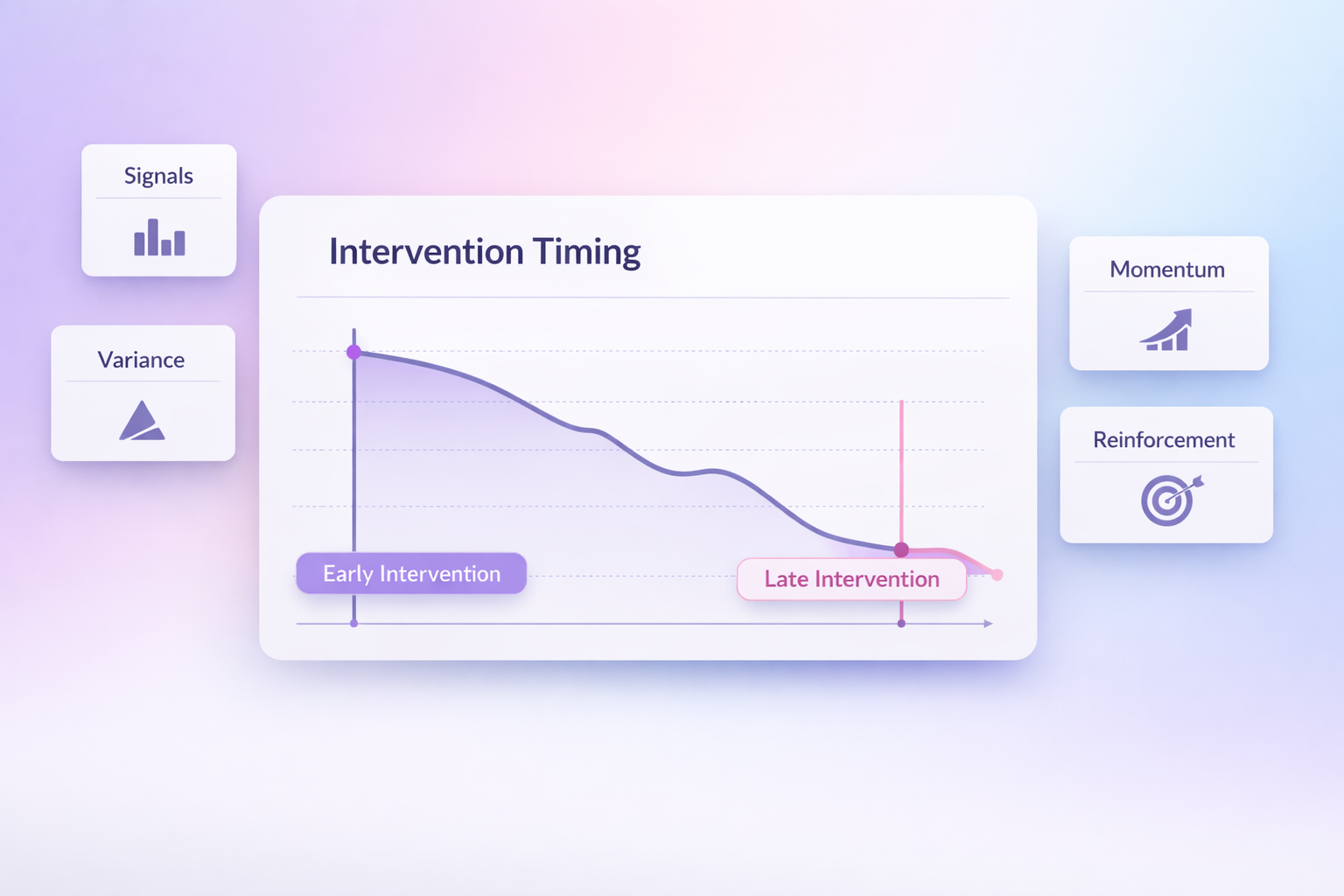
By the time leadership reviews customer satisfaction data, the behavior has already changed, and reversing it requires far more effort than reinforcing it early would have.
The problem wasn’t commitment.
It was late visibility.
Drift is inevitable in complex organizations. The leadership question is not how to prevent it entirely – but how early leaders can see it and intervene while correction is still cheap.
That is the difference between reactive management and execution governance.

Why Traditional Leadership Signals Arrive Too Late
Senior leaders already send signals: town halls, dashboards, reviews, scorecards.
Yet execution still drifts. Why?
Because most leadership signals are episodic and indirect. They rely on:
- Periodic reporting
- Lagging outcomes
- Manager interpretation
- Retrospective explanation
By the time information reaches the executive level, it is filtered, delayed, and framed as justification rather than signal.
What execution stability actually requires is simpler – and harder:
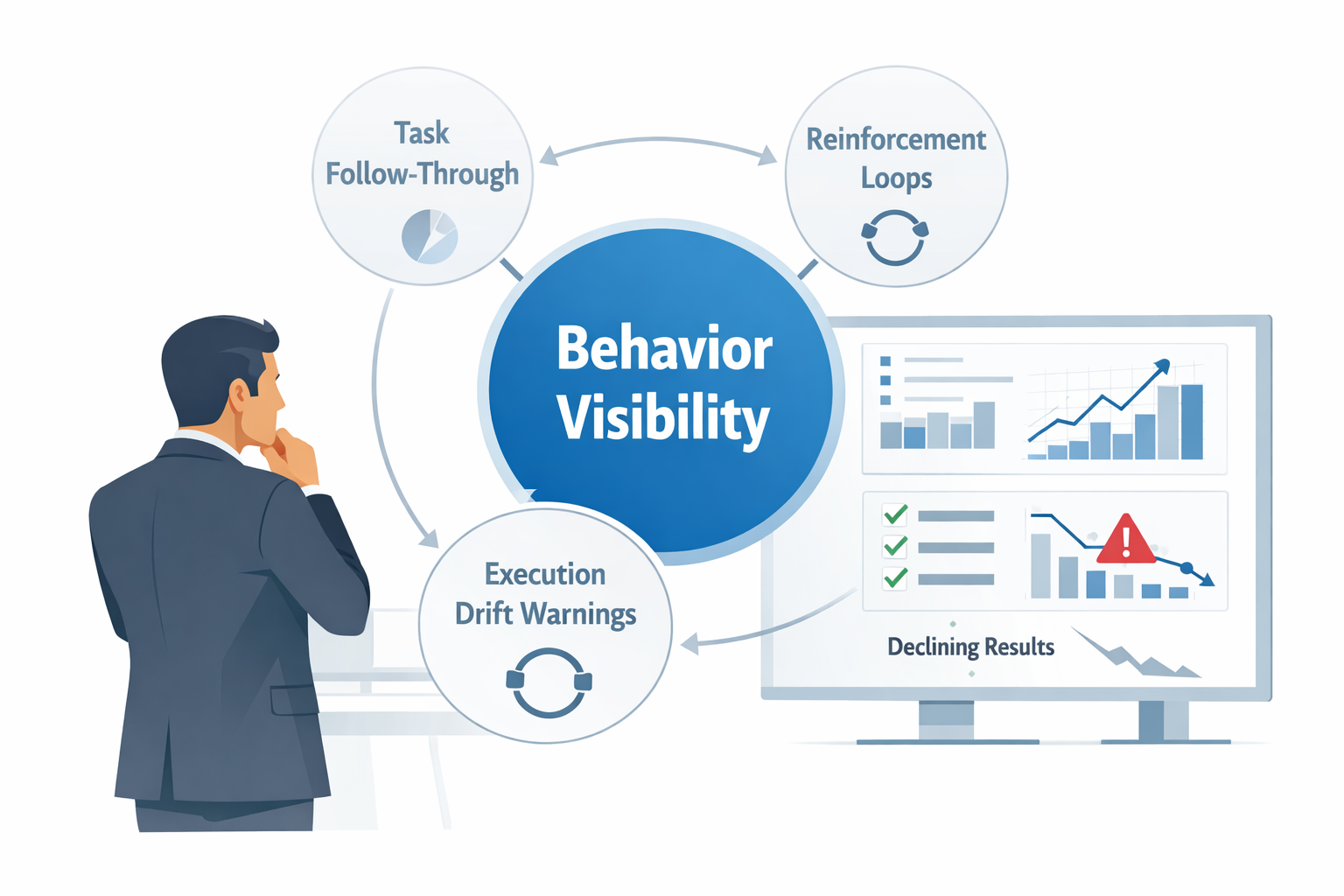
- Visibility into whether critical behaviors are happening
- Signals tied to real workflows, not presentations
- Leadership action before outcomes degrade
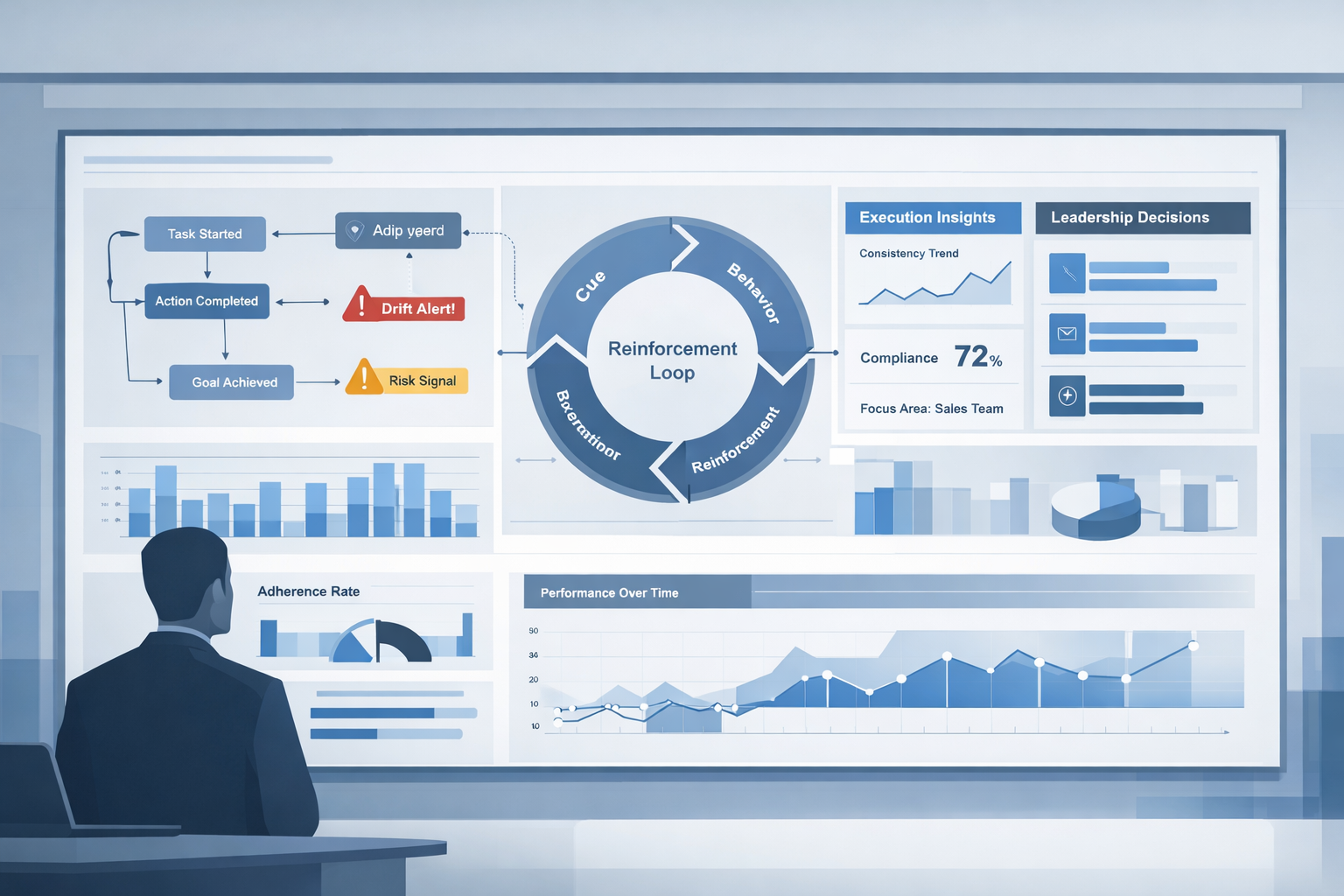
This is where Behavior Analytics for Execution matters – not as a measurement exercise, but as a leadership system.
Its purpose is not to evaluate people.
Its purpose is to help leaders answer three questions clearly and early:
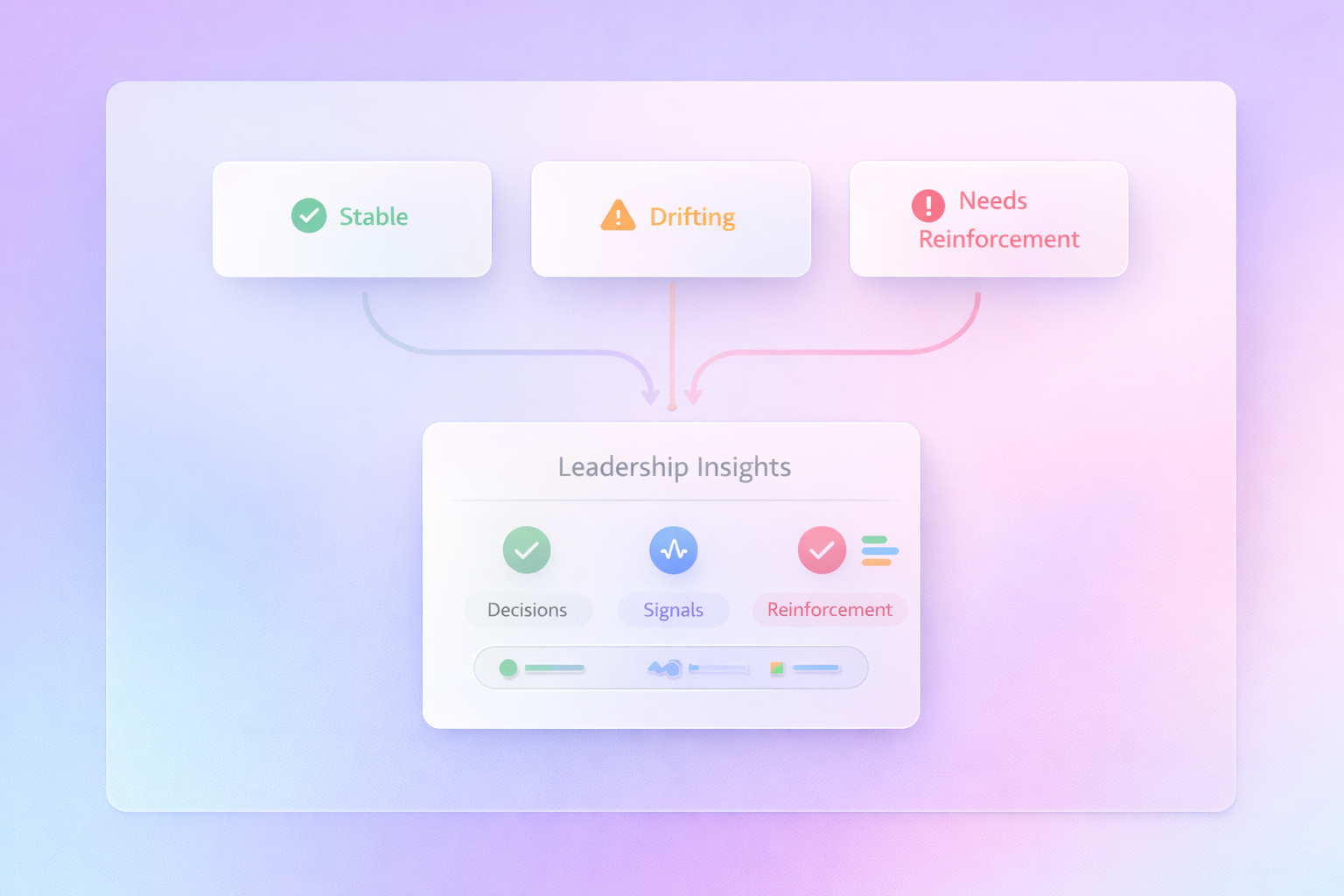
- Where is execution drifting from agreed decisions?
- Which behaviors matter most to stabilize outcomes?
- Where should leadership intervene now to prevent future failure?
If analytics does not directly inform a leadership decision, it is noise.
Governing Execution Through Visibility and Reinforcement

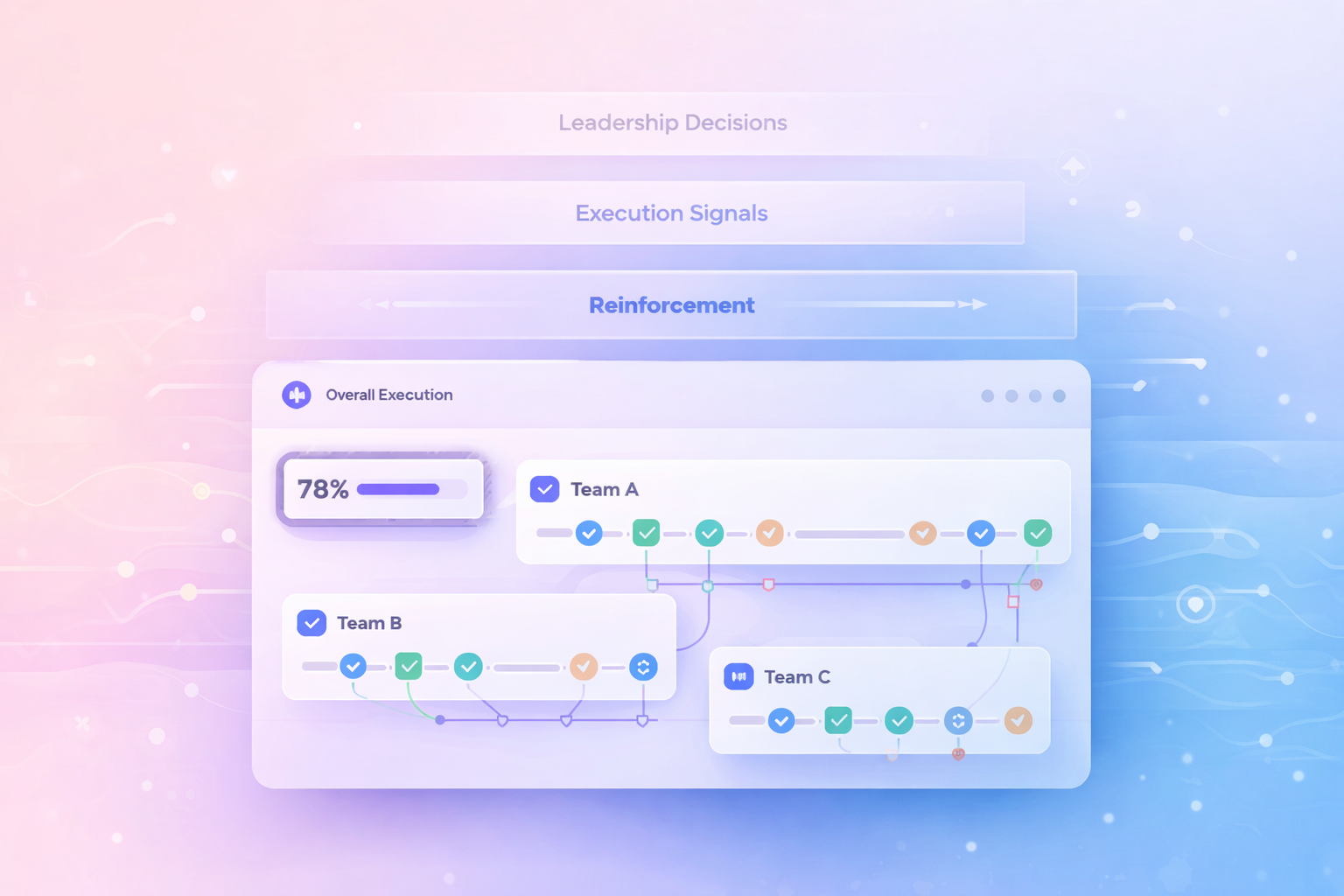
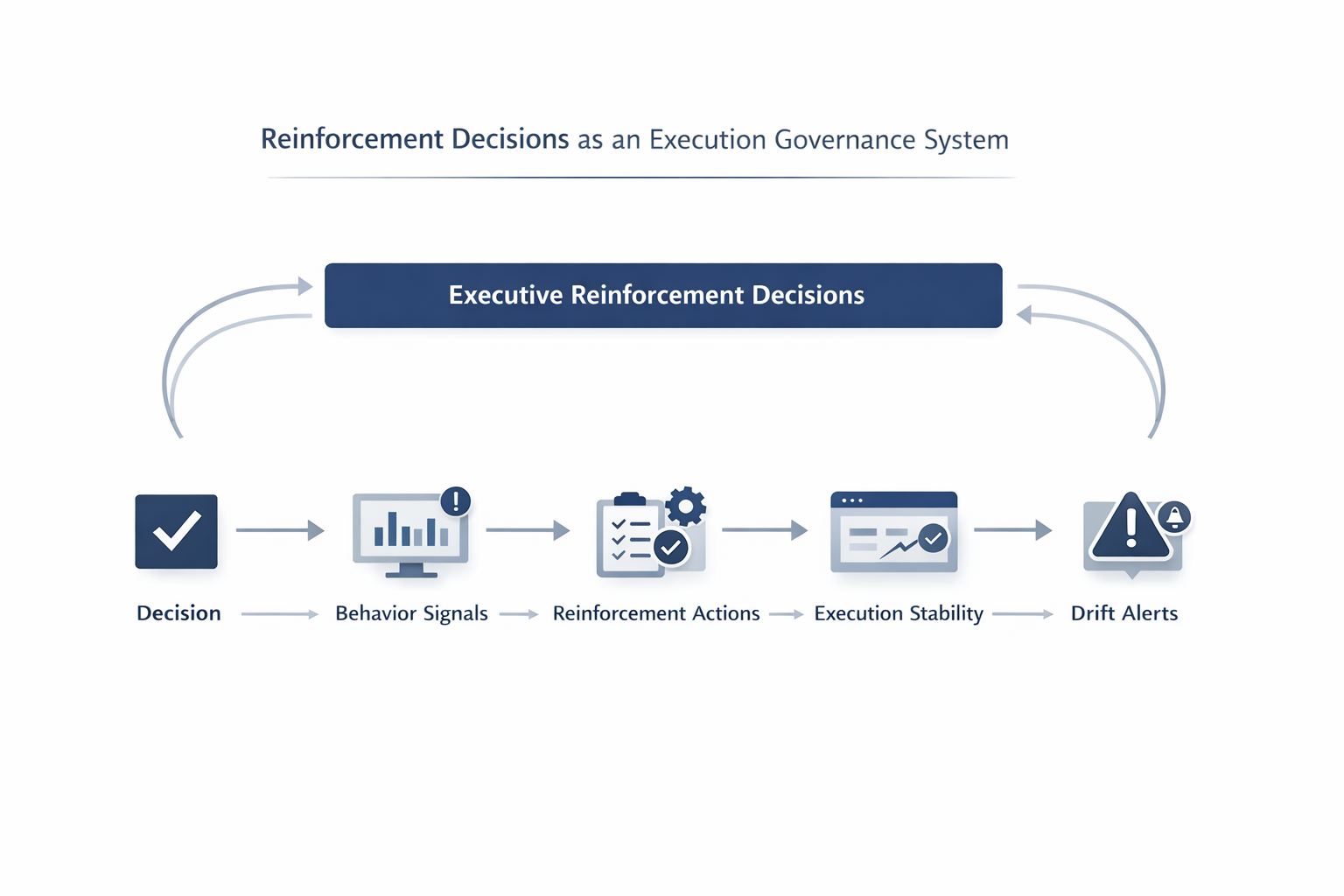
Execution governance works as a loop, not a dashboard.
Leaders define what must reliably happen for the strategy to succeed.
Signals emerge from daily work showing where follow-through weakens.
Leaders decide when and how to reinforce – before drift hardens into habit.
This is where triggers play a critical role.
Triggers are often misunderstood as reminders for individuals. In execution governance, they serve a different purpose:
they tell leaders when attention is needed.
Examples:
- A workflow step consistently delayed during peak cycles
- A handoff repeatedly bypassed under pressure
- A decision rule overridden more often than expected
These signals don’t blame people. They reveal where the system is under stress.
What matters is what leaders do next.
Every trigger should map to a clear leadership action:
- Reinforce this behavior more visibly
- Remove friction from this step
- Clarify expectations under current conditions
- Adjust resources before outcomes suffer
Without that link, signals accumulate and governance collapses into reporting.
Reinforcement, in this context, is not motivation.
It is control.
It shapes what gets attention, what becomes non-negotiable, and what survives when pressure rises.
Reinforcement can include process redesign, decision clarification, resource shifts, or visibility – not rewards or punishments.
Habits form downstream of reinforcement. Treating habits as the starting point leads to coaching and training cycles. Treating reinforcement as the lever stabilizes execution at scale.
The Distinct Roles of CHROs and COOs
For CHROs, execution governance is not about programs. It is about ensuring leadership decisions survive contact with reality.
This means defining which behaviors are execution-critical, ensuring signals reflect real work, and preventing drift from becoming culturally acceptable.
For COOs, execution governance provides early visibility into operational stress and a way to intervene without micromanaging. Instead of firefighting outcomes, COOs manage execution conditions.
Both roles shift from chasing performance to protecting reliability.
The Final Shift
Organizations rarely fail because they can’t perform at their peak.
They fail because baseline execution becomes unreliable.
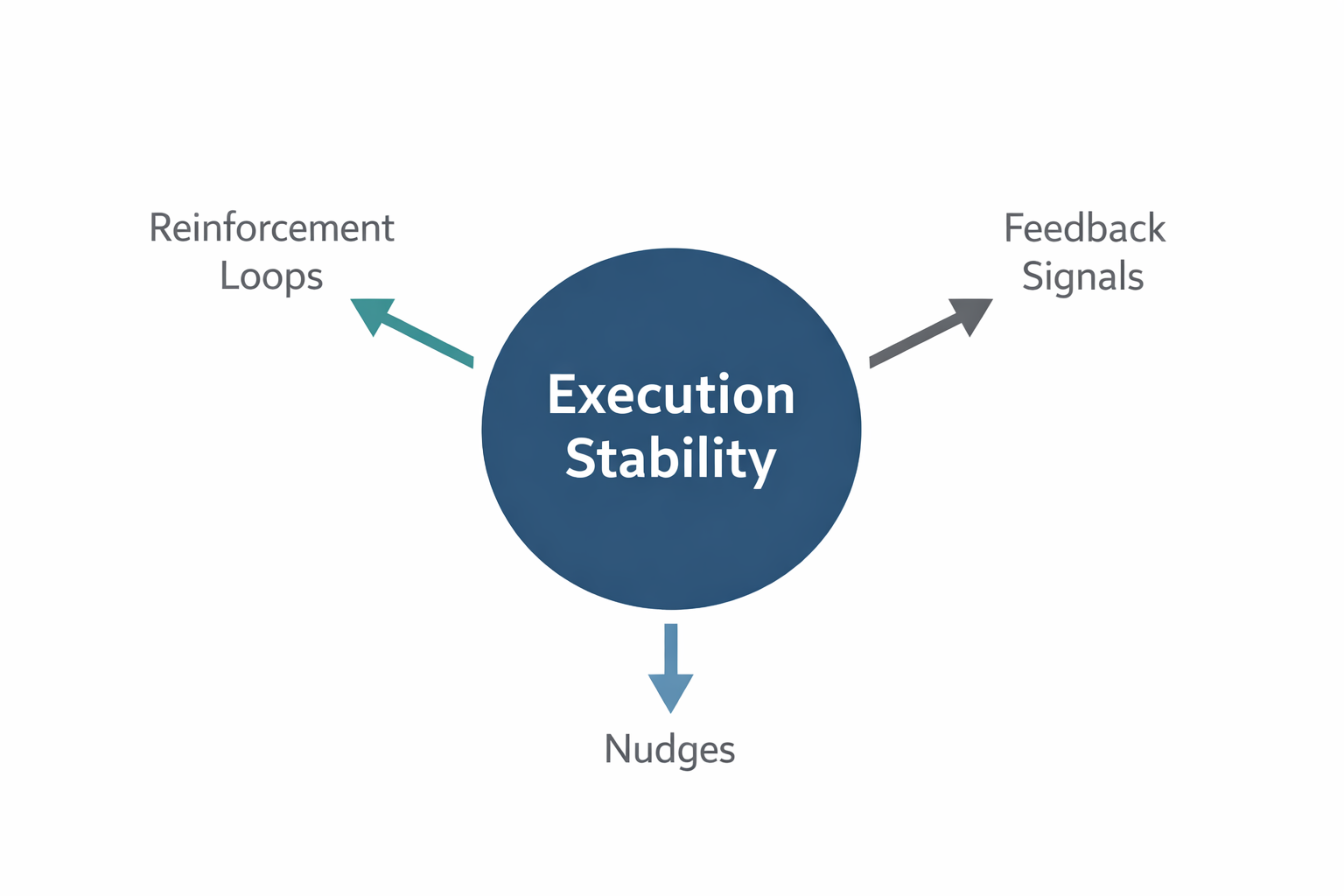
Execution stability means decisions survive attention shifts.
Critical behaviors hold under pressure.
Follow-through is predictable, not heroic.
Behavior Analytics for Execution provides the visibility.
Reinforcement provides the control.
Leadership decisions provide the stability.
When these align, strategy stops decaying into suggestion.
And that is where leadership truly begins –
not at the moment of decision,
but at what still happens months after everyone stops talking about it.
You have not enough Humanizer words left. Upgrade your Surfer plan.