skip to Main Content


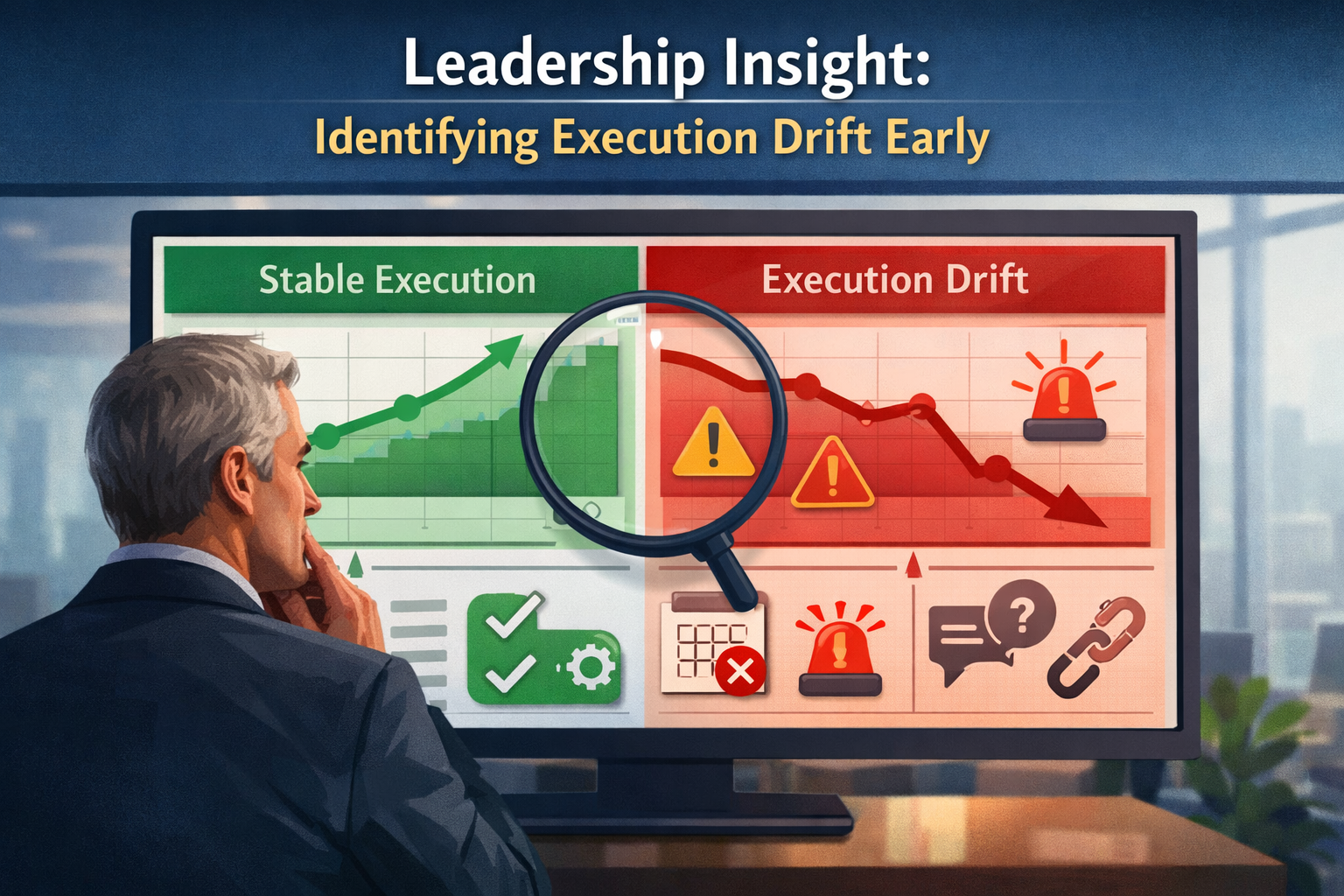
Execution Doesn’t Collapse – It Quietly Drifts
Most strategies don’t fail because they were wrong.
They fail because the right decision slowly loses force after attention moves on.
A decision is approved.
The priority is communicated.
Everyone aligns.
For a few weeks, execution looks solid.
Then operations take over. Inboxes fill. Competing objectives reappear. Managers stop explicitly reinforcing the decision. Teams adapt locally. Small deviations accumulate.
Nothing breaks dramatically.
But follow-through softens.
By the time leaders notice underperformance, execution has already drifted far enough that fixing it becomes expensive, political, and disruptive.
This is the leadership problem Intervention Timing exists to solve.
Not what leaders decide –
but when they step in to preserve execution stability before drift turns into failure.
Why Leaders Intervene Too Late (And Why It’s Not a People Problem)
Execution drift is rarely about motivation.
People don’t suddenly stop caring.
Drift happens because the system changes:
- Competing signals enter day-to-day work
- Reinforcement weakens as attention shifts
- Local optimizations override enterprise intent
- Feedback arrives too late to matter
Consider a simple, familiar example.
A COO introduces a new escalation protocol to reduce customer-impacting delays. For the first month, response times improve. Leaders mention it in meetings. Managers reinforce handoffs.
By month two, escalation mentions disappear from reviews. Middle managers focus on throughput targets. Teams still “follow the protocol,” but with small shortcuts. Response times begin to vary across units.
Nothing looks broken on dashboards.
Revenue is fine. SLAs are technically met.
By the time delays show up in customer metrics, the behavior has already normalized – and correcting it now requires retraining, escalation, and political friction.
The issue wasn’t effort.
It was timing.
Leaders didn’t intervene when execution was still stable and recoverable. They intervened after drift had hardened.
This is why late interventions feel heavy.
And early ones feel almost invisible.
Intervention Timing Is a Leadership Capability, Not a Reminder System
Intervention Timing is often misunderstood as a behavioral tactic – reminders, nudges, or habit formation.
That framing misses the point.
Intervention Timing is a leadership governance capability. It determines whether leaders act while execution is still aligned – or only after alignment has already broken.
There are only two types of intervention:
Stabilizing Interventions (Early)
- Small and targeted
- Structural rather than performative
- Low-friction
- Often unnoticed by most of the organization
Recovery Interventions (Late)
- Broad and disruptive
- Politically sensitive
- Attention-heavy
- Commonly reframed as “change initiatives”
Timing determines which type leaders are forced into.
Most leaders don’t delay because they hesitate.
They delay because they lack visibility.
What Leaders Need to See – Before Outcomes Decline

Outcome metrics confirm failure after it has already occurred.
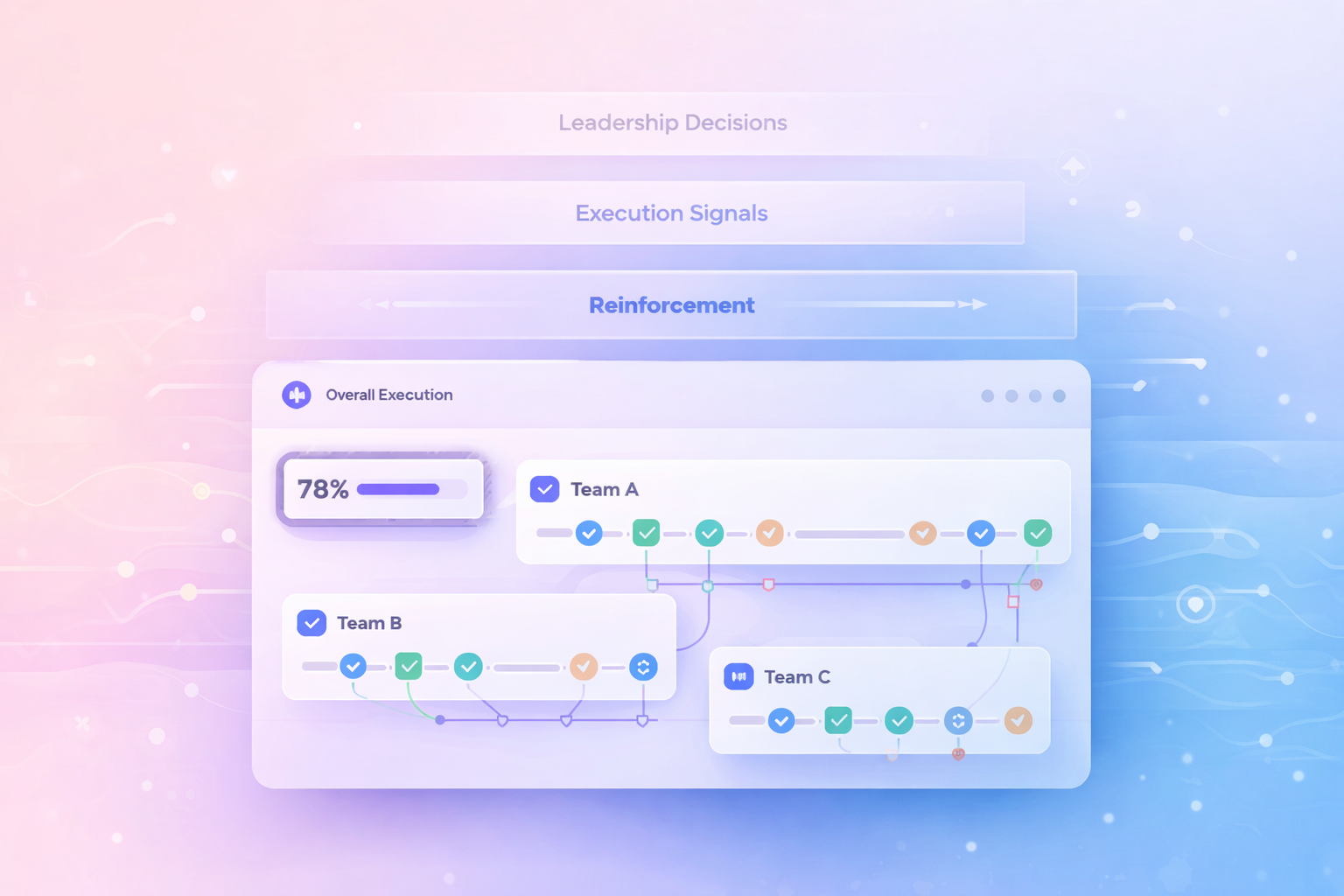
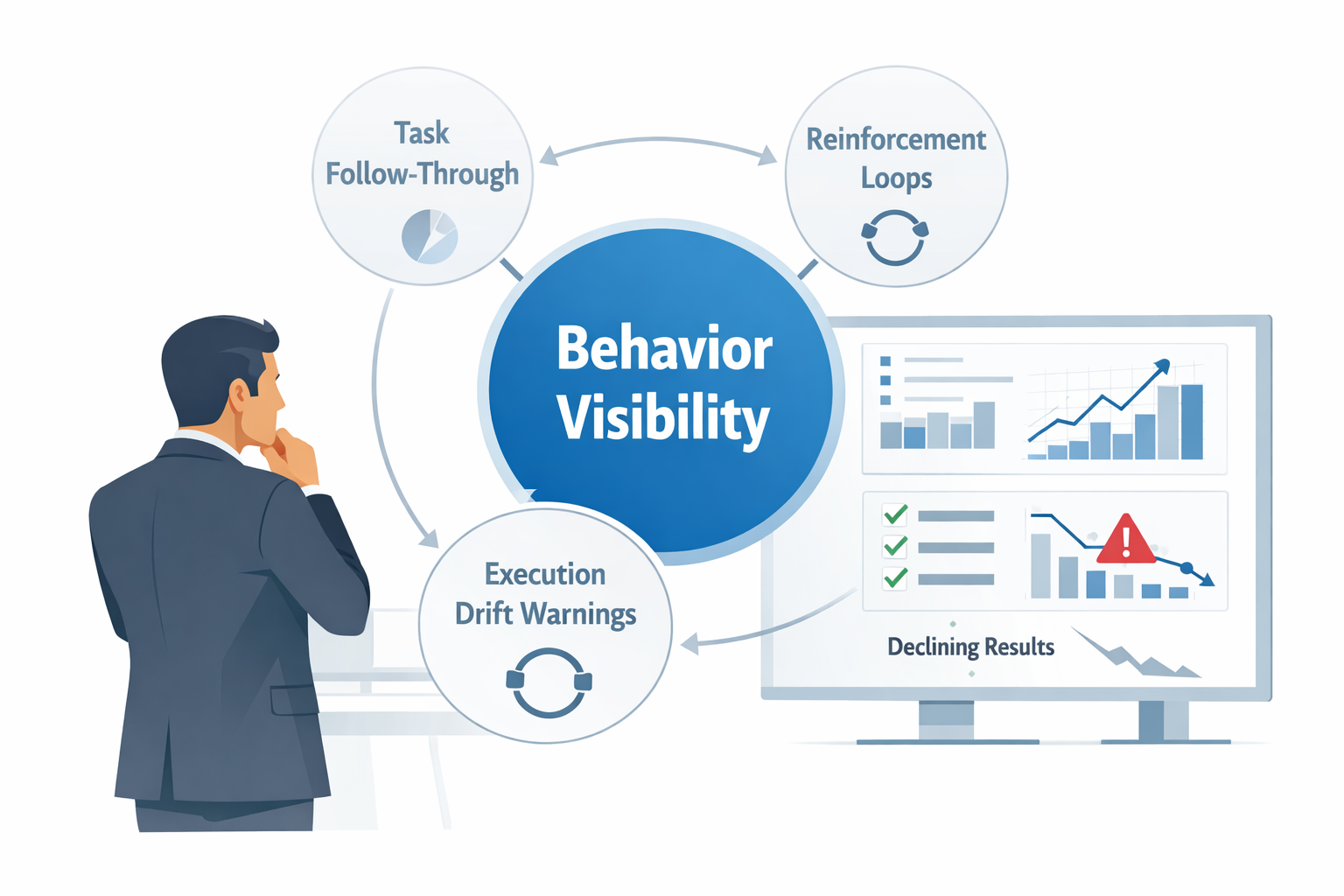
Intervention Timing depends on earlier execution signals, such as:
- Consistency of Critical Actions
Are the agreed behaviors still happening at the expected cadence? - Variance Between Units
Are some teams quietly drifting while others remain stable? - Momentum Over Time
Is follow-through holding – or slowly eroding?
These signals don’t require micromanagement.
They require system-level visibility into how execution is actually unfolding.
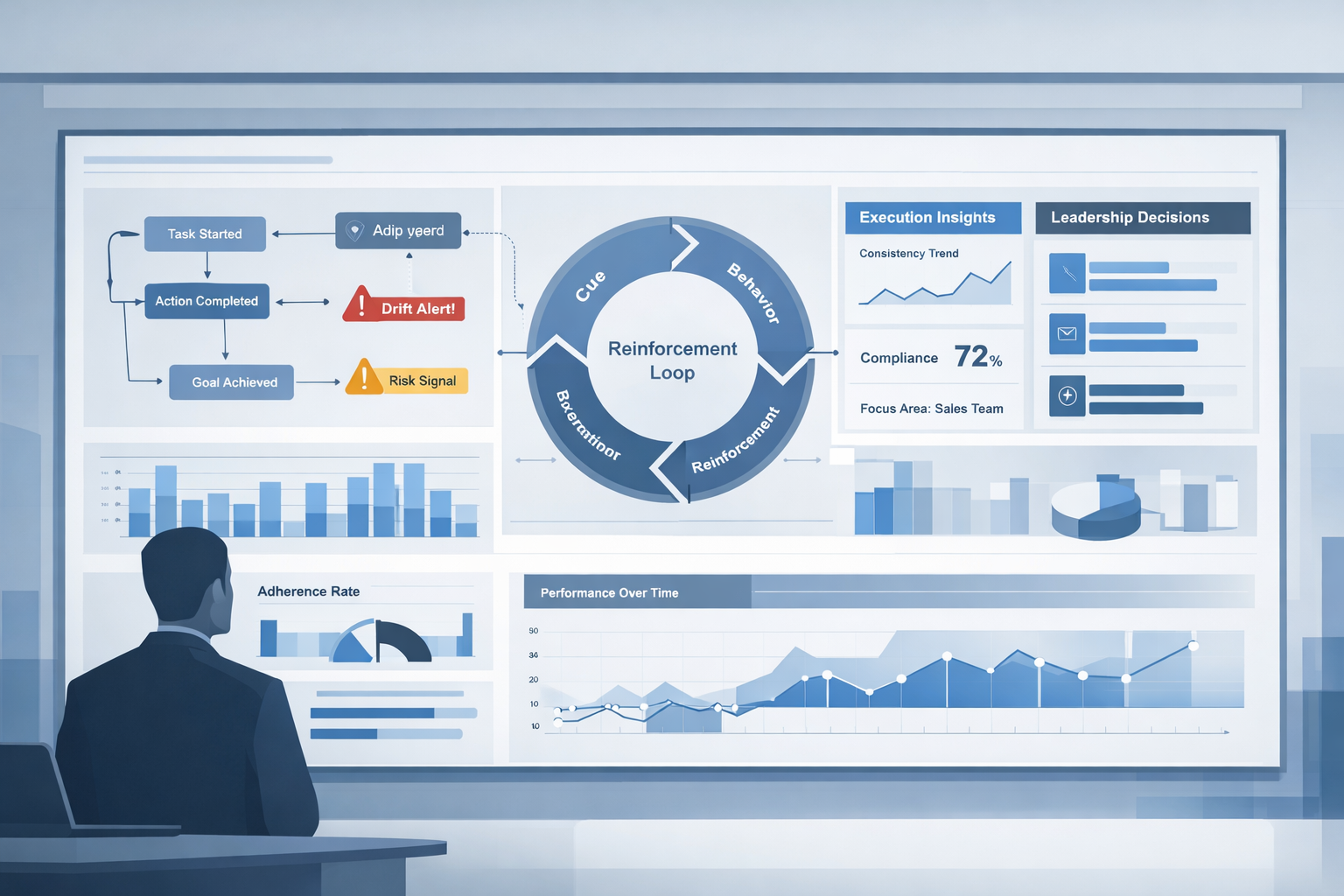
This is where Behavior Analytics for Execution matters.
Not to monitor people –
but to make execution drift visible early, while intervention is still cheap and stabilizing.
Why Measurement Isn’t the Goal

Measurement alone doesn’t fix execution.
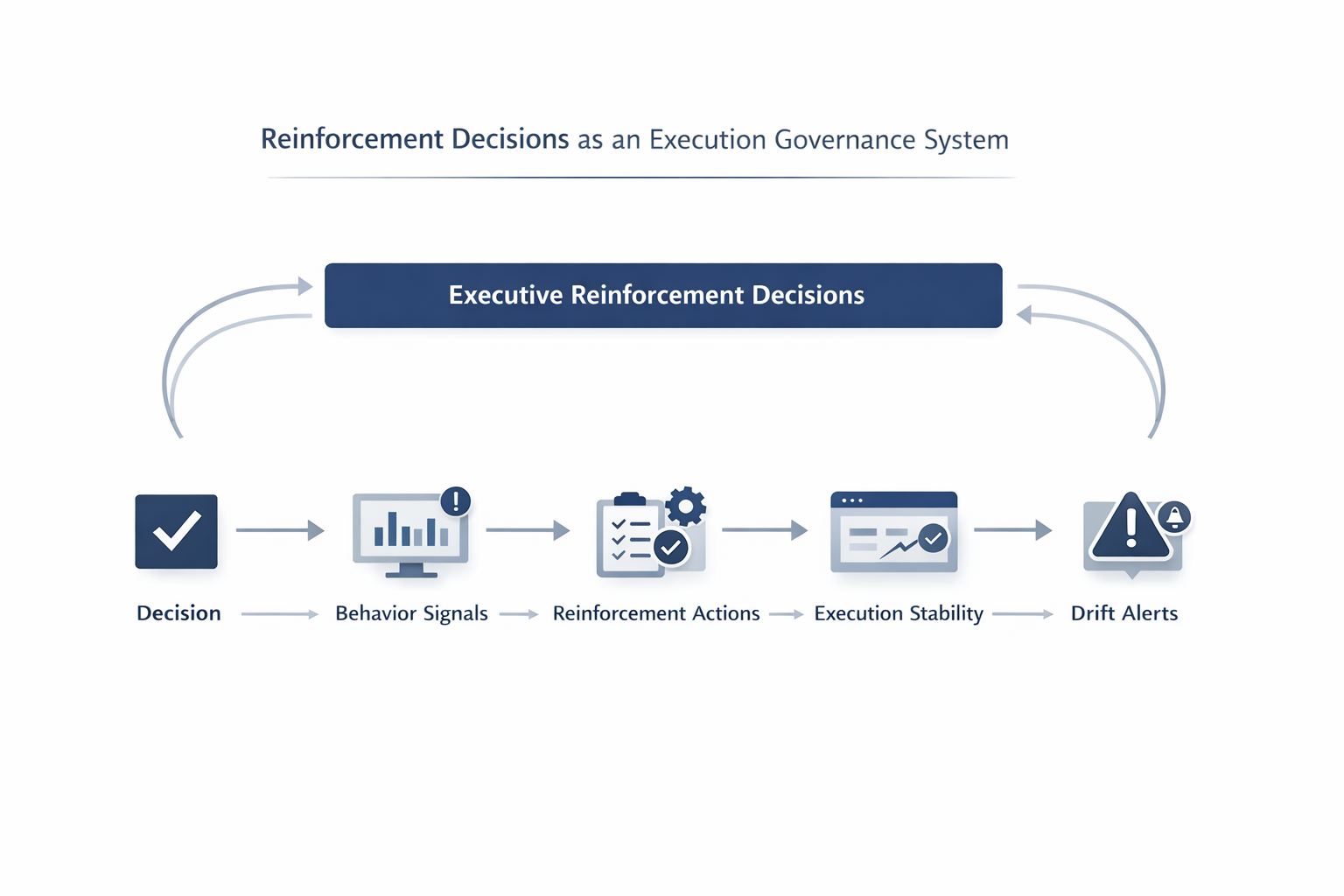
In effective execution governance:
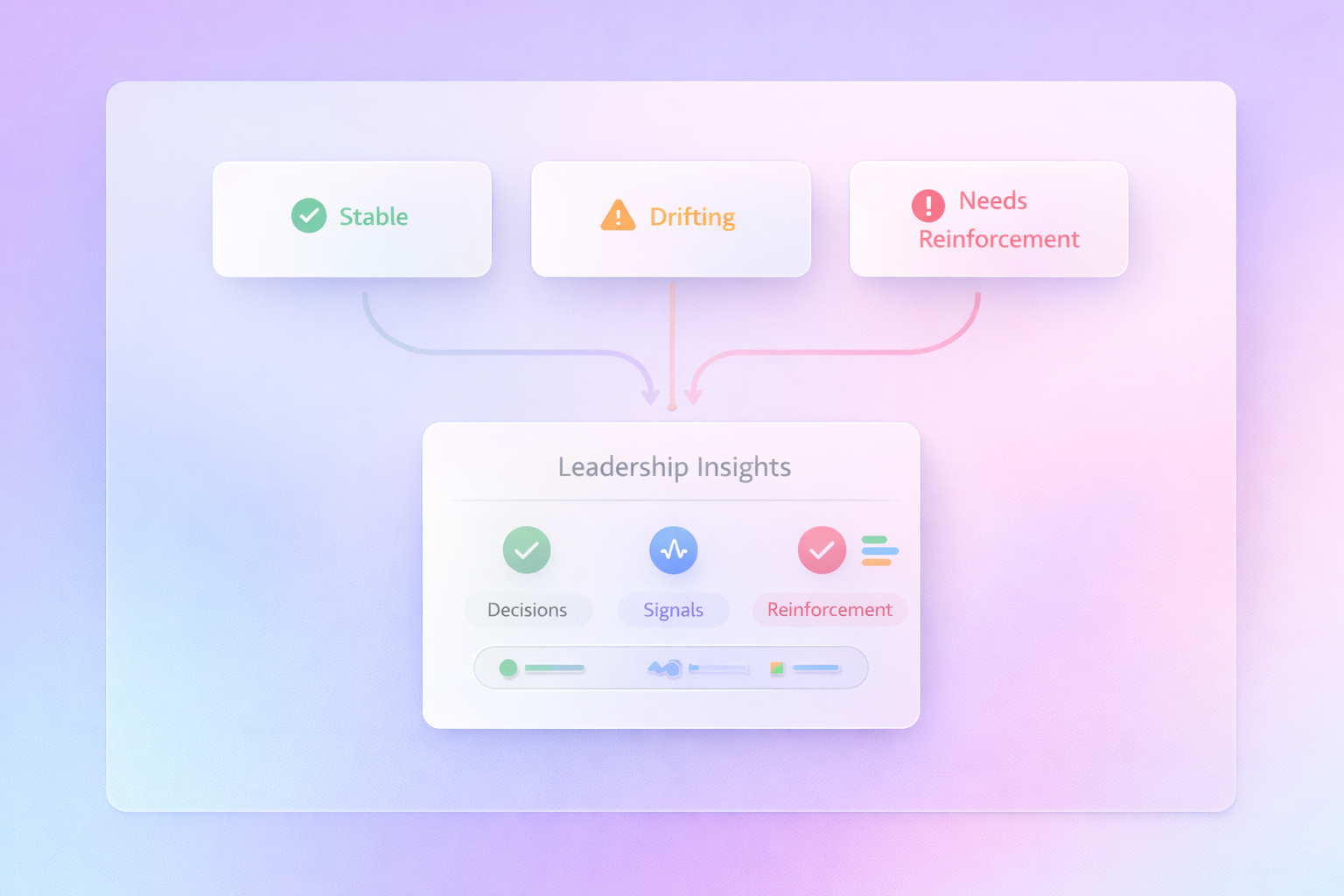
- Measurement detects early deviation
- Insight interprets drift risk
- Leadership decides whether to intervene
- Reinforcement stabilizes follow-through
Measurement serves leadership judgment.
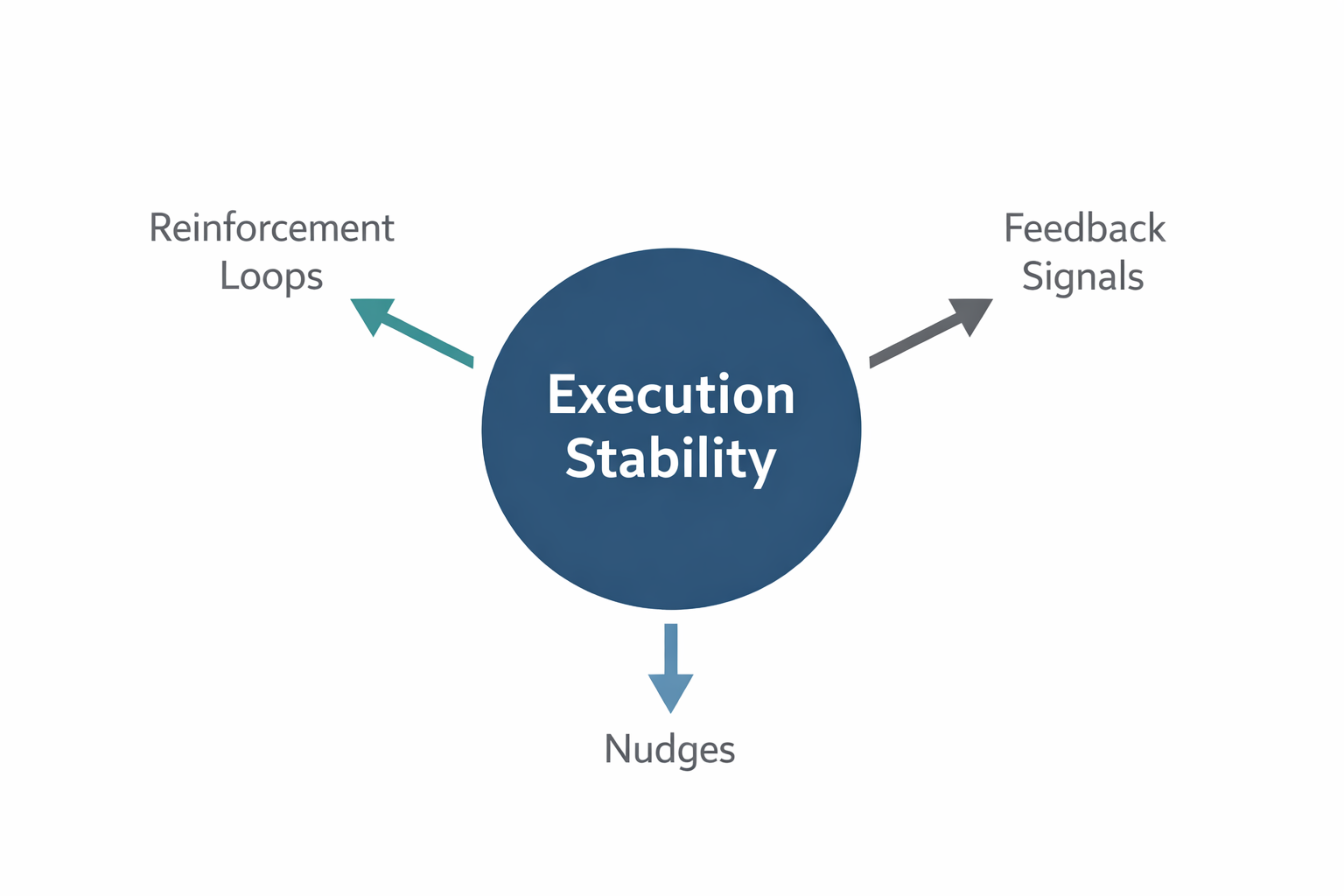
Execution stability is the objective.
Without reinforcement, intervention is noise.
With reinforcement, intervention becomes durable.
The Hidden Cost Curve of Delay
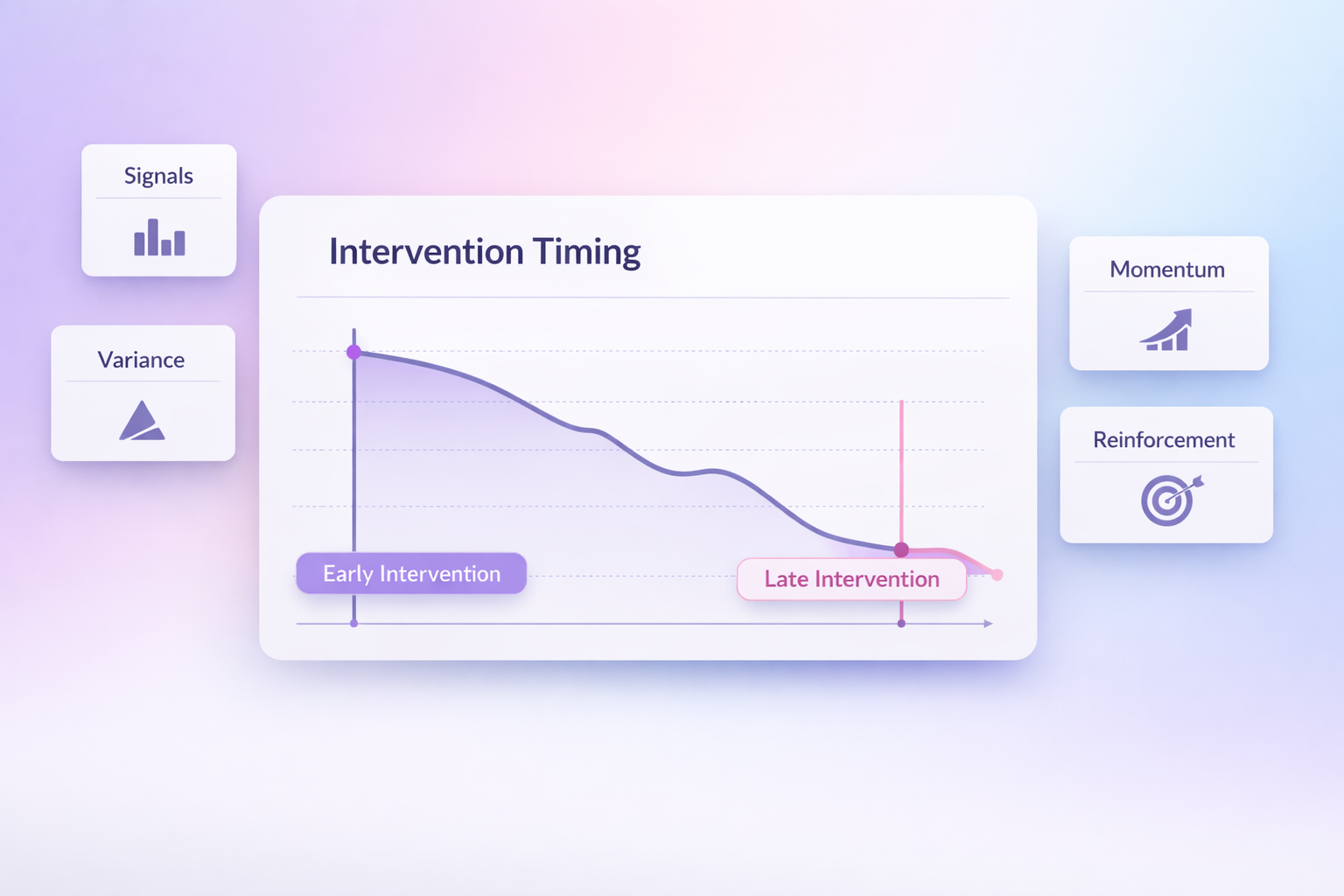
Execution drift is nonlinear.
Small deviations early are easy to correct.
The same deviations later require disproportionate effort.
Delays increase:
- Coordination cost
- Resistance
- Communication overhead
- Loss of credibility
Intervention Timing exists to keep leaders on the low-cost side of this curve – where action stabilizes rather than disrupts.
Leadership Begins After the Decision
The most dangerous phase of execution is after agreement.
Before decisions, debate is visible.
After decisions, drift is invisible.
Intervention Timing operates in this gap – between decision and outcome.
It protects:
- Strategic intent
- Capital allocation
- Organizational focus
- Leadership credibility
This is not about driving peak performance.
It is about reliable execution under real conditions: limited attention, competing priorities, and operational noise.
Final Thought
Most leadership frameworks focus on decision quality.
Behavior Analytics for Execution focuses on decision durability.
Intervention Timing is how leaders ensure decisions continue to shape reality long after the meeting ends.
Execution rarely collapses.
It erodes.
And leadership is deciding when to act – before erosion becomes failure.