skip to Main Content
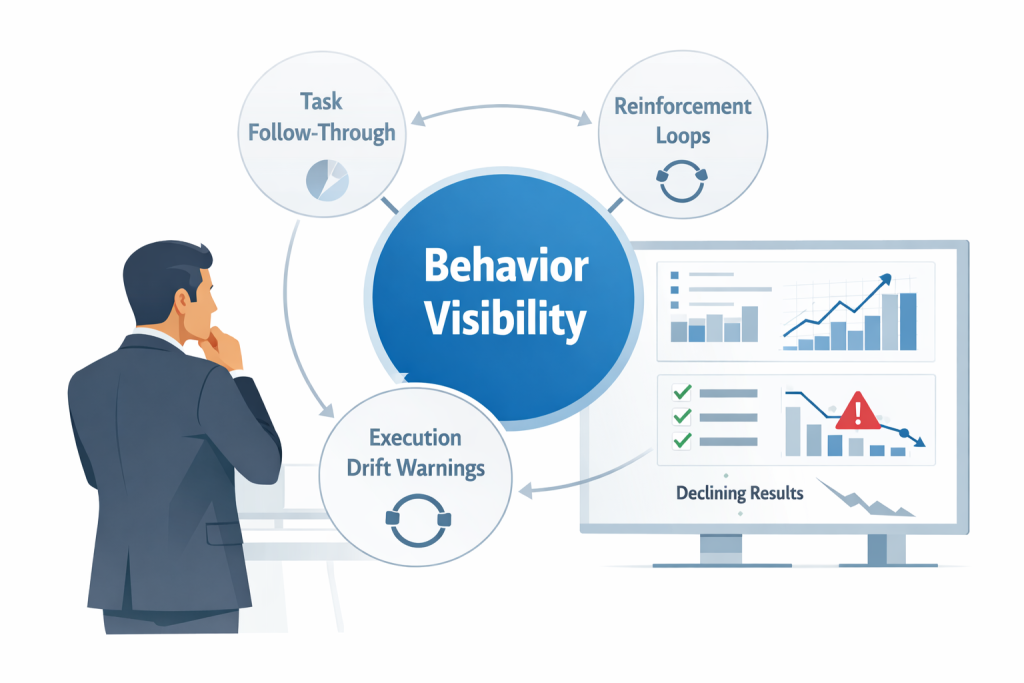

Executives rarely lose sleep because dashboards look bad.
They lose sleep because something feels off – even when dashboards still look fine.
A strategy that looked promising begins to stall.
Execution feels slower.
Decisions don’t translate into consistent follow-through.
People nod in meetings – but momentum fades afterward.
By the time revenue drops, customers churn, or delivery timelines slip, the underlying execution drift has already been happening for months.
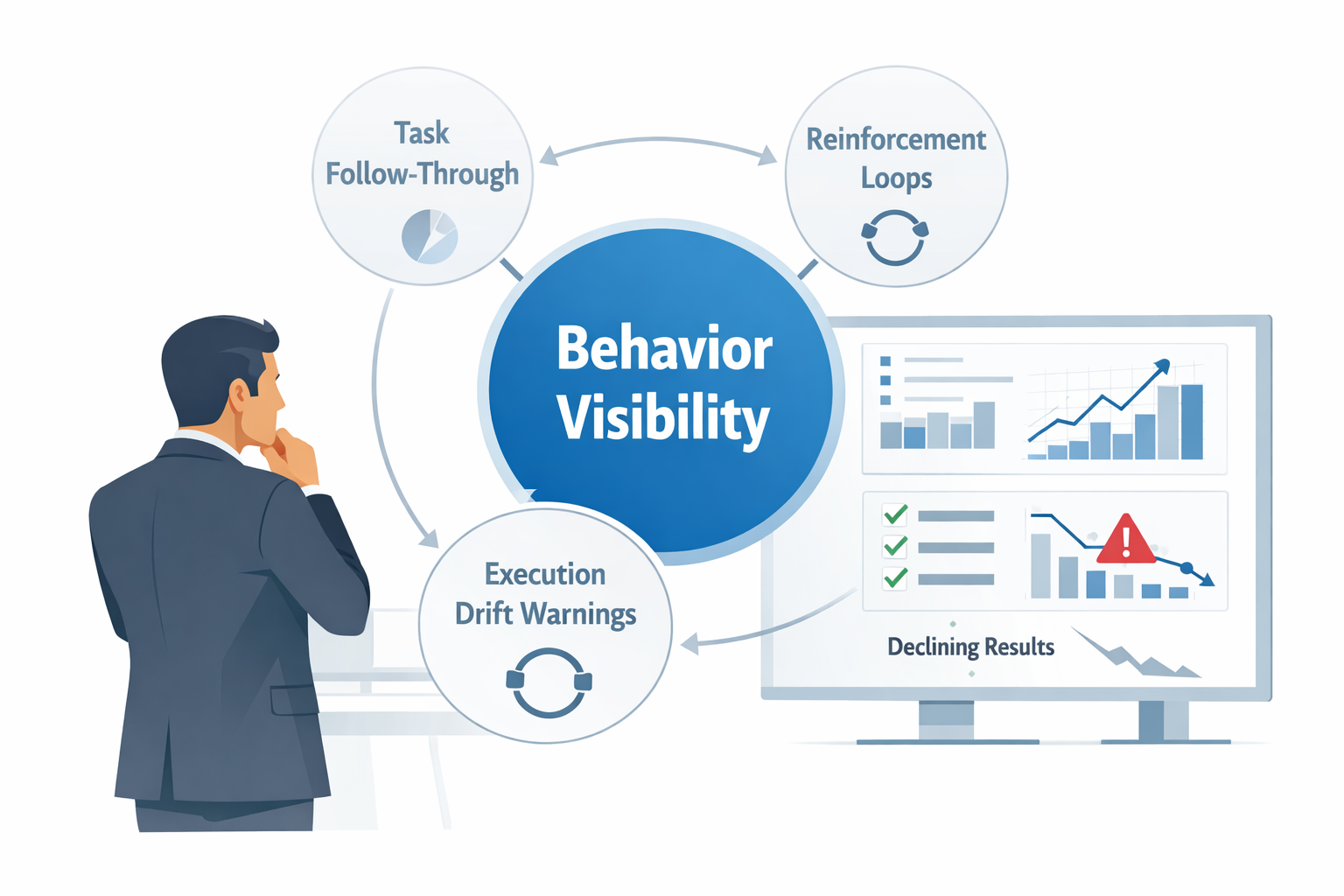
That gap – the gap between when behavior changes and when metrics decline – is the reason Behavior Visibility matters.
Behavior Visibility is not about monitoring people or policing effort.
It is about giving leaders early signals about:
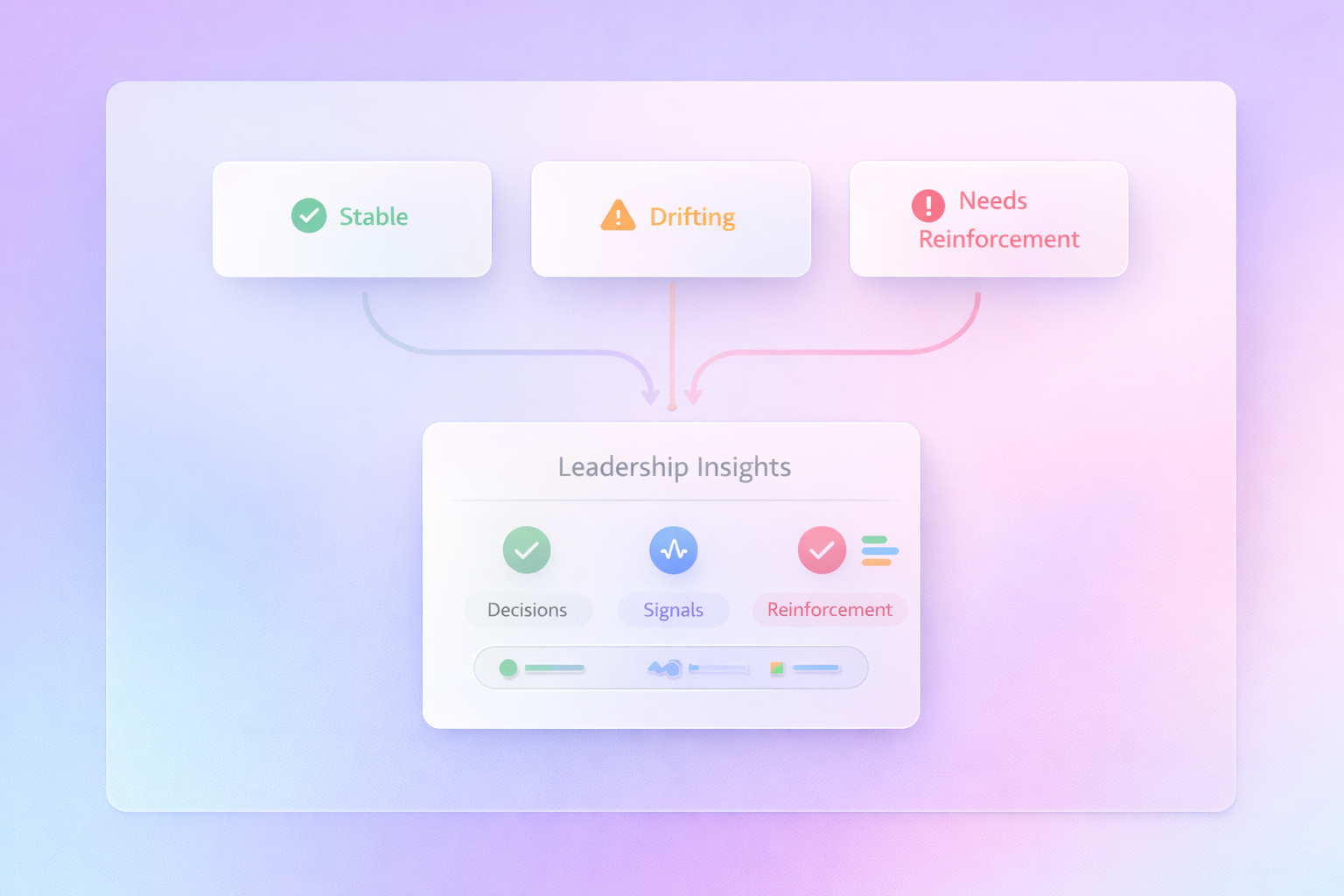
- where execution is drifting
- where reinforcement is weak
- where initiatives are losing energy
- where decisions are not translating into follow-through
In other words:
Behavior Visibility allows leadership to see execution before results decline.
And in modern organizations, that visibility is no longer optional.
Platforms like GWork are built around this idea – not as HR tools, not as habit trackers, but as systems that help leaders govern execution stability across complex, constantly changing environments.
Before we go deeper, let’s align on what Behavior Visibility really means – and what it absolutely does not mean.
Executive Summary
For busy leaders, here’s the core argument in 30 seconds:
- Results decline late – behavior drifts early – Waiting for metrics means reacting after damage accumulates.
- Dashboards don’t reveal execution reality – They summarize outcomes, not the behaviors that produce them. That’s why leaders must understand lagging vs leading indicators.
- Behavior Visibility gives leaders early-warning signals – Drift becomes visible long before performance declines.
- Reinforcement systems stabilize follow-through – Training, nudges, or reminders alone do not hold execution together.
Organizations that see behavior early govern execution, rather than constantly reacting to failure after the fact.
What Behavior Visibility Really Means (And Why It Matters Now)
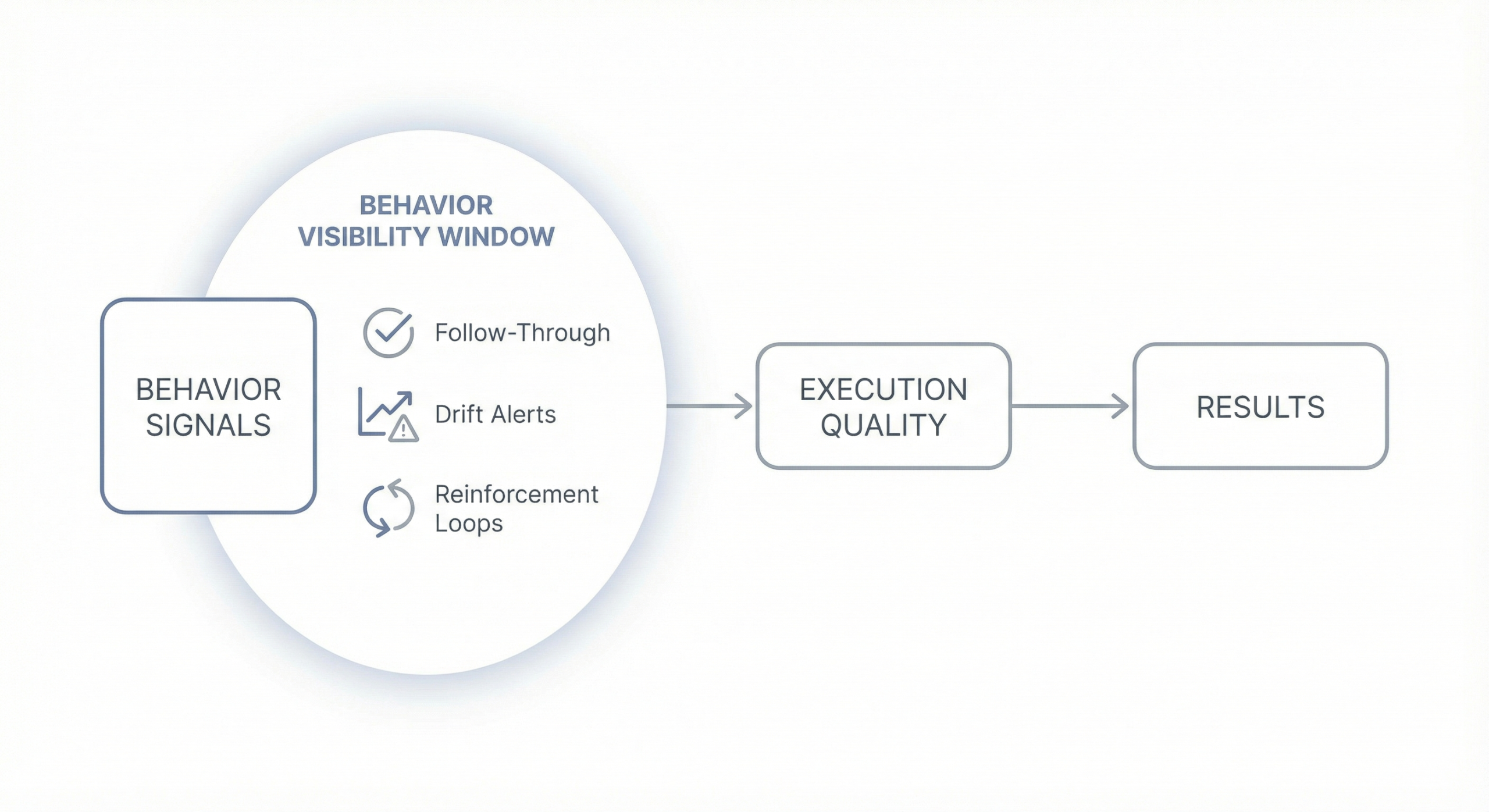
Let’s define it clearly.
Behavior Visibility is the ability for leadership to see:
- whether key execution behaviors are happening
- where they are breaking down
- whether reinforcement is stabilizing behavior
- where drift is beginning before results change
This is not HR analytics.
It’s not engagement scoring.
It’s not productivity surveillance.
And it is definitely not about motivating people more.
Behavior Visibility sits inside a larger strategic discipline:
Behaviour Analytics for Execution
Meaning:
- Leaders make strategic decisions
- Those decisions depend on consistent execution
- Reinforcement systems stabilize execution over time
- Measurement simply gives leaders visibility to govern it
Without behavior visibility, leaders are flying blind.
They rely on lagging outcomes – and by the time they see failure, the underlying behavior drift is deeply embedded.
The Problem: Results Decline Long After Behavior Has Drifted
This is the core leadership problem.
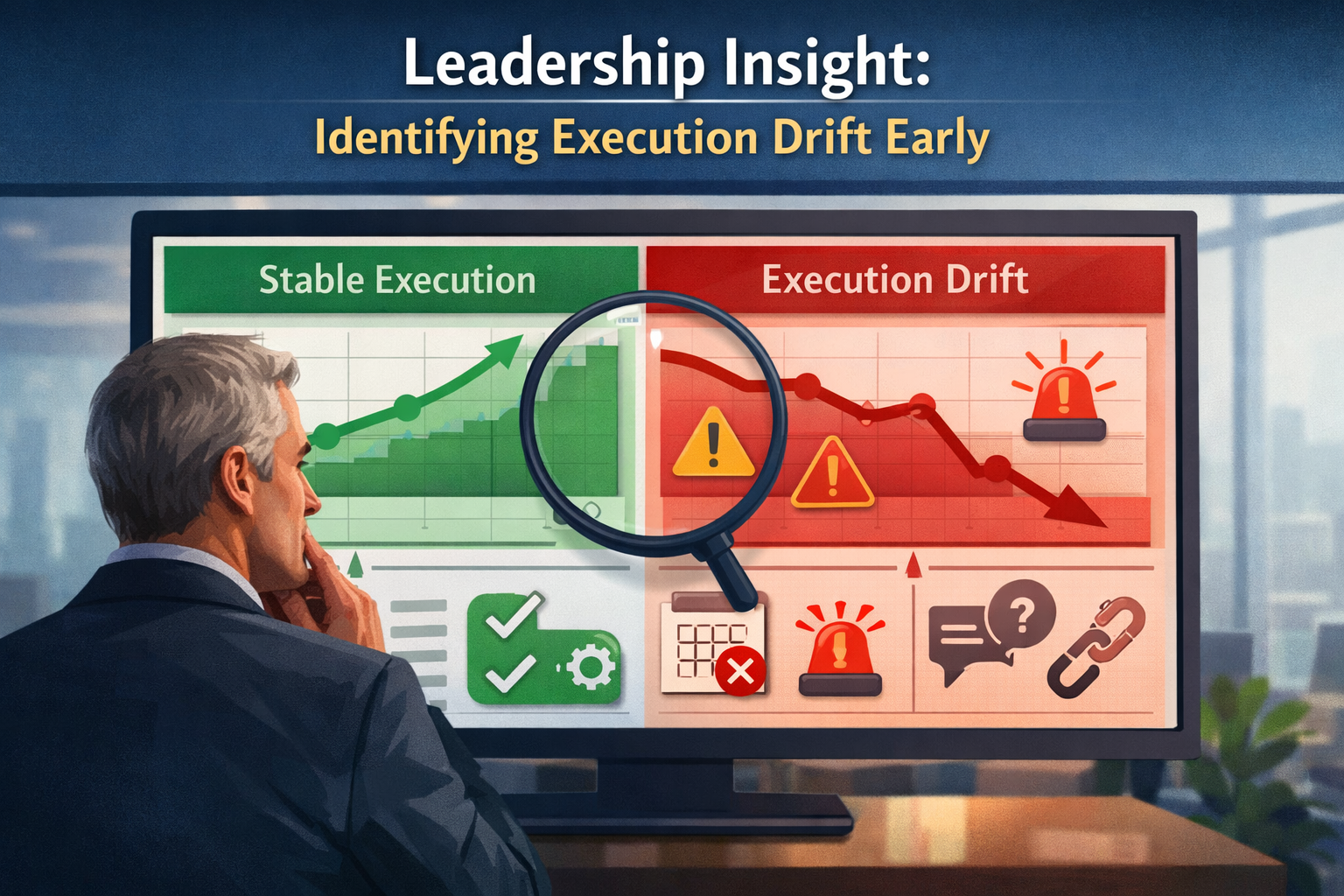
Execution drift always happens in behavior first:
- follow-through becomes inconsistent
- systems are bypassed “just this once”
- shortcuts get normalized
- priorities compete silently
- energy drops around initiatives
But dashboards only show:
- revenue declines
- defect rates rise
- cost overruns
- missed timelines
- churn
- engagement drops
Those outcomes lag reality.
Which means leadership ends up reacting instead of governing.
Think about any large initiative:
Digital transformation.
Pricing changes.
CRM adoption.
Sales process upgrades.
Customer experience redesign.
Early signals are always behavioral:
- key rituals no longer happening
- leaders reinforcing the wrong priorities
- teams reverting to old processes
- decision fatigue replacing clarity
But none of that appears in dashboards.
That’s why organizations often say:
“We had no idea things were this bad until it was too late.”
It wasn’t invisible.
It was simply unmeasured.
Behavior Visibility vs Traditional Dashboards
Traditional dashboards answer:
What happened?
Behavior Visibility answers:
What is starting to drift – and where should leadership intervene?
Let’s draw a simple contrast.
Traditional Dashboards Show:
- KPIs
- lagging metrics
- historical outcomes
- performance summaries
- problem reports after the fact
They are backward-looking.
Behavior Visibility Shows:
- whether key behaviors are happening
- where reinforcement is weak
- where initiatives lose follow-through
- early indicators of drift
- signals before performance declines
It is forward-looking.
This is why organizations using platforms such as GWork don’t wait for financial damage to realize execution drift has already taken root.
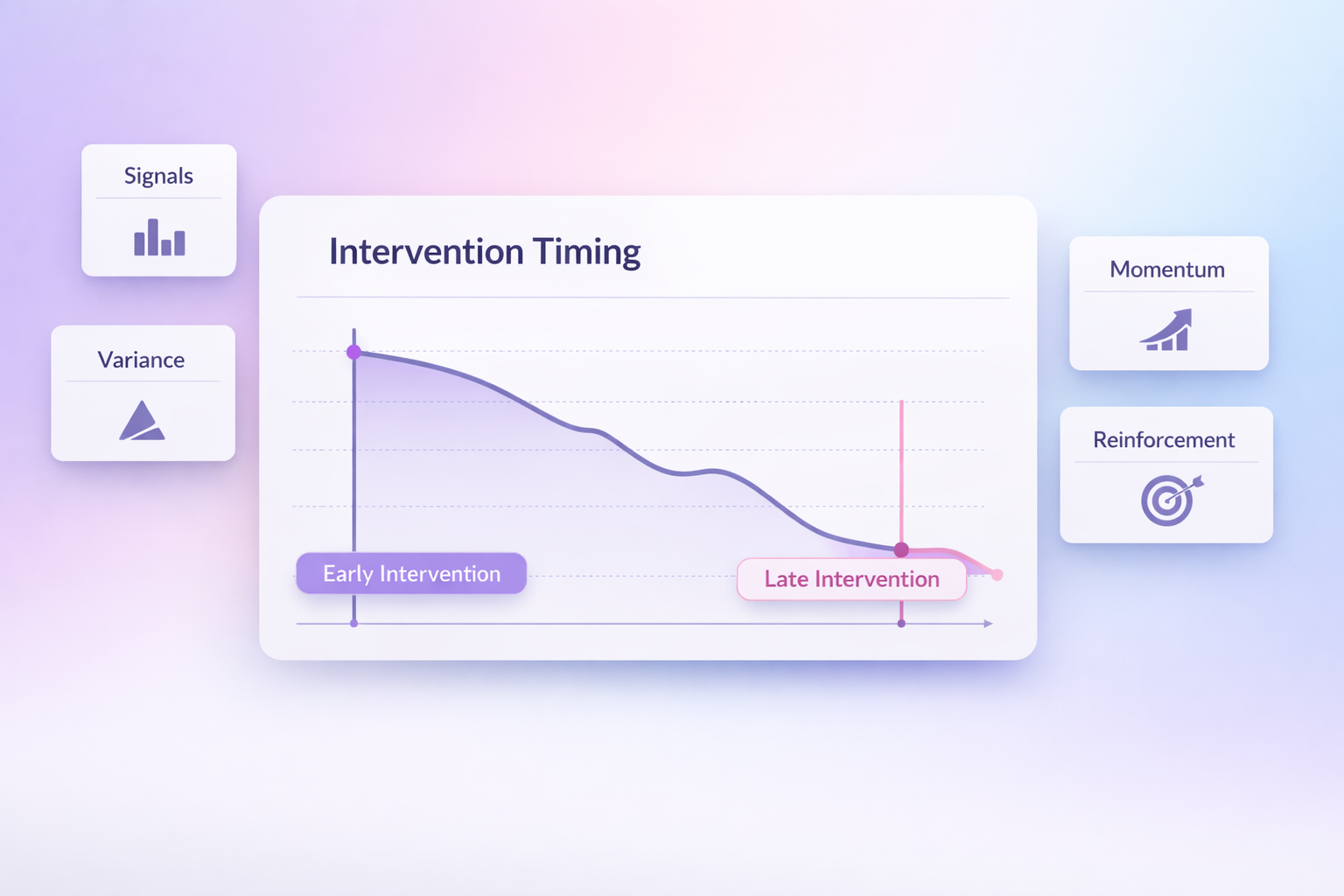
They see drift early, while it is still small, local, and correctable.
Behavior Visibility Inside Behaviour Analytics for Execution
To keep the category language disciplined:
Behaviour Analytics for Execution is the system.
Inside it:
- Leadership governs execution
- Measurement reveals drift
- Reinforcement stabilizes behavior
- Habits function as execution units
- Nudges are supportive, not central
Behavior Visibility belongs here:
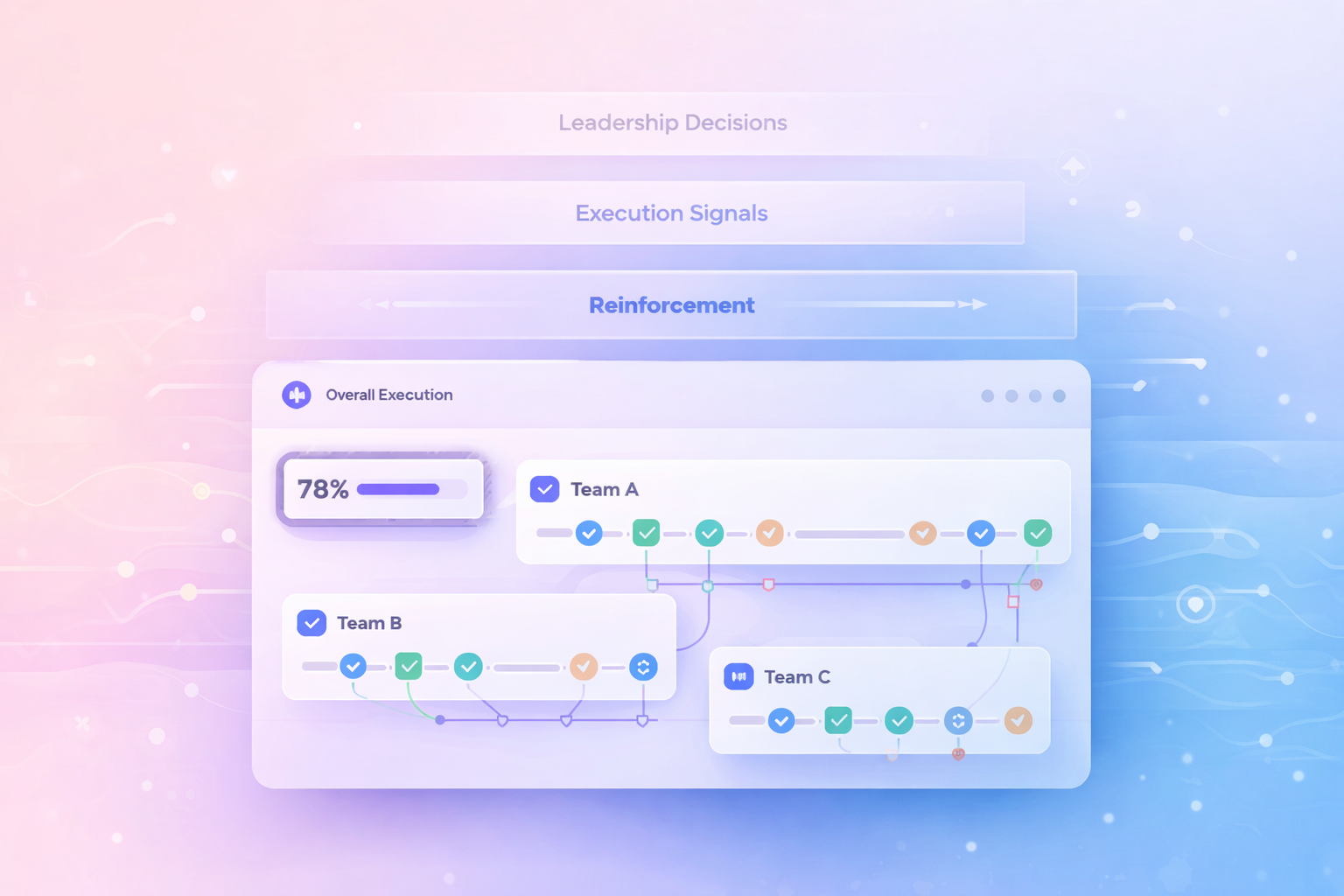
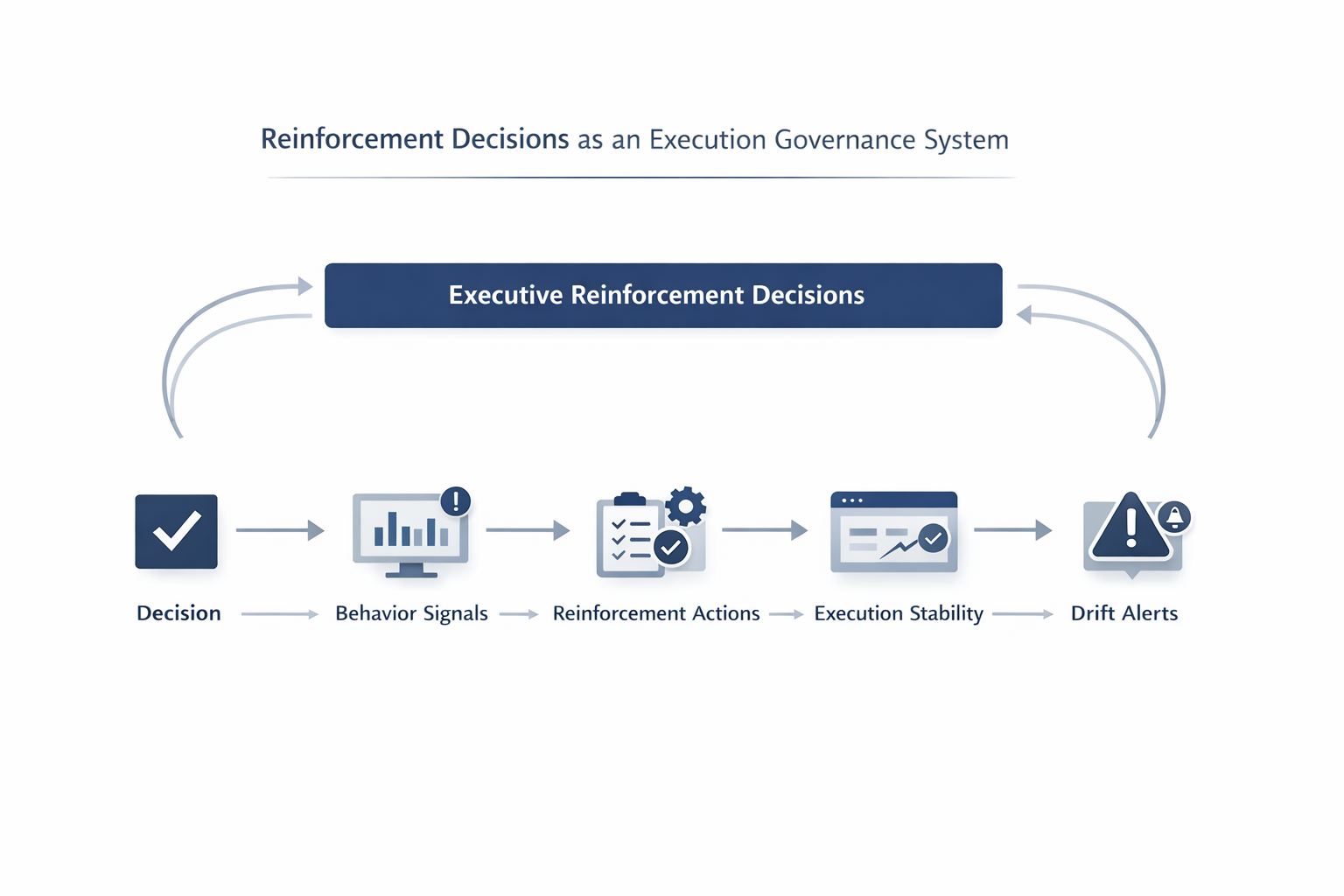
Leaders decide → behavior is reinforced → measurement shows drift → leaders adjust early.
A simple model:
Decision → Behavior Signals → Reinforcement → Stability → Results
Notice results come last.
This ensures the system is not measurement-led.
It is decision-led, with measurement providing visibility.
Reinforcement Systems: The Missing Layer Leaders Rarely See
Most organizations rely on two things when they want behavior change:
- Training
- Nudges/reminders
But both have structural limitations.
Training creates awareness – not follow-through.
People understand the idea.
They agree in workshops.
They take notes.
But when pressure rises, they revert to old behavior.
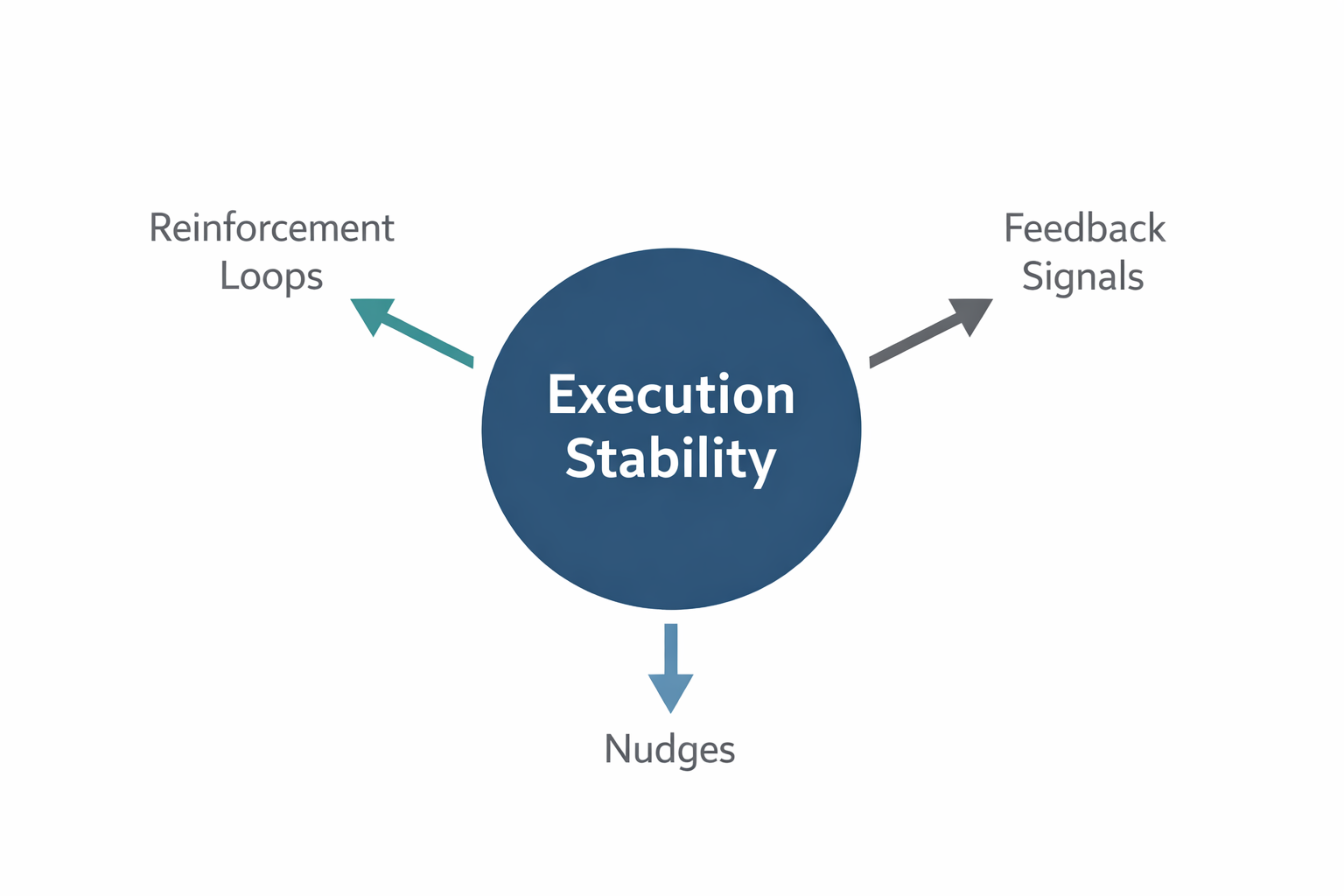
Nudges help – but only inside reinforcement systems.
Nudges alone are like:
- reminders
- notifications
- motivational prompts
They support behavior – but they do not stabilize it.
Reinforcement systems are different.
They answer:
- What gets reinforced?
- Where reinforcement is weak?
- What behaviors stabilize execution?
- How does leadership maintain consistency under real conditions?
In this frame:
Habits are not the category.
They are execution units inside reinforcement systems.
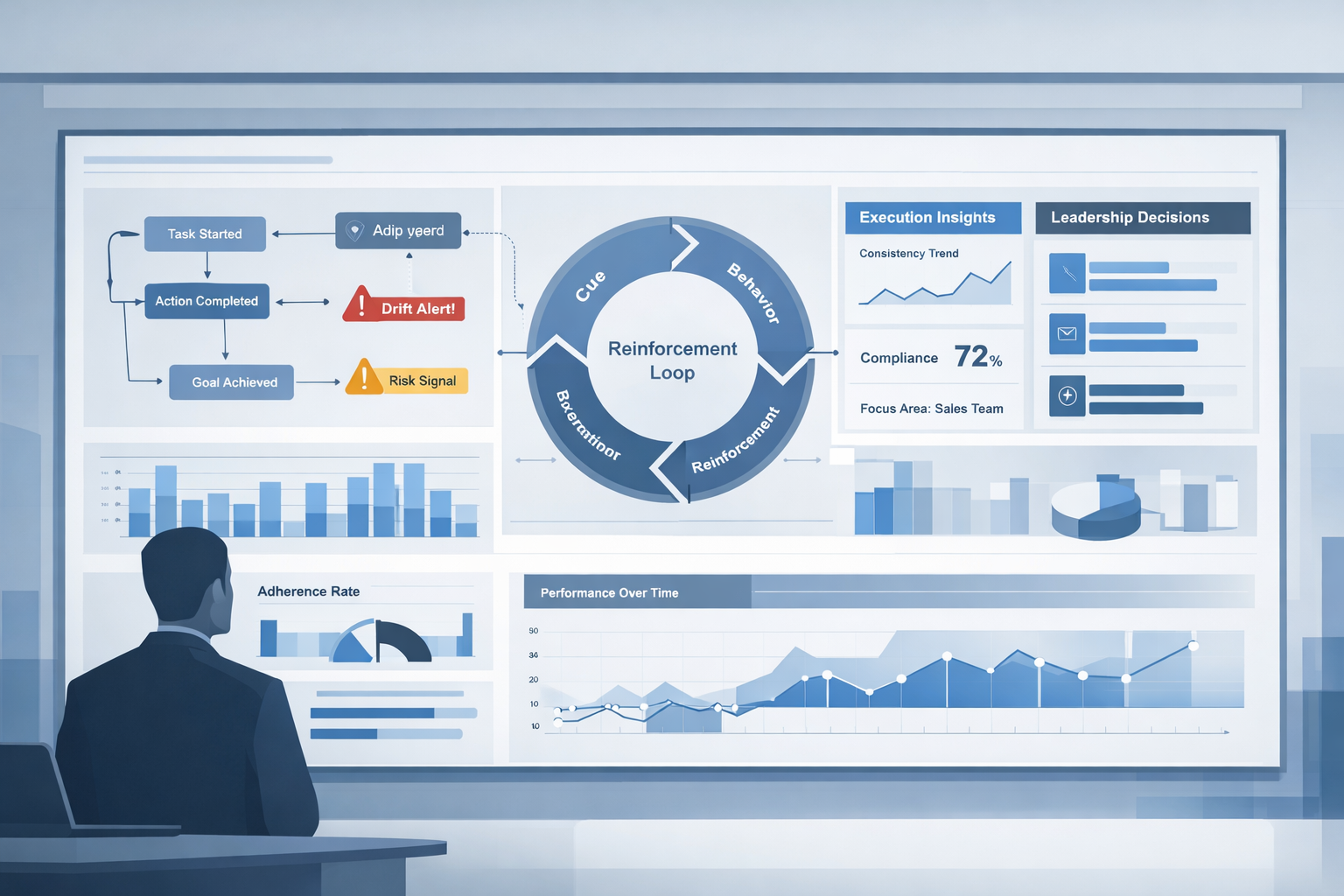
Organizations like GWork exist specifically to give leaders visibility into those reinforcement loops – and whether they are holding under stress.
Leadership Governance: Seeing Where to Intervene Before Decline
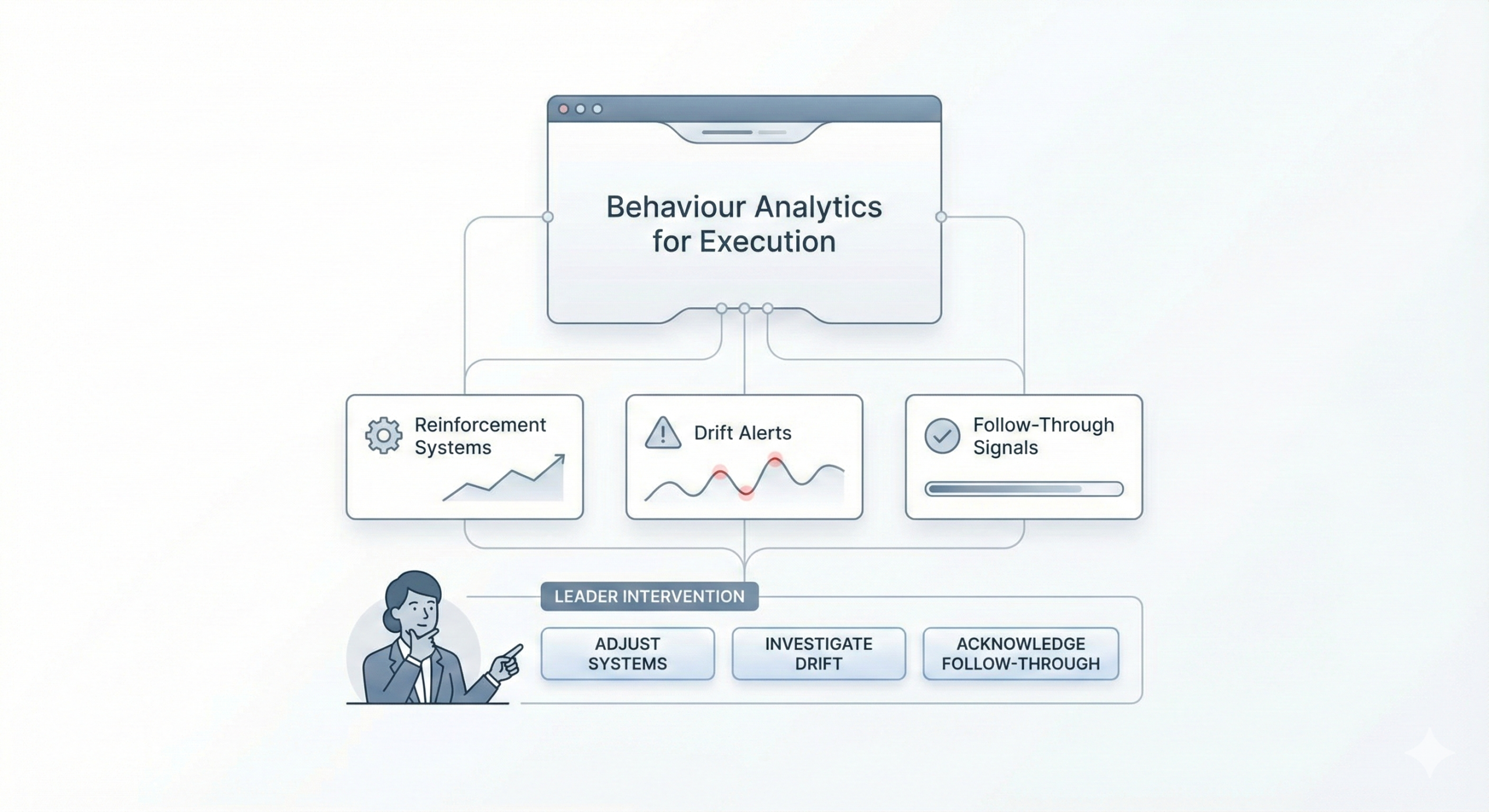
Behavior Visibility only matters if it leads to better leadership decisions.
Executives should be able to look at behavior signals and ask:
- Where is execution starting to drift?
- What needs reinforcement immediately?
- Which initiatives are losing follow-through?
- Where do we need intervention routines?
- What can be deprioritized safely?
This shifts leadership from reactive crisis management to execution governance.
Instead of:
“Why are numbers falling?”
It becomes:
“Where is drift starting – and what reinforcement is missing?”
That shift changes everything.
What Leaders Miss Without Behavior Visibility
Let’s walk through a few common scenarios.
Scenario 1: Strategy Rollout That Quietly Fades
A new strategy is announced.
Town halls are held.
Leaders communicate alignment.
Three months later:
- rituals disappear
- reviews are irregular
- priorities compete silently
- execution becomes fragmented
Dashboards still look okay.
But drift is already happening.
Behavior Visibility would reveal:
- missing reinforcement rituals
- weak follow-through points
- confusion about priorities
- early drift signals across teams
Leaders would intervene early – before strategy loses credibility.
Scenario 2: Process Change That Never Stabilizes
A new process is launched to improve speed and quality.
But pressure rises.
Teams defend old shortcuts.
Leads say, “We’ll do it properly later.”
Months later, defects rise – then dashboards finally register the problem.
Behavior Visibility would show:
- inconsistent process adherence
- reinforcement gaps from leadership
- where drift originally began
Again – governance, not policing.
Scenario 3: Compliance Drift Without Bad Intent
Nobody is malicious.
Nobody is ignoring policy on purpose.
But:
- deadlines compress
- trade-offs happen
- “temporary exceptions” become normal
Eventually, risk surfaces publicly.
Behavior Visibility shows drift before it becomes risk.
Why Dashboards Rarely Warn Leaders Early
Dashboards measure:
- outputs
- time
- costs
- volumes
- revenue
- defects
They do not measure:
- reinforcement behavior
- execution drift
- missing follow-through
- weakening routines
- eroding leadership signals
And because they don’t measure it – organizations assume it isn’t happening.
Behavior Visibility fills that blind spot.
People Also Ask (Short Leadership Answers)
How do you reinforce behavior in the workplace?
You don’t motivate people harder.
You stabilize execution through:
- clear priorities
- visible reinforcement routines
- leadership follow-through
- measurement that shows drift early
The goal is execution stability, not individual compliance.
Why doesn’t training lead to behavior change?
Because training creates understanding, not reinforcement.
Without reinforcement systems:
- people revert to older habits under pressure
- shortcuts creep back
- execution becomes fragile
Behavior Visibility helps leadership see when reinforcement is failing – so they intervene early.
Why don’t dashboards warn leaders earlier?
Because dashboards measure lagging signals.
Behavior drifts first.
Metrics move later.
Behavior Visibility tracks the behaviors that produce the metrics – giving leaders lead indicators, not after-the-fact symptoms.
If your organization still waits for dashboards to show trouble, you’re governing execution too late.
👉 Platforms like GWork exist so leaders can see drift as it begins – explore our GWork demo.
Why Reinforcement Must Sit Under Leadership – Not Beside It
One of the subtle mistakes organizations make is treating reinforcement as a separate “program”:
- engagement initiative
- culture effort
- productivity campaign
But reinforcement is governance.
Leaders decide:
- what gets reinforced
- what behavior stabilizes execution
- how signals cascade
- when corrective intervention happens
- what gets deprioritized in overload
Measurement supports that governance.
Behavior Visibility empowers that governance.
Without leadership gravity, reinforcement becomes motivational theater.
Key Takeaways (Executive Summary Box)
- Behavior Visibility is the earliest execution signal.
- Results decline long after behavior drifts.
- Dashboards are lagging indicators – not governance tools.
- Reinforcement systems stabilize execution – not motivation.
- Leadership must see and govern drift before it becomes performance loss.
This is execution reliability, not performance psychology.
Why Behavior Visibility Is Now a Leadership Mandate
Organizations are operating under increasing complexity:
- faster decision cycles
- competing initiatives
- remote and hybrid work
- high dependency environments
- constant strategy evolution
Under those conditions, execution will always drift.
Not because people are lazy.
Not because culture is broken.
But because systems without reinforcement are fragile.
Behavior Visibility gives leaders:
- clarity
- early signals
- governance authority
- decision confidence
- stability through uncertainty
And when it is embedded inside Behaviour Analytics for Execution, it becomes the foundation for execution reliability across the organization.
Leaders who wait for dashboards will always manage decline.
Leaders who invest in Behavior Visibility govern stability before decline begins.
And that is the real competitive advantage.