skip to Main Content

Executive Summary
Most organizations do not fail because strategy is unclear or people are unmotivated.
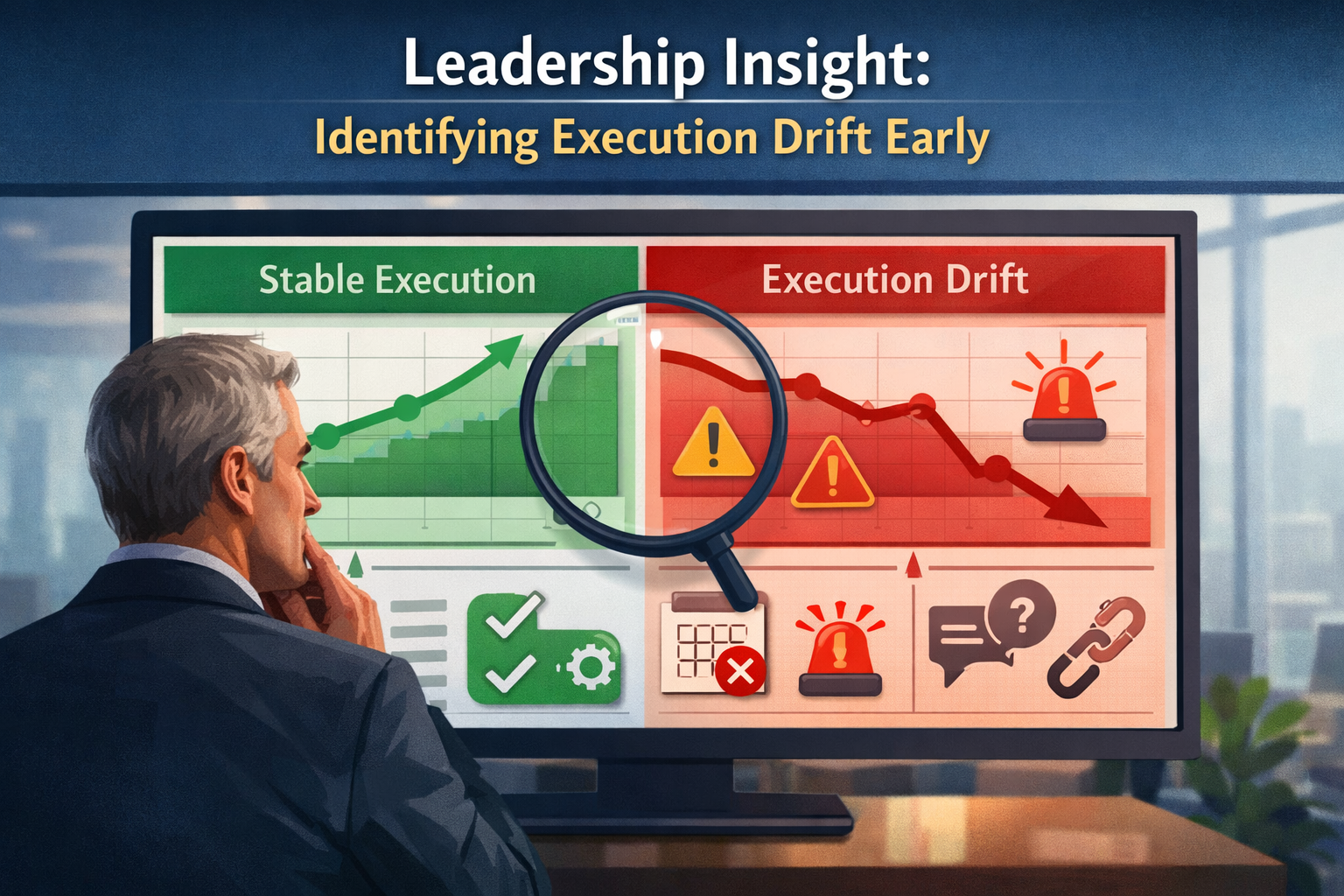
They fail because leaders lose visibility into execution after decisions are made – and by the time results signal a problem, execution has already been drifting for months.
Behaviour Analytics for Execution exists to close that gap.
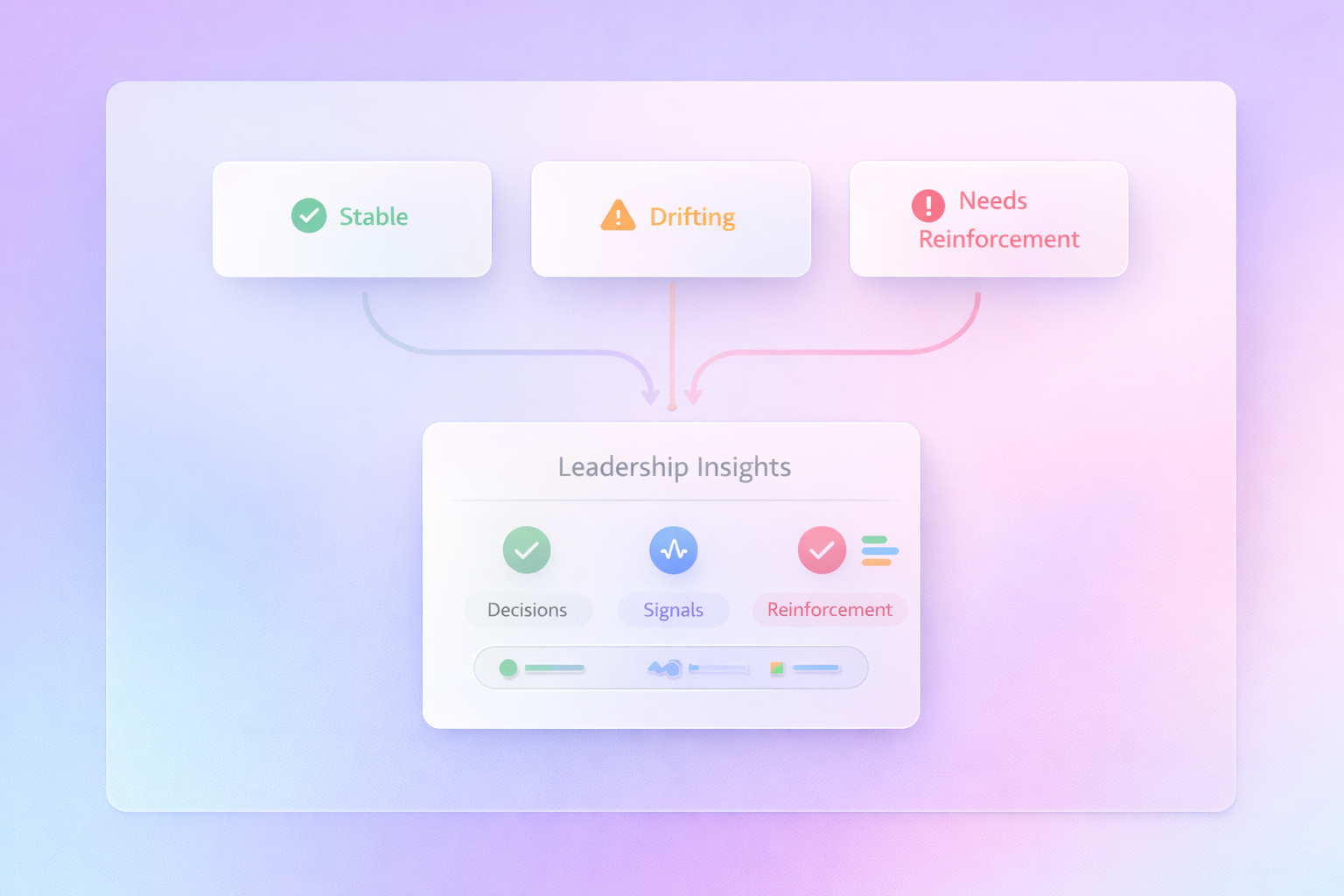
It allows leaders to see – early and reliably – whether critical execution behaviors are:
- holding,
- weakening,
- or breaking altogether.
This article explains:
- why execution drifts even after alignment, training, and communication,
- why reinforcement – not motivation – stabilizes follow-through,
- why nudges help but fail when used without governance,
- and how leadership decisions determine what gets reinforced, reviewed, or allowed to drift.
Reinforcement and nudges are not standalone solutions.
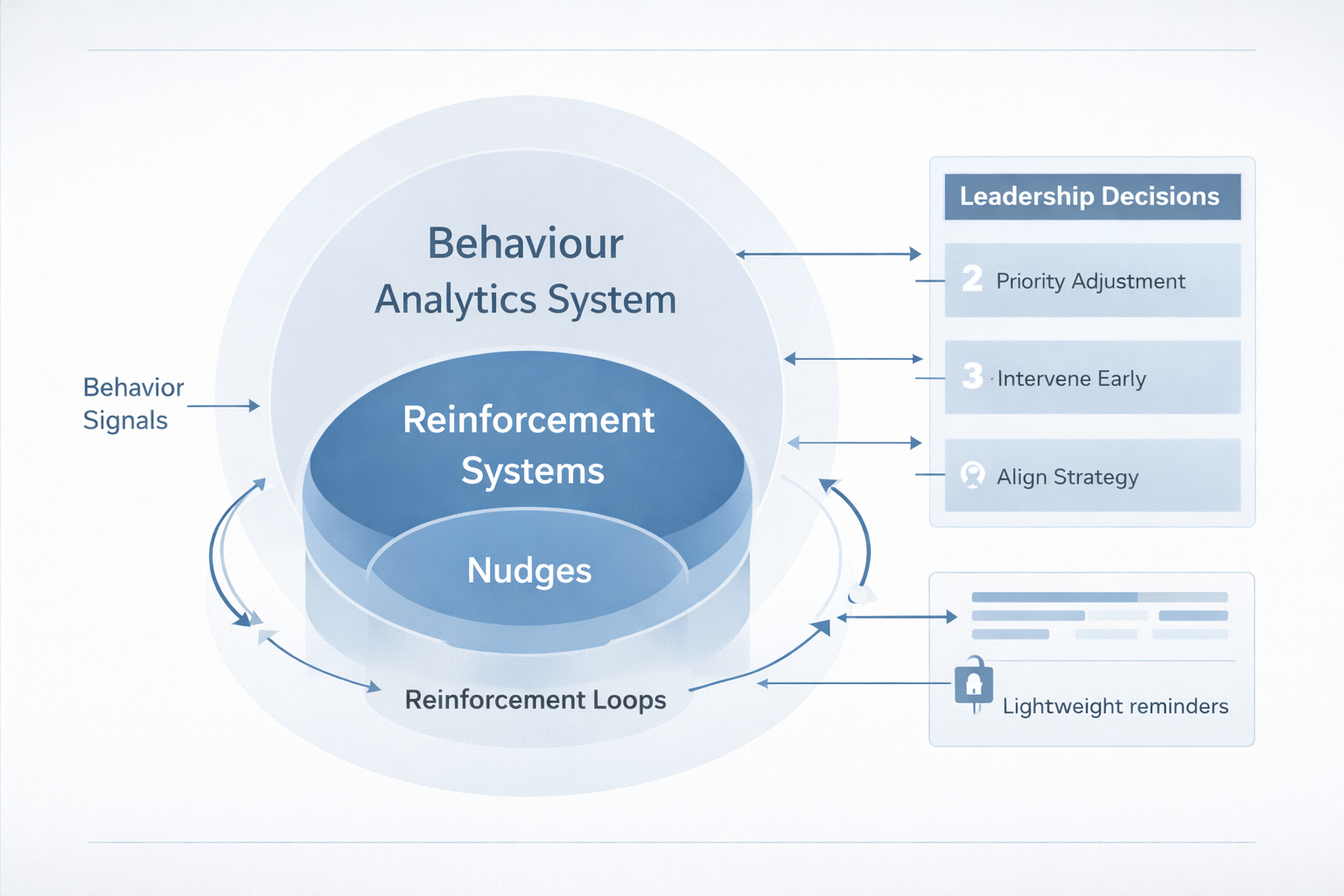
They are mechanisms inside a Behaviour Analytics system, governed by leadership decisions about execution stability.
GWork operates in this category because reliable execution depends on visibility, reinforcement, and governance – not better reminders or stronger engagement rhetoric.
This changes leadership action by shifting attention from post-hoc outcome reviews to early execution governance – allowing leaders to reinforce, intervene, or de-prioritize behaviors before performance indicators move.
What Is Behaviour Analytics for Execution?
Clarity matters, because this category is often misunderstood.
Behaviour Analytics for Execution is the discipline of making execution visible – behavior by behavior – so leaders can stabilize follow-through before outcomes drift.
It is not:
- HR analytics,
- engagement measurement,
- performance management,
- habit coaching,
- or behavior change psychology.
Those approaches focus on people.
Behaviour Analytics focuses on execution conditions.
It answers leadership questions such as:
- Are the critical behaviors actually happening where strategy depends on them?
- Where is execution starting to loosen?
- Which behaviors require reinforcement right now?
- Where should leaders intervene – and where should they stop reinforcing?
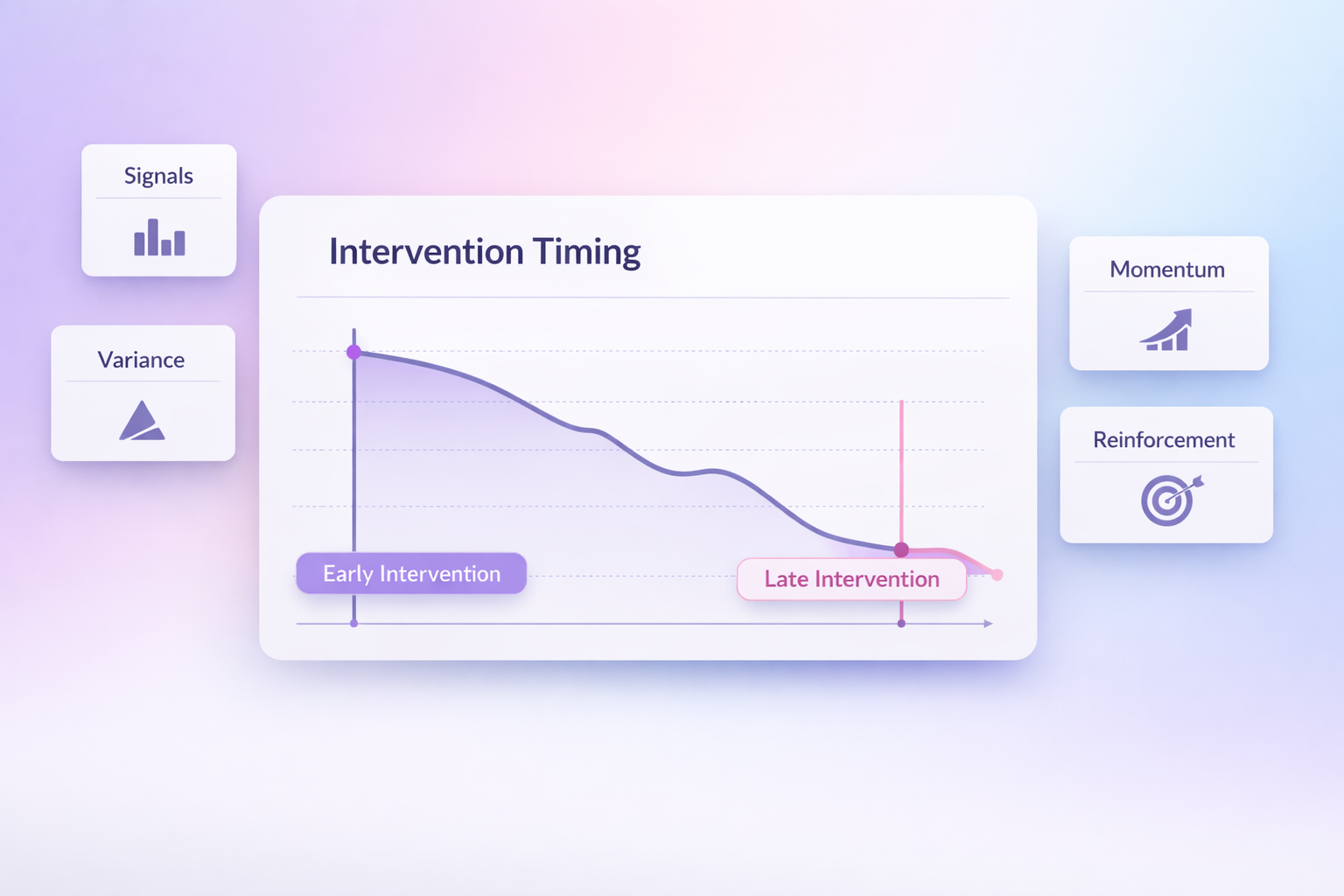
Outcomes always lag execution.
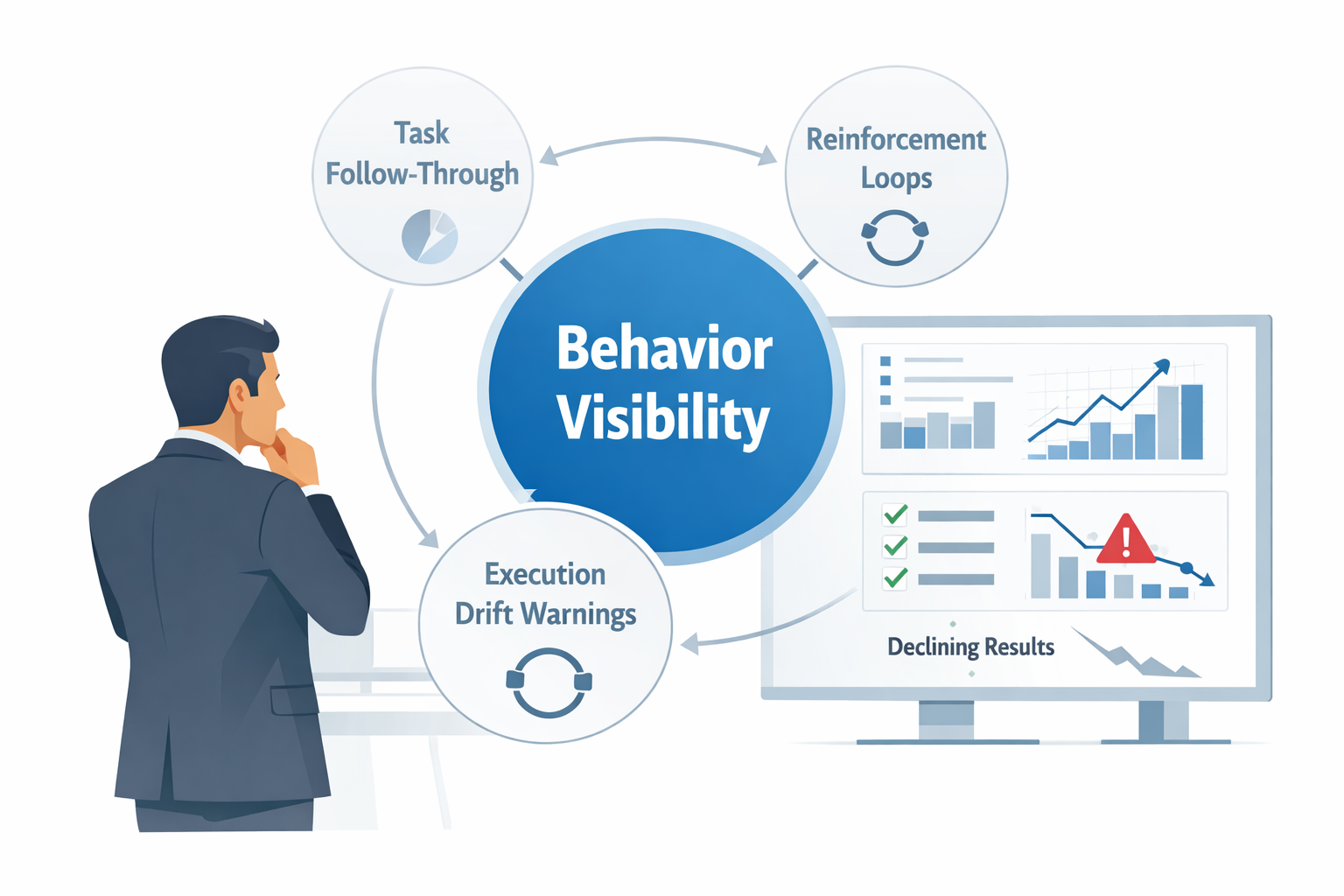
By the time revenue softens, quality slips, customers churn, or adoption stalls, behavior drift has already occurred – often quietly and unevenly across the organization.
For COOs, CHROs, and Heads of Operational Excellence, this creates a structural leadership problem:
How do we see execution early enough to govern it – instead of reacting after results break?
Everything in this article sits underneath that question.
Where Execution Actually Breaks
Execution rarely fails all at once.
It erodes gradually.
The pattern is familiar:
- A decision is made.
- Strategy is communicated.
- Training is delivered.
- Dashboards are launched.
Then attention moves on.
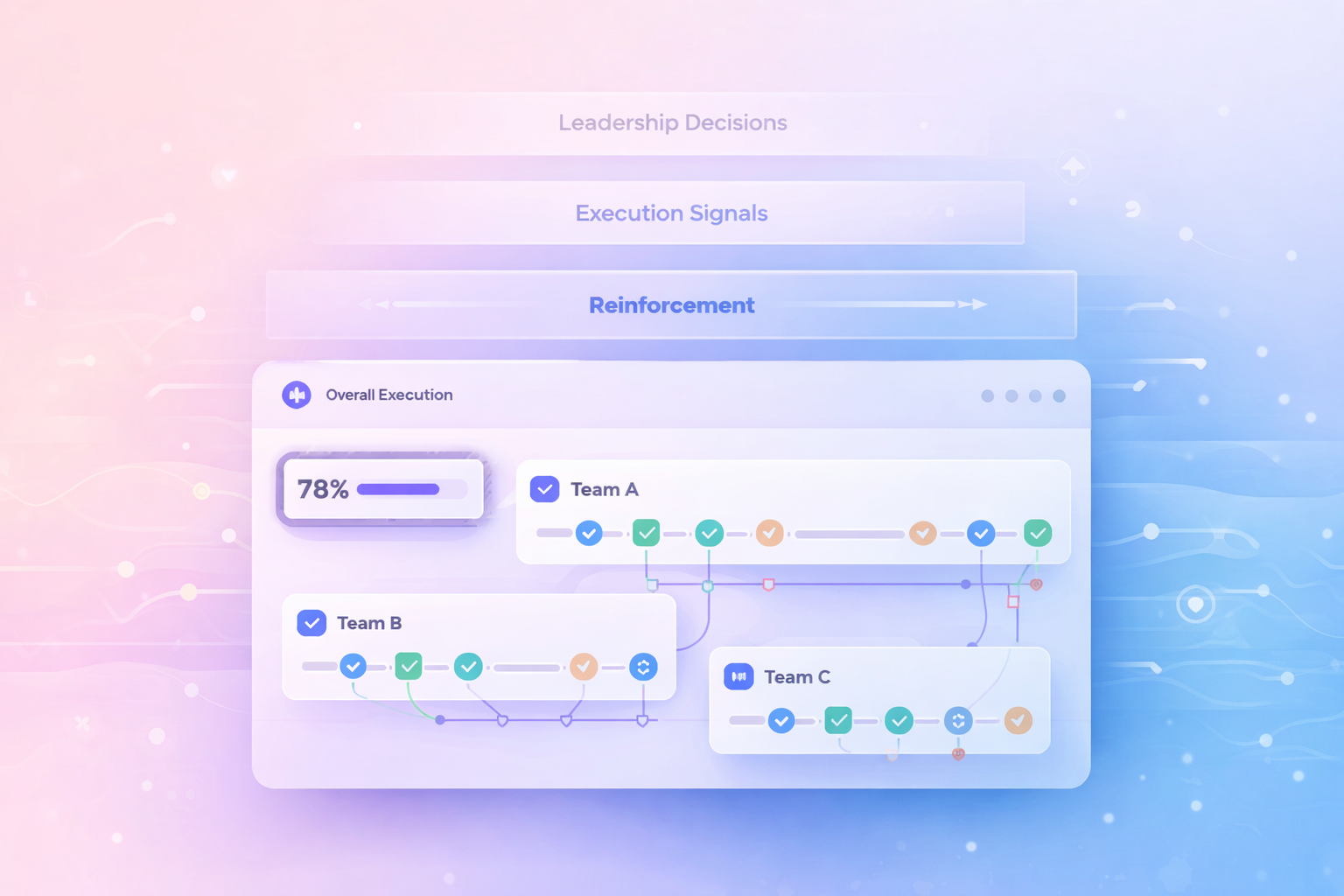
Some teams maintain follow-through.
Others drift.
Some behaviors weaken quietly.
Others disappear completely.
Because leaders mostly see results, not behaviors, this erosion stays invisible until problems surface.
Common signals include:
- initiatives that start strong and fade without explanation,
- inconsistent execution across regions or teams,
- policies that exist on paper but not in practice,
- repeated frustration that “we trained this already,”
- dashboards that explain outcomes but not causes.
Leaders experience this as confusion:
- Why don’t priorities stick?
- Why doesn’t training translate into daily behavior?
- Why does execution revert under pressure?
The answer is rarely intent or effort.
The answer is missing reinforcement structure.
Reinforcement Systems: The Missing Layer Leaders Rarely Build
Training explains what should happen.
Reinforcement determines whether it keeps happening.
A reinforcement system is not about control or motivation.
It is about creating repeatable execution conditions so critical behaviors stabilize under real-world pressure.
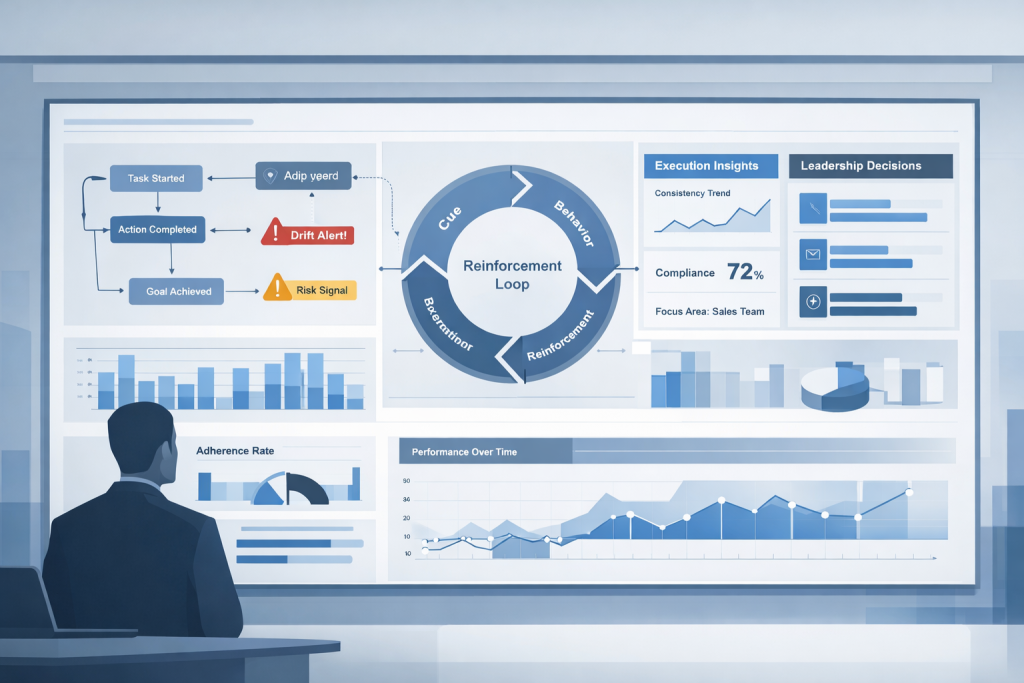
At its simplest, reinforcement follows a leadership loop:
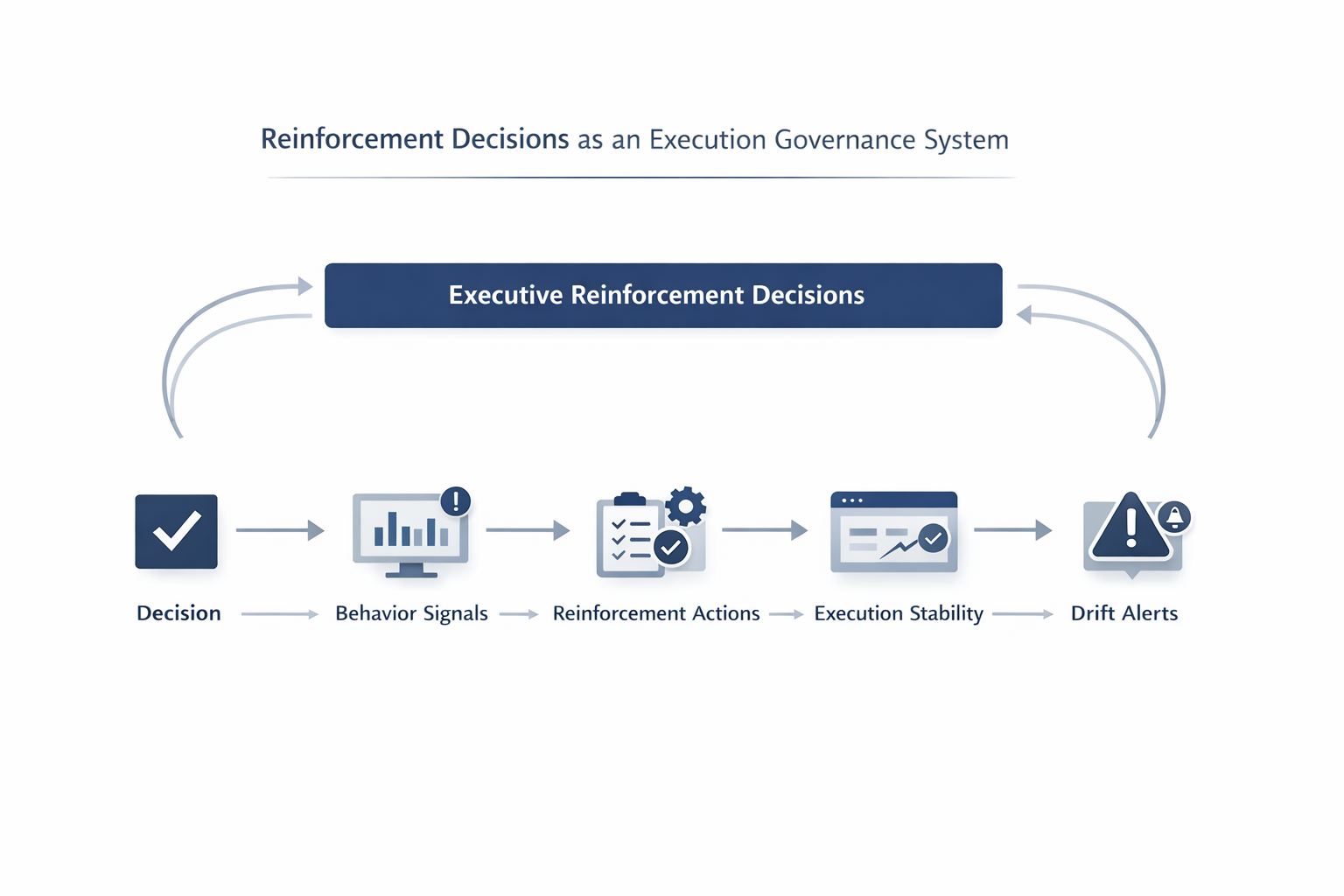
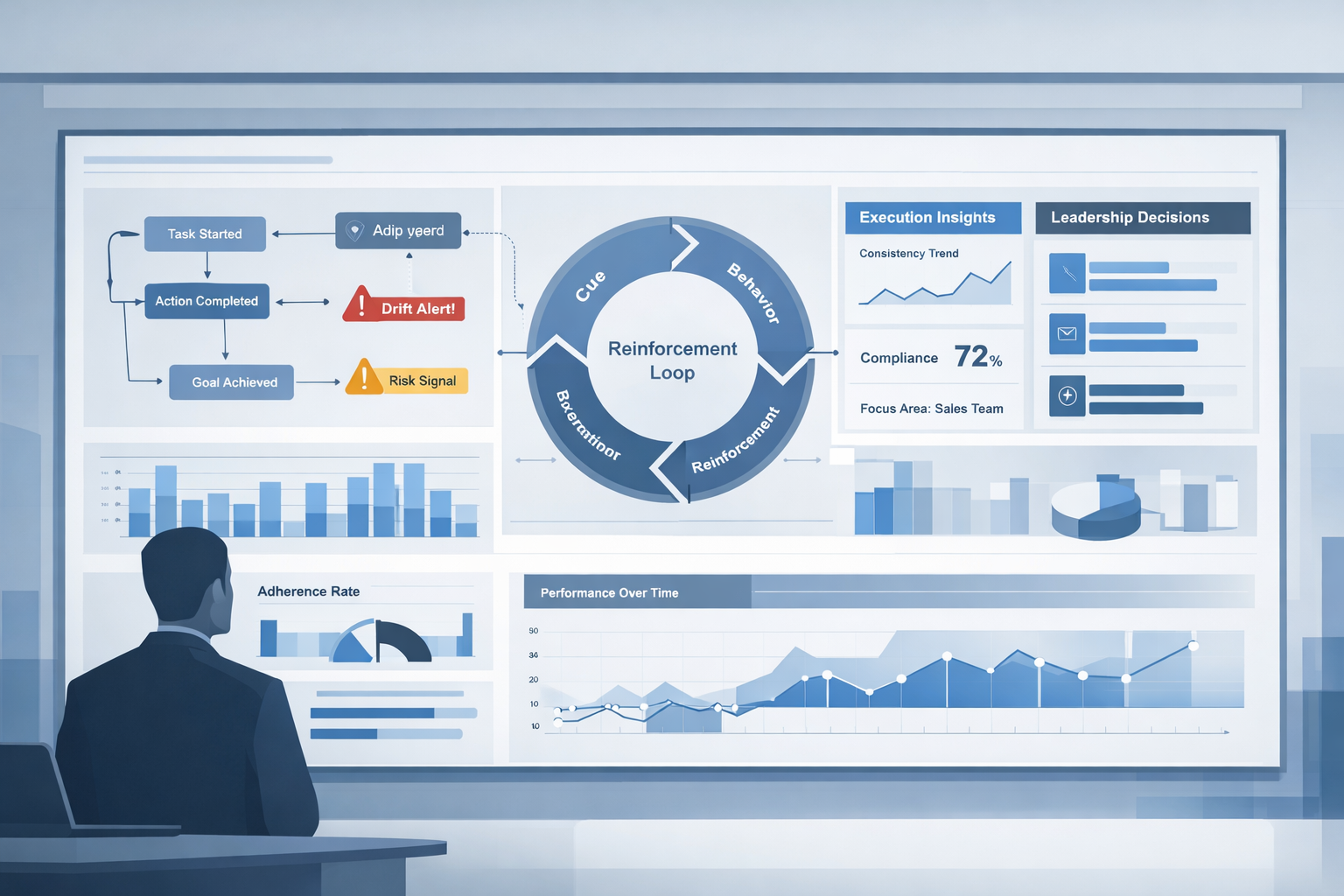
Cue → Behavior → Reinforcement → Visibility → Leadership Decision
- Cue
A moment in the workflow signals priority – a prompt, checkpoint, or trigger. - Behavior
The action either occurs or it does not. - Reinforcement
Leadership attention, review, consequence, or acknowledgment signals:
“This behavior matters.” - Visibility
Behavior becomes execution data – not opinion. - Leadership Decision
Leaders decide where to intervene, tighten reinforcement, or allow de-prioritization.
Reinforcement exists to:
- reduce execution drift,
- stabilize follow-through,
- surface weak signals early,
- align leadership attention with what actually drives outcomes.
This changes leadership action by giving leaders a concrete basis to decide where to apply attention now, rather than assuming execution is holding until results say otherwise.
This is why reinforcement belongs to governance, not HR culture programs.
The core leadership question is not:
“How do we get people to do this?”
It is:
“Which behaviors are critical enough that we must govern their consistency?”
That decision defines execution reliability.
Nudges vs Reinforcement: Distinct Roles Inside the Same System
Nudges are popular because they feel lightweight and non-intrusive.
They remind.
They prompt.
They simplify timing.
They reduce friction.
Used correctly, they help execution.
What Nudges Do Well
Nudges are effective when:
- attention lapses,
- timing matters,
- complexity creates friction,
- priorities fade from view.
They support behavior at the moment of action.
Why Nudges Fail When Used Alone
Organizations often rely on nudges without reinforcement:
- notifications,
- reminders,
- motivational prompts,
- friendly messages.
Initially, behavior improves.
Then it fades.
Because nudges do not create governance.
Nudges fail when:
- no one reviews execution signals,
- behavior drift has no consequence,
- leaders do not act on visibility,
- teams realize execution consistency is not being governed.
Over time, nudges become noise.
Nudges Inside a Reinforcement System
Nudges become effective when embedded inside reinforcement.
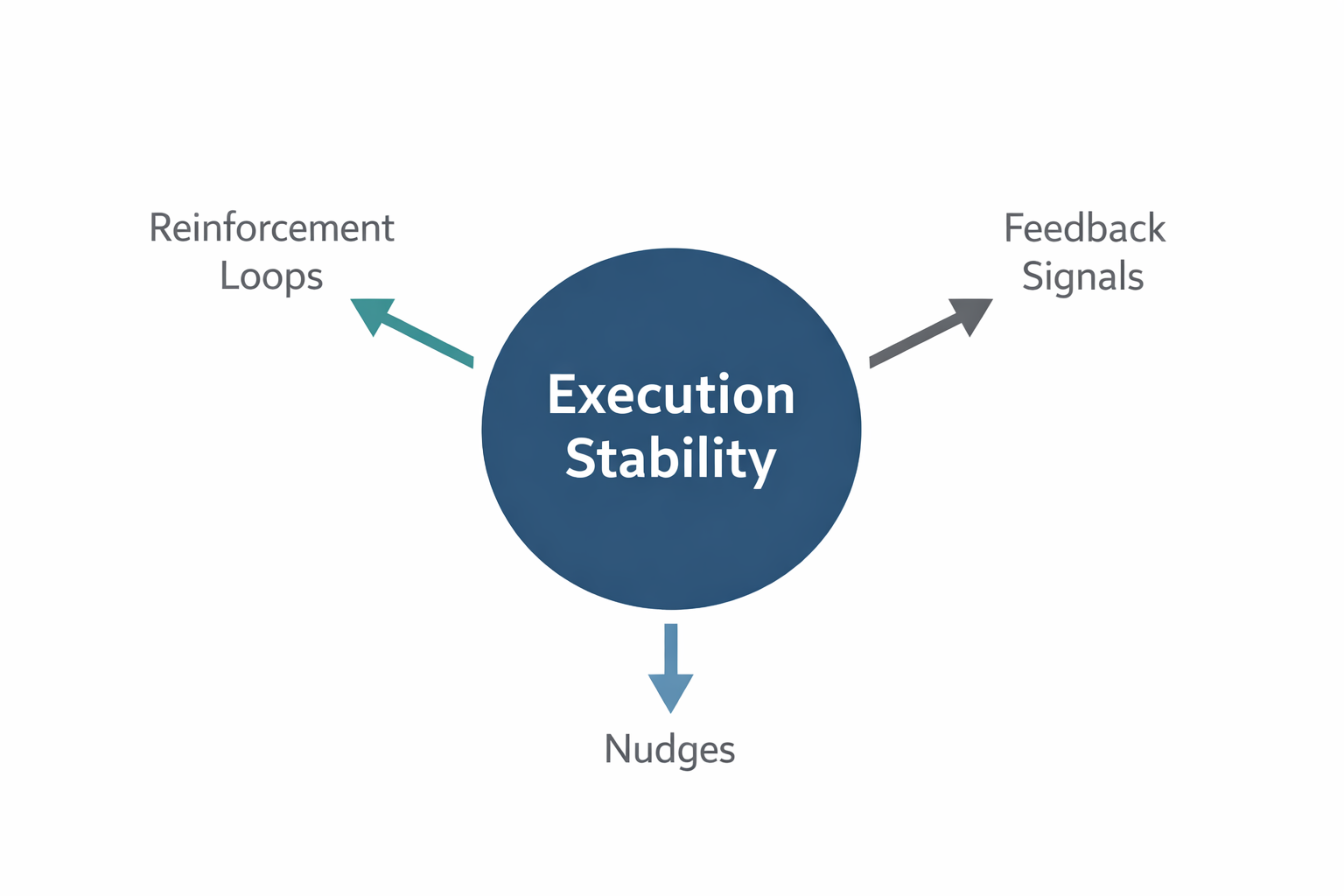
- Nudges cue behavior.
- Reinforcement stabilizes it.
- Visibility reveals drift.
- Leadership decisions govern response.
In this structure:
- Nudges guide.
- Reinforcement governs.
- Behaviour Analytics connects execution to leadership action.
This distinction protects the category:
- Nudges are mechanisms.
- Reinforcement is a system.
- Behaviour Analytics for Execution is the category.
Measurement Exists to Support Leadership Decisions
A common failure pattern is becoming measurement-led instead of decision-led.
Organizations collect dashboards, charts, and trends – but execution does not improve.
Measurement only matters when it enables earlier, better leadership decisions.
The correct sequence is:
- Identify critical execution behaviors.
- Make them visible.
- Detect where drift is forming.
- Decide:
- what to reinforce,
- where to intervene,
- what to de-prioritize,
- how urgently to act.
If a metric cannot answer:
“What should leaders do differently next?”
it has limited execution value.
Behaviour Analytics shifts leadership thinking from:
- “How do we track more?”
to:
- “How do we govern execution more effectively?”
This changes leadership action by turning dashboards into decision triggers – clarifying when to step in, when to tighten reinforcement, and when to stop expending leadership attention on behaviors that no longer require governance.
Why Training Alone Never Stabilizes Execution
Training is necessary – but insufficient.
Training builds understanding.
Reinforcement builds consistency.
| Training | Reinforcement |
| Explains what to do | Ensures it keeps happening |
| Event-based | Ongoing and systemic |
| Knowledge-focused | Behavior-focused |
| Often HR-owned | Leadership-governed |
| No response to drift | Visibility + action |
Without reinforcement:
- execution weakens,
- drift spreads quietly,
- leaders assume alignment that no longer exists,
- strategy breaks unevenly across the organization.
The issue is not learning.
It is lack of execution governance.
How Leaders Apply This in Practice
This category only matters if it changes leadership behavior.
A governance-driven approach looks like this:
1. Identify Critical Execution Behaviors
Not everything deserves reinforcement.
Focus on behaviors that:
- protect strategic outcomes,
- prevent downstream failure,
- must remain stable under pressure.
2. Design the Reinforcement Loop
For each behavior:
- What cues it?
- Where does visibility occur?
- Who reviews it?
- What leadership response follows drift?
If the loop is incomplete, drift is inevitable.
3. Use Nudges Strategically
Use nudges where:
- timing matters,
- forgetting is the barrier,
- friction blocks action.
But only when reinforcement exists.
4. Review Drift at Leadership Cadence
Make behavior visibility part of governance.
Ask regularly:
- Where is execution loosening?
- What reinforcement needs tightening?
- What should we stop reinforcing?
5. Remove People-Control Framing
Shift from:
❌ “How do we get employees to comply?”
to:
✔ “How do we stabilize execution conditions so behaviors hold?”
That shift defines this category.
Key Takeaways
- Behaviour Analytics for Execution is the anchor.
- Reinforcement stabilizes execution where training cannot.
- Nudges help – but only inside governance.
- Measurement exists to support leadership decisions.
- The goal is execution reliability, not motivation.
GWork exists in this category because execution does not fail from lack of intent –
it fails from lack of visibility, reinforcement, and leadership governance.
Ready to Make Execution More Reliable – Not Just More Measured?
Dashboards show results.
Behaviour Analytics shows what creates those results — and where execution silently begins to drift.
👉 Connect with GWork to explore how Behaviour Analytics can stabilize execution across your organization.
Conclusion
Execution doesn’t break because people stop caring.
It breaks because organizations lack:
- visibility into behavior,
- reinforcement structures,
- leadership governance around drift.
By placing reinforcement and nudges where they belong – inside a Behaviour Analytics system – leaders gain earlier signals, stronger follow-through, and reliable execution under real-world pressure.