
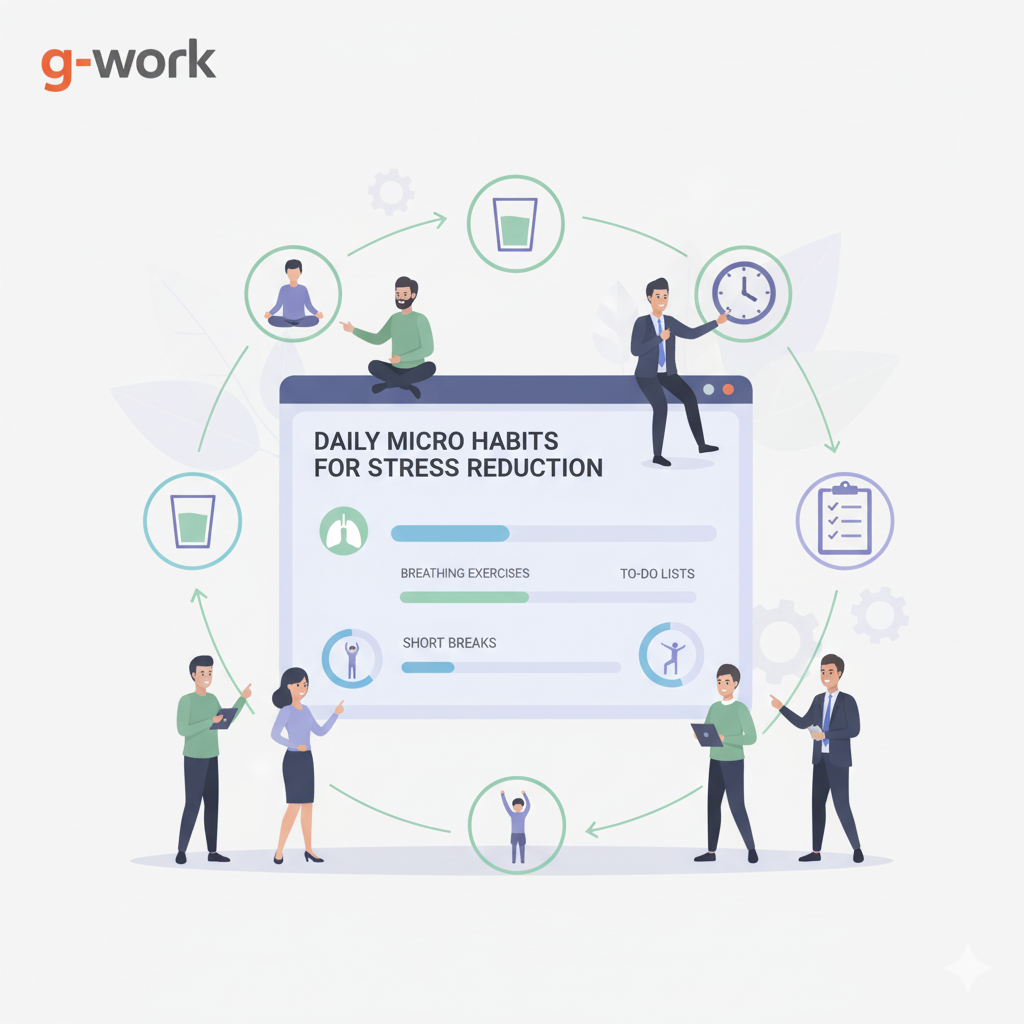

Small work routines can make priorities, handoffs and boundaries clearer. They should not be presented as a cure for workplace stress or a replacement for addressing excessive demands, harassment, unsafe conditions or inadequate resources.
Updated October 27, 2026.
This guide is for managers and learning teams choosing practical work-design experiments. It does not offer treatment advice or claim that a breathing exercise, reminder or habit tracker will prevent burnout.
Start with the conditions of work
The World Health Organization’s guidance on mental health at work includes organizational interventions addressing workplace risks, alongside manager and worker training and other support. A personal routine should not shift responsibility for organizational problems onto an employee.
Ask people where work becomes difficult: conflicting priorities, repeated interruptions, unclear ownership, unavailable tools or pressure to remain available outside agreed hours. Decide which conditions the organization needs to change before introducing a new practice.
Five routines to test with the team
| Work problem | Routine to consider | Manager responsibility |
|---|---|---|
| Too many competing priorities | At planning, agree on the next priority and what can wait. | Resolve conflicts between requests and adjust commitments. |
| Unnecessary interruptions | Agree on a focus period and an appropriate route for urgent issues. | Check that coverage and role requirements allow it. |
| Repeated handoff confusion | Confirm the owner and next step before transferring work. | Provide accessible ownership information and realistic handoff time. |
| Unclear end-of-day expectations | Record the next step and communicate availability where relevant. | Respect agreed hours and establish proper urgent-cover arrangements. |
| Meetings create extra work without decisions | Close with the decision, owner and next check date. | Cancel unnecessary meetings and protect time to do the work. |
These are work-process recommendations, not clinically validated stress treatments. A routine that adds reporting or ignores a role’s constraints may make work harder.
Example: a priority check rather than another reminder
Illustrative example. A team receives requests from two managers. Instead of asking employees to build a resilience habit, the managers agree on one shared priority list and a route for resolving conflicts. At the existing planning meeting, staff identify which commitment must change when an urgent request arrives.
The review asks whether priorities are clearer, whether conflicting requests have reduced and whether staff can raise concerns. It does not infer improved mental health from completion of a checklist.
Run a proportionate review
- Choose a problem with the people affected by it.
- Name the organizational change and who owns it.
- Test one routine during relevant work opportunities.
- Ask whether it helped, what burden it added and what remains unresolved.
- Keep, adapt or stop the routine and follow through on structural issues.
Do not require disclosure of personal health information to participate. Use appropriate confidential workplace or professional support when someone needs help beyond a work-process change.
Connect manager learning with better work design
After manager training, choose one support behavior, such as clarifying what work can wait, and check whether it is useful to the team. Use the post-training action plan kit to record that commitment. The team culture guide offers routines for discussion and coordination, while the measurement guide separates application evidence from outcome claims.