

Most execution failures are not strategic errors.
Last updated: April 2026
They are visibility failures.
The strategy is clear. The team is capable. Yet progress slows between steps. Decisions wait. Approvals queue. Ownership blurs.
Momentum erodes quietly.
That is how bottlenecks form.
Strong leaders do not respond with urgency or more meetings. They respond with structured attention. They reinforce priorities, intervene where flow stalls, and deprioritize distractions.
Execution is governed, not accelerated through pressure.
Execution Drift Creates Bottlenecks
Execution rarely collapses. It gradually loses consistency.
A new initiative launches with clarity. Two weeks later, operational demands compete for attention. Reviews slow. Handoffs stretch. Decisions age.
Nothing appears broken. Yet progress weakens.
This is execution drift – the natural decline in follow-through once leadership attention shifts elsewhere.
Bottlenecks form in these gaps.
Not inside the work itself, but between stages:
- Between teams
- Between approvals
- Between decisions
👉 This is execution drift – the natural decline in follow-through once leadership attention shifts elsewhere.
Leaders who understand why execution discipline breaks down can prevent bottlenecks before they compound.
A Practical Example
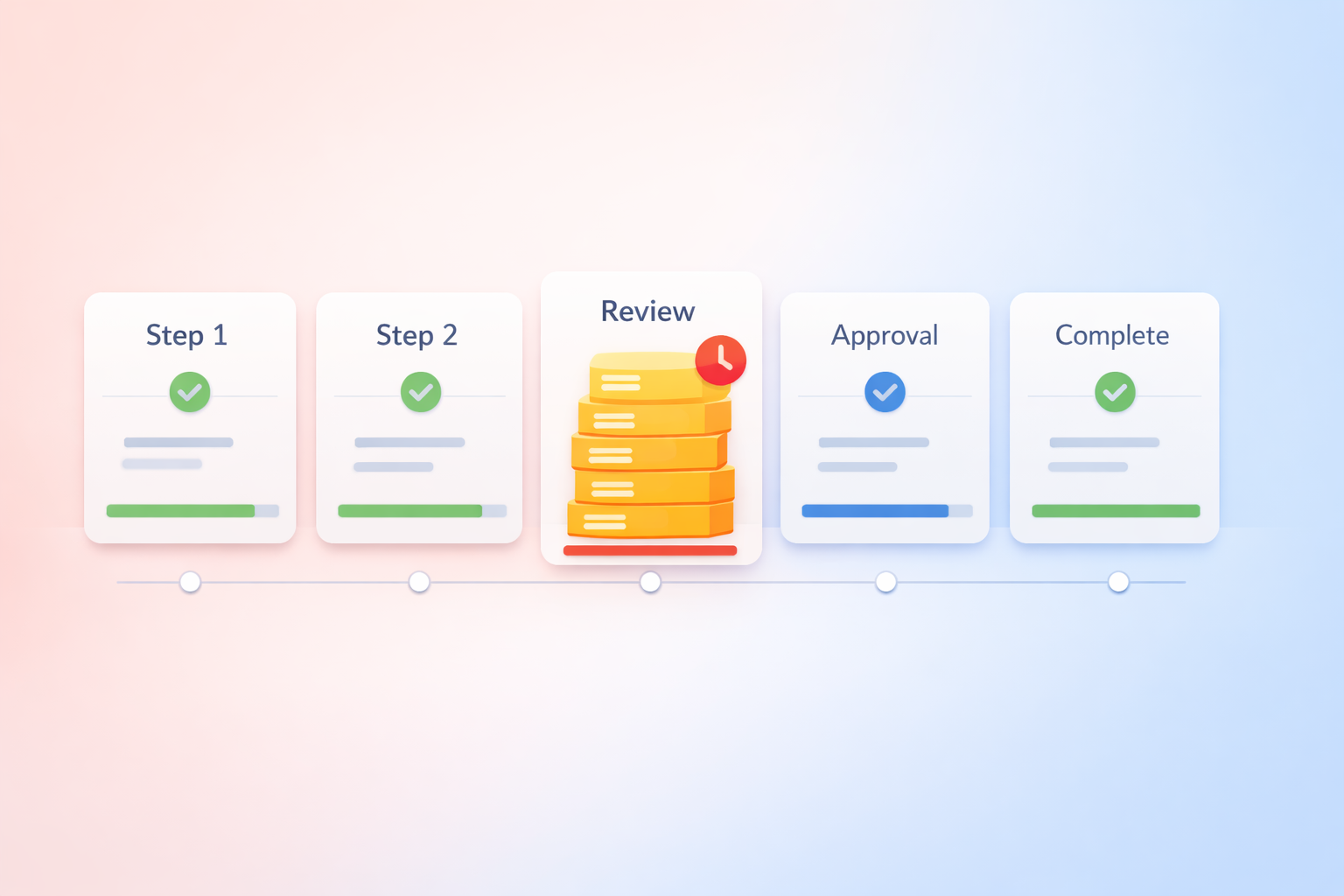
A marketing team completes a campaign brief on Monday. Design delivers assets by Wednesday. The files then sit in legal review for four days. Legal completes the review in two hours.
Actual work time: 10 hours.
Elapsed time: 6 days.
The constraint was not effort. It was an unseen queue.
practical execution governance modelThe constraint was not effort. It was an unseen queue.
Organizations that understand how workflow visibility improves decision speed eliminate these silent delays.
Multiply this pattern across multiple workflows and the organization feels slow despite high activity. Teams are busy, but throughput declines.
Without visibility into waiting time, leaders assume urgency is the solution. It is not.
Flow – not effort – determines execution speed.
Status language often conceals drift:
- “We’re on track.”
- “Almost done.”
- “Should close soon.”
Execution stabilizes when leaders instead ask:
- What has not moved in three days?
- Where are decisions waiting?
- Which stage consistently takes the longest?
These questions surface bottlenecks early.
Leadership Governs Flow
When performance slows, many organizations increase oversight: more check-ins, more reminders, more escalation.
This treats execution as a motivation issue.
It is rarely that.
Execution stability is structural. You do not fix traffic by instructing drivers to accelerate; you improve the design of the road.
The same principle applies inside organizations.
Effective leaders focus on flow:
- Where is work accumulating?
- Who owns the decision?
- Why are multiple approvals required?
- What can be simplified?
The objective is not tighter control over people. It is control over movement.
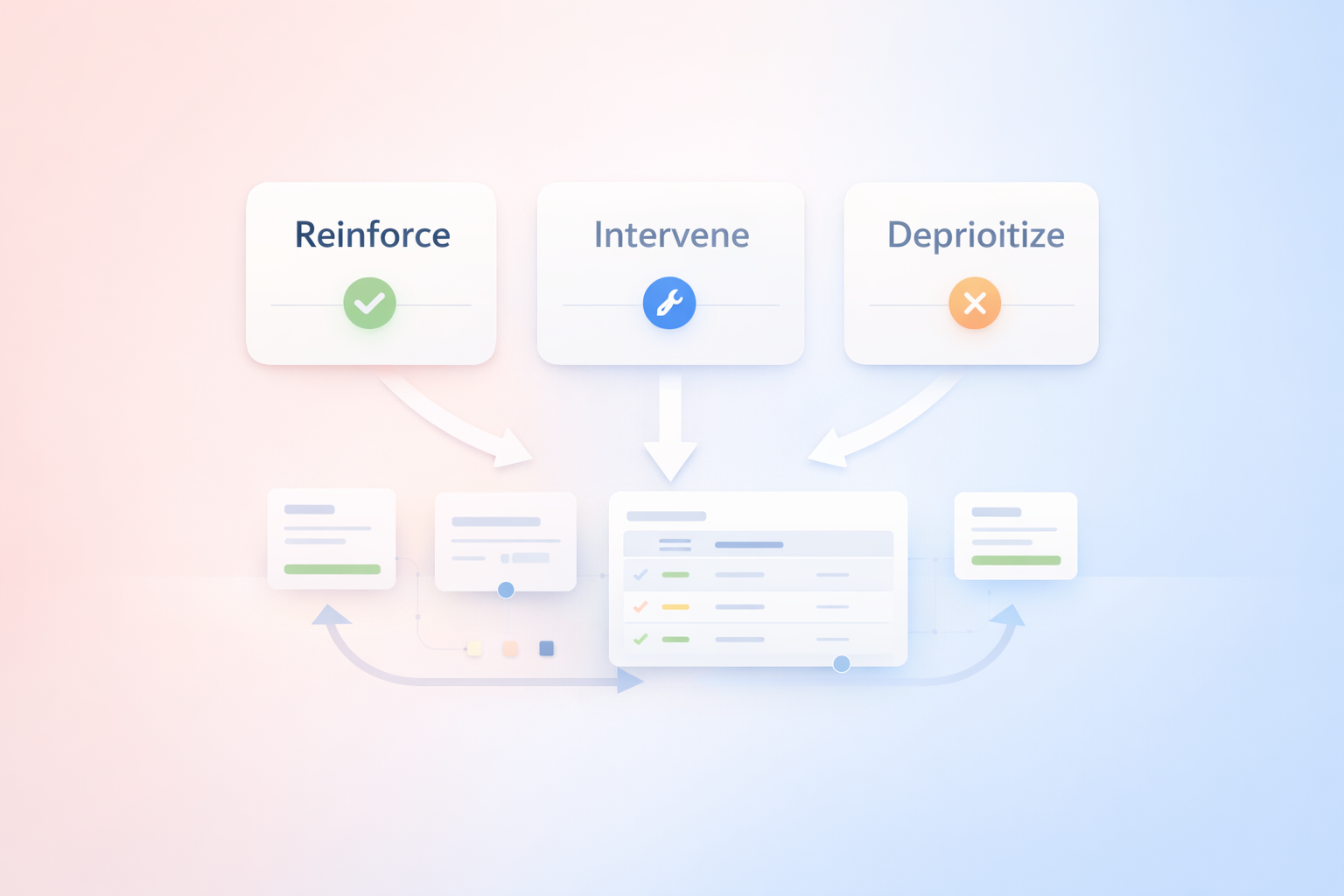
Every bottleneck response falls into three leadership actions:
1. Reinforce
Reassert priorities. Clarify ownership. Increase visibility around what must move now.
2. Intervene
Step directly into stalled stages. Make decisions. Remove blockers. Simplify steps.
3. Deprioritize
Reduce competing initiatives. Eliminate low-value work consuming capacity.
Most execution challenges can be addressed by deliberately applying one of these three actions.
Ownership alone resolves a significant portion of delay. Shared responsibility often results in queued decisions. Each critical stage requires:
- One accountable owner
- One defined objective
- Clear authority to decide
When ownership is explicit, movement accelerates.
Execution improves not because people work harder, but because decisions happen faster.
Visibility and Reinforcement Prevent Future Bottlenecks
The strongest organizations do not wait for performance decline. They design systems that make delay visible.
Visibility enables correction before momentum is lost.
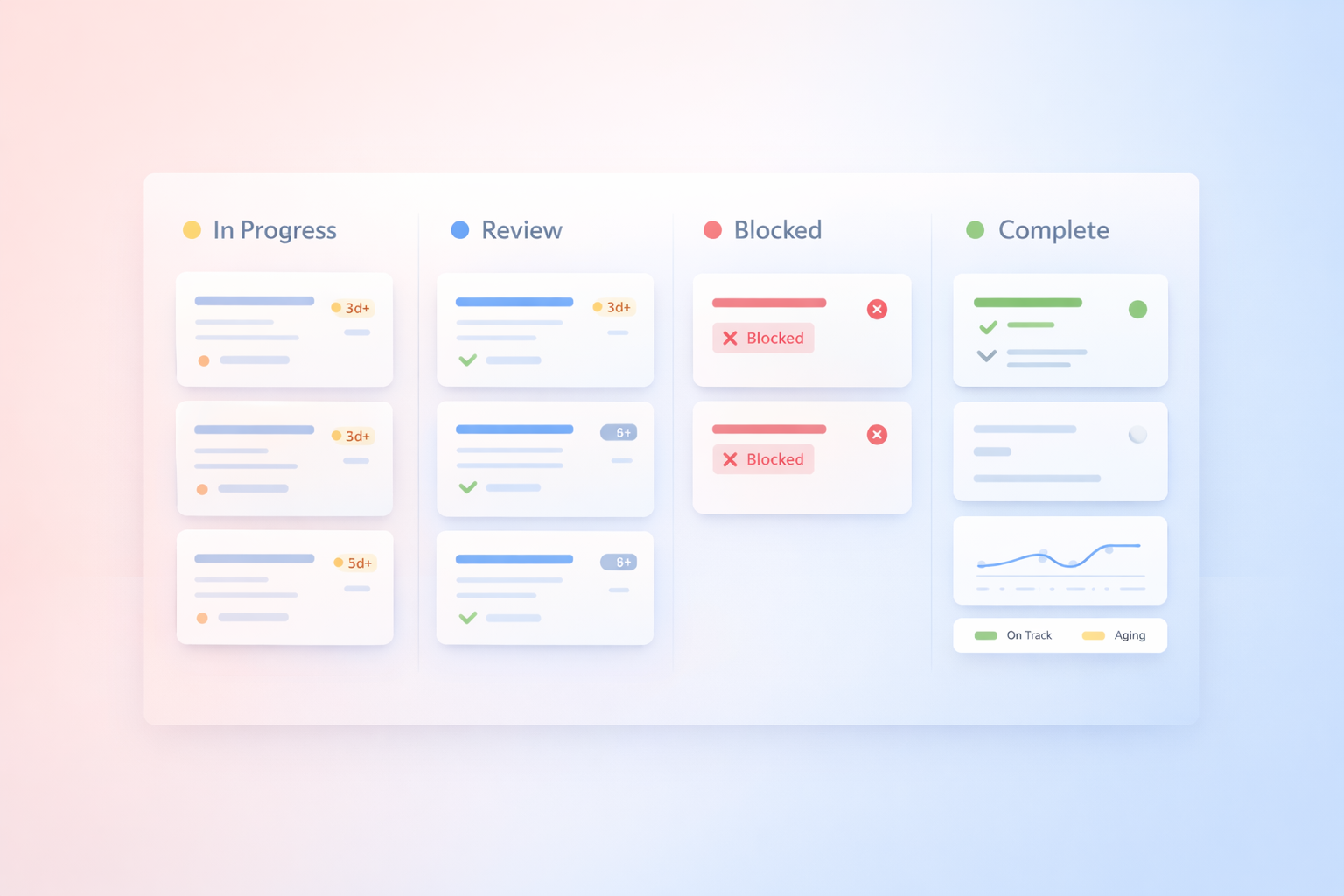
Step 1: Make Work Observable
Maintain a shared view of active work, stages, aging tasks, and blocked items. If something has not progressed, leaders should see it without requesting updates.
Step 2: Identify the Constraint
Every system has a limiting stage. That stage sets overall speed. Improving non-constraints produces little impact. Improving the constraint changes everything.
Look for repeated waiting patterns, overloaded reviewers, or recurring escalations.
Step 3: Redesign, Don’t Pressure
When friction appears, adjust structure:
- Reduce approval layers
- Shorten handoffs
- Clarify decision rights
- Rebalance workload
Small structural adjustments often produce disproportionate gains.
Step 4: Reinforce Consistently
Execution discipline fades without regular reinforcement. Leaders must rhythmically:
- Review signals
- Remove obstacles
- Restate priorities
- Confirm outcomes
Consistency, not intensity, sustains execution stability.
Make Execution Visible with Gwork
Most bottlenecks are not effort problems. They are visibility gaps.
Gwork helps leadership teams identify stalled work, surface constraints, and reinforce priorities before execution slows.
If you want to see where your workflows are stalling – and what to fix first –
See how execution clarity turns drift into momentum.
Key Takeaways
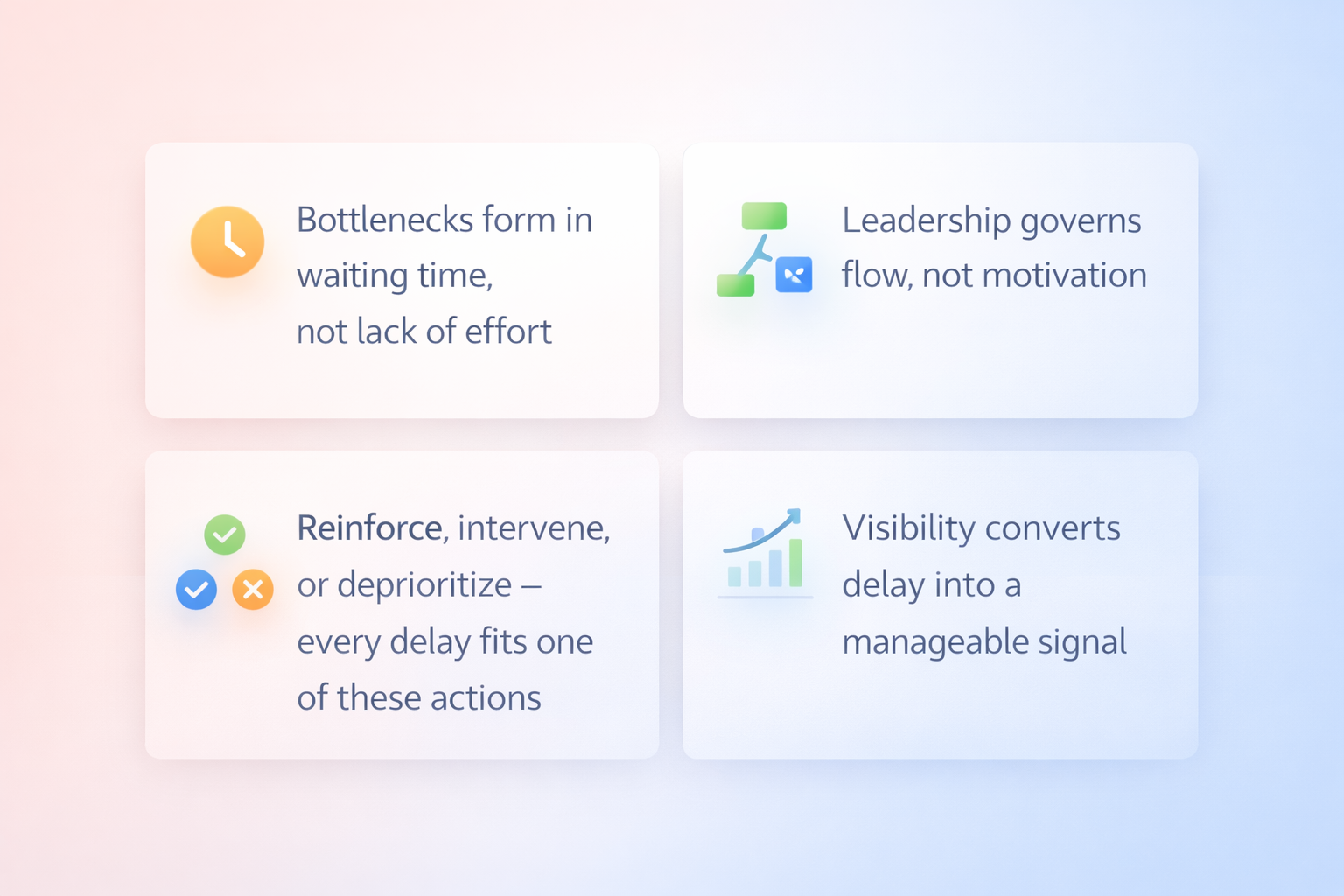
- Bottlenecks form in waiting time, not lack of effort
- Leadership governs flow, not motivation
- Reinforce, intervene, or deprioritize – every delay fits one of these actions
- Visibility converts delay into a manageable signal
- Structural clarity accelerates decisions
Final Thought
Execution slows when friction goes unseen.
Leaders who design for visibility and act decisively on constraints do not chase performance. They build systems where flow is governed, delays surface early, and progress becomes reliable.
In those systems, bottlenecks are not crises.
They are signals – addressed before they compound.
Ready to close the strategy-execution gap?




![6 Best 15Five Alternatives for Teams That Want More Than Check-Ins [2026] - engagement, surveys, behavior, leadership, teams](https://gwork.io/wp-content/uploads/2026/04/15five-alternatives-featured.jpg)
![The Complete Guide to Behavioral Change Platforms [2026] - engagement, surveys, behavior, leadership, teams](https://gwork.io/wp-content/uploads/2026/04/behavioral-change-platforms-guide-featured.jpg)
![GWork vs Humu: Behavioral Change Platforms Compared [2026] - engagement, surveys, behavior, leadership, teams](https://gwork.io/wp-content/uploads/2026/04/gwork-vs-humu-featured-3.jpg)
![GWork vs BetterUp: Behavioral Change Platform vs. Coaching Platform [2026] - engagement, surveys, behavior, leadership, teams](https://gwork.io/wp-content/uploads/2026/04/gwork-vs-betterup-featured.jpg)
![6 Best BetterUp Alternatives for Scalable Employee Development [2026] - engagement, surveys, behavior, leadership, teams](https://gwork.io/wp-content/uploads/2026/04/betterup-alternatives-featured.jpg)
![7 Best Lattice Alternatives for Performance That Actually Changes [2026] - engagement, surveys, behavior, leadership, teams](https://gwork.io/wp-content/uploads/2026/04/lattice-alternatives-featured.jpg)