

Most initiatives don’t collapse because the strategy was wrong.
Last updated: April 2026
They collapse because follow-through quietly weakens.
A weekly handoff slips.
An approval takes two extra days.
A safety check gets skipped “just this once.”
A cross-team meeting stops happening.
Nothing dramatic.
Just small breaks in rhythm.
Then results move.
By the time revenue dips, customers churn, or delivery slows, leaders are already late.
And that is the core problem with most dashboards.
They tell you what happened.
They do not show you where execution is beginning to drift.
Leadership does not need another report.
Leadership needs early visibility that points to where reinforcement is required before outcomes break.
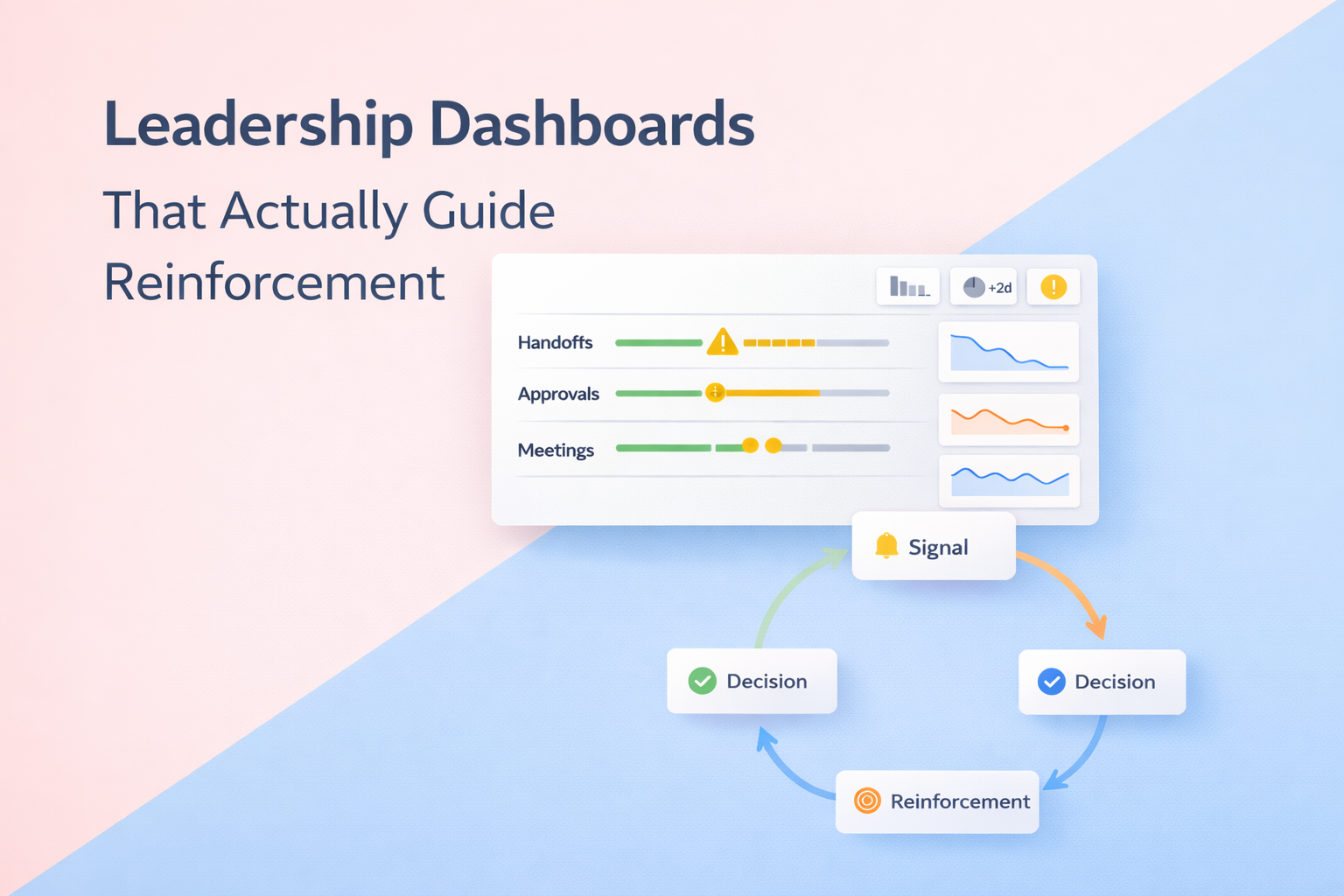
That is what real Leadership Dashboards are for.
Not performance tracking.
Not people metrics.
Not historical summaries.
But governing execution while it is still fixable.
Execution Drift Emerges Before Results Fail
Execution rarely fails loudly.
It fades.
And fading is difficult to detect.
A strategy launches with energy.
Priorities are clear.
Everyone aligns.
Then operations take over.
Urgent requests pile up.
New initiatives compete for attention.
Teams improvise.
Standards soften.
Not intentionally.
Just gradually.
This is execution drift.
Not resistance.
Not low motivation.
Just the natural decay of follow-through when attention shifts elsewhere.
What drift looks like in real operations
Not theory. Not behavior coaching. Actual operational signals:
- Customer escalations sit untriaged for 48 hours instead of 12.
- Handoffs between Sales and Operations miss required details.
- Safety walkthroughs occur monthly instead of weekly.
- Approvals stack up in queues.
- Project checkpoints quietly disappear.
Each one seems small.
But together, they destabilize execution.
And none of these appear on traditional dashboards.
Because most dashboards focus on outcomes:
- Revenue
- Attrition
- Utilization
- Engagement scores
Those are lagging indicators.
They move after the damage is done.
By the time they change, reinforcement becomes reactive.
Leaders end up explaining problems instead of preventing them.
The flaw of traditional dashboards
They are scoreboards.
They report history.
But leadership is a forward-looking responsibility.
Leaders do not need to know only what went wrong last quarter.
They need to know:
“Where is follow-through starting to weaken this week?”
Without that visibility, execution becomes guesswork.
Leadership’s Job Is to Stabilize Execution, Not Micromanage People
When dashboards focus on individuals, the system drifts toward HR language.
Who underperformed?
Who needs improvement?
Who did not comply?
That framing creates friction.
And it misses the point.
Leaders do not control people directly.
They shape conditions.
They control:
- Priorities
- Workflows
- Cadences
- Checkpoints
- Reinforcement
Execution reliability comes from those conditions, not individual effort.
So the leadership question is not:
“Who isn’t performing?”
It is:
“Where are the conditions for follow-through breaking down?”
That shift changes how dashboards should function.
The three leadership actions that matter
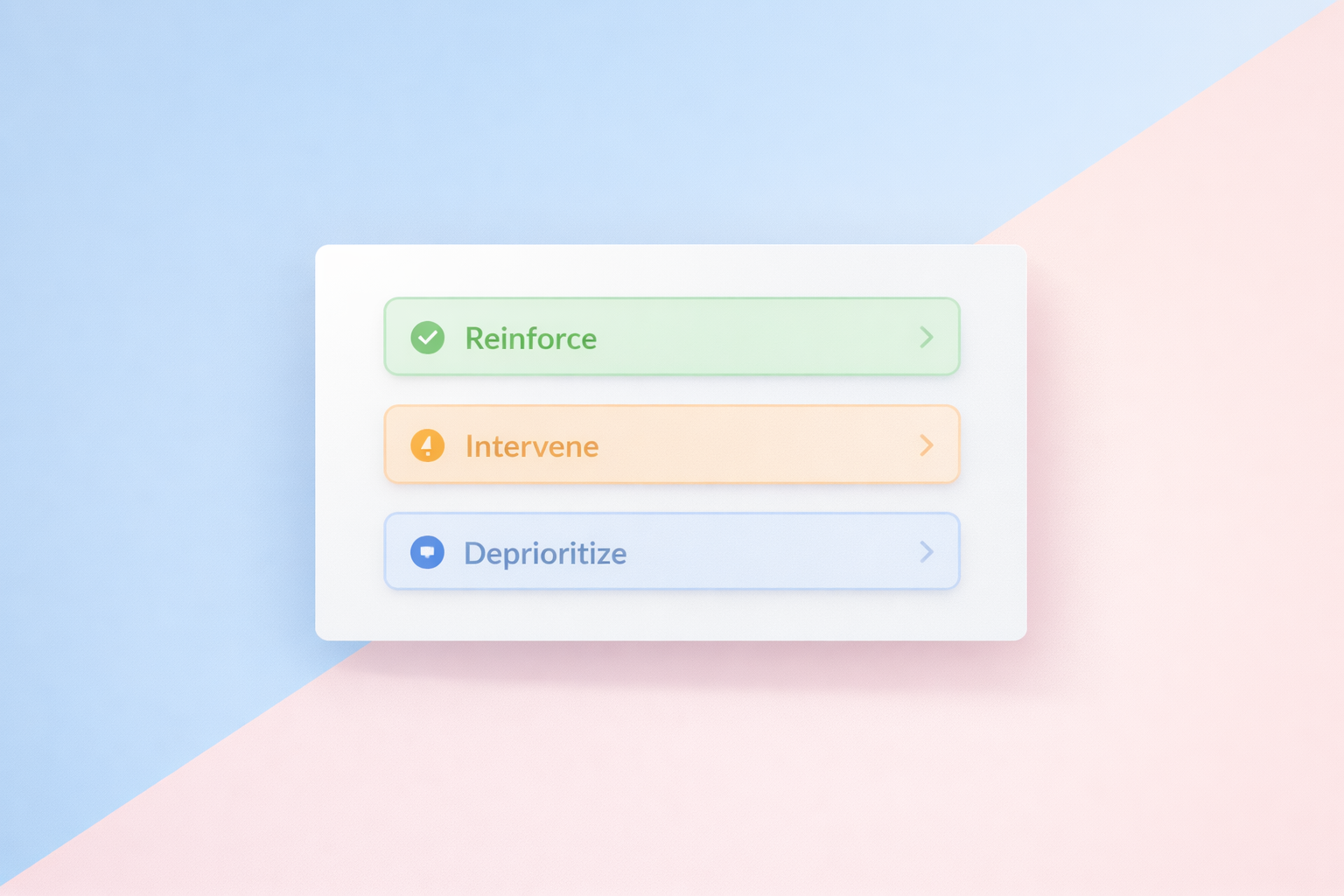
Every week, leaders essentially do three things:
- Reinforce what must remain consistent.
- Intervene where drift is appearing.
- Deprioritize what no longer matters.
If a dashboard does not support those three decisions, it is merely decorative.
A COO example that grounds this in reality
Imagine a COO responsible for on-time delivery.
A traditional dashboard shows:
- On-time delivery: 87%
- Revenue: stable
- Backlog: rising
Useful, but late.
A leadership dashboard shows:
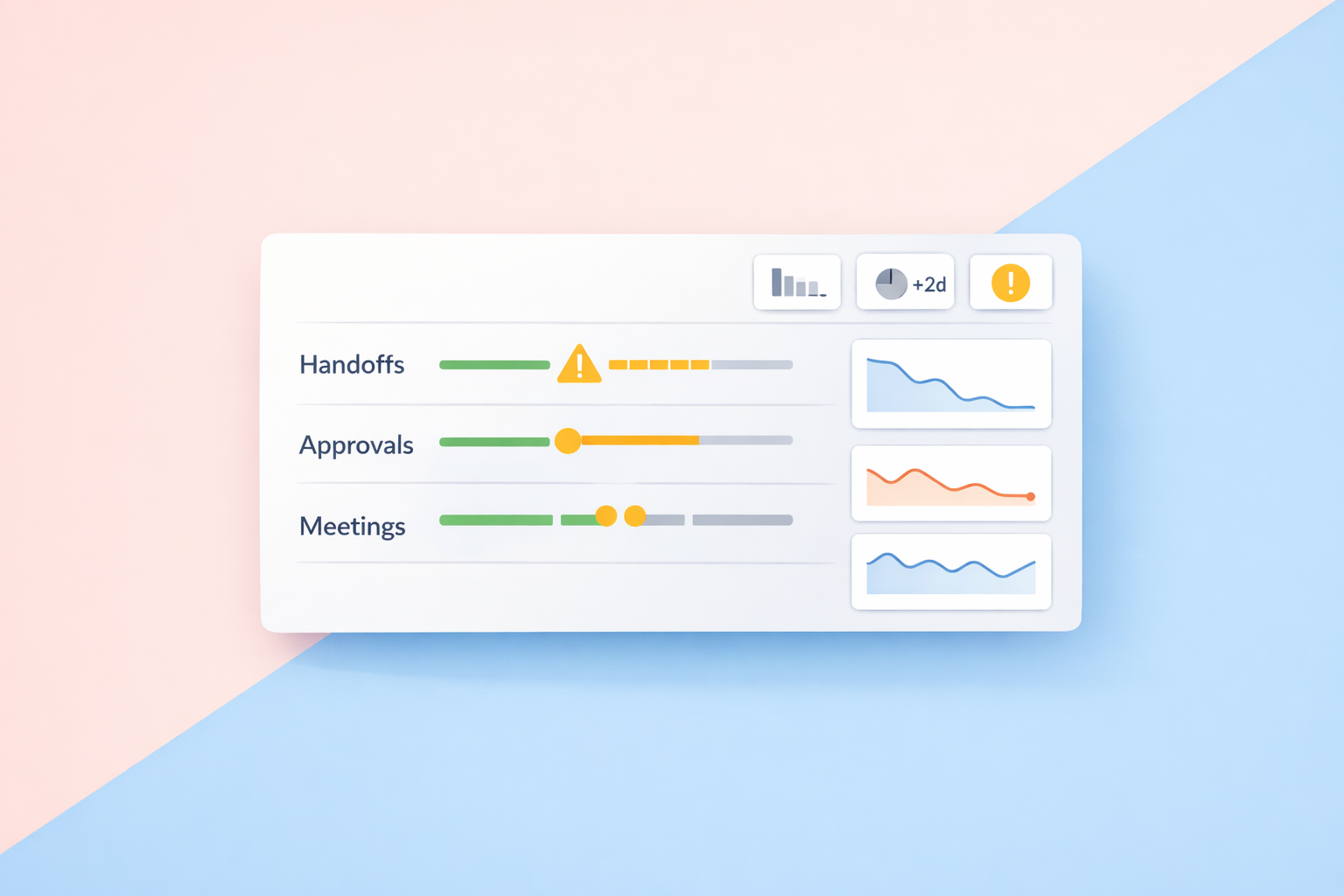
- Handoff delays increasing between Planning and Operations.
- Approval time creeping from 1 day to 3 days.
- Weekly coordination meeting adherence declining.
Now the decision is obvious.
Reinforce handoffs.
Tighten approvals.
Re-establish cadence.
Intervene early.
Before delivery drops.
That is governance – not reporting.
Measurement must serve decisions
Dashboards should never feel measurement-led.
Leaders should not debate charts.
They should look and immediately know:
“This is where we act.”
If a signal does not drive a decision, remove it.
Because more data does not improve execution.
Better reinforcement does.
What Makes a True Leadership Dashboard
A useful dashboard does not show more metrics.
It shows earlier signals.
Signals that move before results.
Signals that reflect execution stability.
Not performance reviews.
Not activity counts.
But whether critical actions are happening reliably.
The right kinds of signals
Effective Leadership Dashboards surface:
Rhythm stability
- Key meetings happening consistently
- Checkpoints completed
- Reviews occurring on schedule
Follow-through reliability
- Steps completed fully
- Approvals on time
- Commitments closed
Coordination health
- Handoff gaps
- Escalation lag
- Rework loops
These are operational facts.
They are objective.
And they move early.
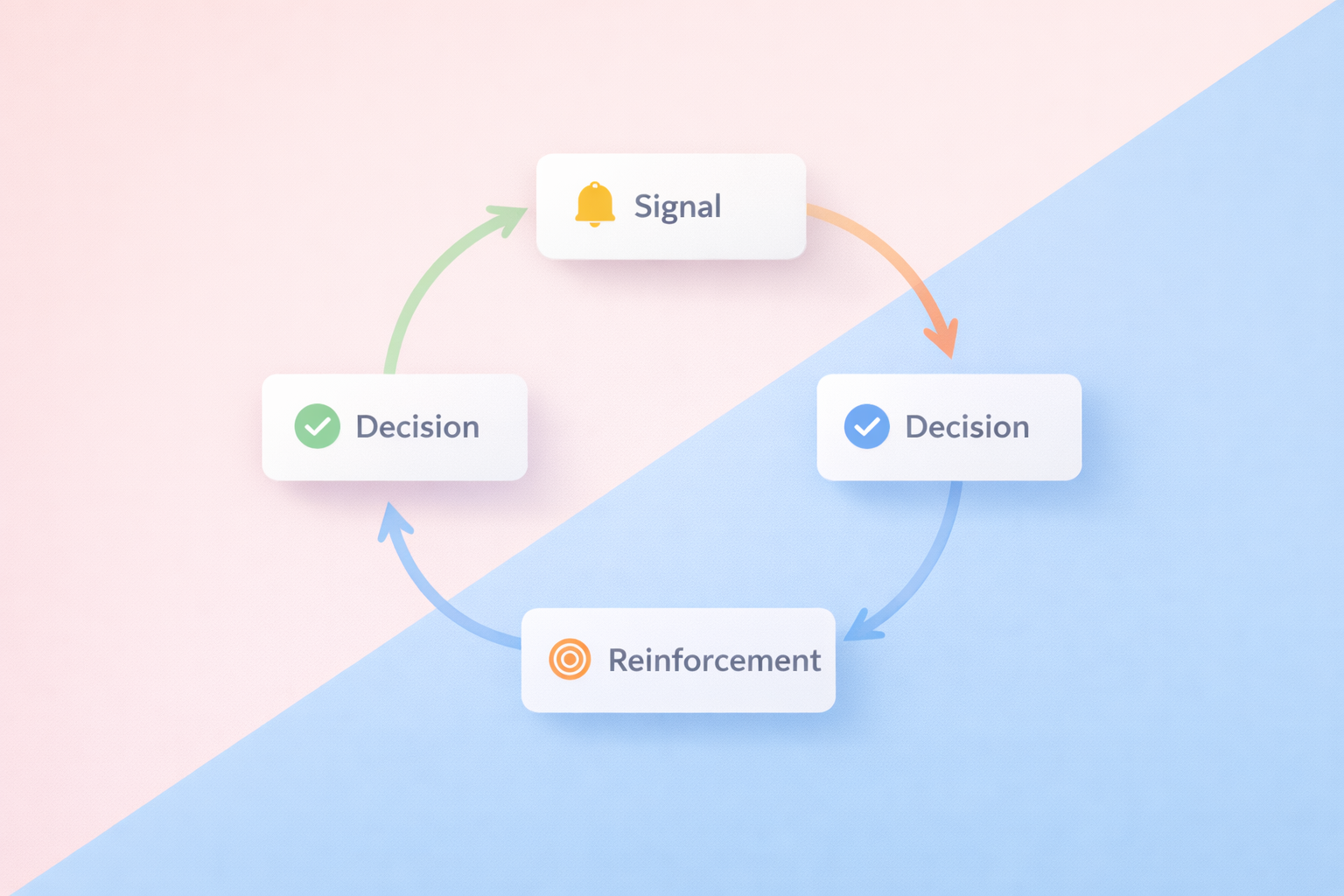
When these signals weaken, leaders reinforce.
When they stabilize, leaders step back.
Every signal must pass one test
“What should I do differently this week?”
If the dashboard cannot answer that instantly, it is overdesigned.
Leadership dashboards are decision tools, not analytics playgrounds.
Designed for executive scanning
Executives do not read every number.
They scan.
So dashboards should:
- Show fewer signals
- Use plain language
- Highlight only what needs attention
- Make next actions obvious
Clarity beats complexity every time.
Where systems like Gwork fit
Tools like Gwork make this practical by giving leaders objective visibility into where execution is stable and where drift is emerging, so reinforcement becomes targeted instead of reactive.
Not more reporting.
Just clearer decisions.
The single purpose of Leadership Dashboards
Not insight.
Not measurement.
Not control.
But follow through.
Because strategy only matters if actions happen reliably after attention moves on.
And follow-through always decays without reinforcement.
The job of leadership dashboards is simple:
Make drift visible early.
So leaders reinforce sooner.
So execution stays stable.
That is it.
When a dashboard helps leaders act before results change, it is working.
If it only explains the past, it is already too late.
Ready to close the strategy-execution gap?




![6 Best 15Five Alternatives for Teams That Want More Than Check-Ins [2026] - engagement, surveys, behavior, leadership, teams](https://gwork.io/wp-content/uploads/2026/04/15five-alternatives-featured.jpg)
![The Complete Guide to Behavioral Change Platforms [2026] - engagement, surveys, behavior, leadership, teams](https://gwork.io/wp-content/uploads/2026/04/behavioral-change-platforms-guide-featured.jpg)
![GWork vs Humu: Behavioral Change Platforms Compared [2026] - engagement, surveys, behavior, leadership, teams](https://gwork.io/wp-content/uploads/2026/04/gwork-vs-humu-featured-3.jpg)
![GWork vs BetterUp: Behavioral Change Platform vs. Coaching Platform [2026] - engagement, surveys, behavior, leadership, teams](https://gwork.io/wp-content/uploads/2026/04/gwork-vs-betterup-featured.jpg)
![6 Best BetterUp Alternatives for Scalable Employee Development [2026] - engagement, surveys, behavior, leadership, teams](https://gwork.io/wp-content/uploads/2026/04/betterup-alternatives-featured.jpg)
![7 Best Lattice Alternatives for Performance That Actually Changes [2026] - engagement, surveys, behavior, leadership, teams](https://gwork.io/wp-content/uploads/2026/04/lattice-alternatives-featured.jpg)